
What the day feels like
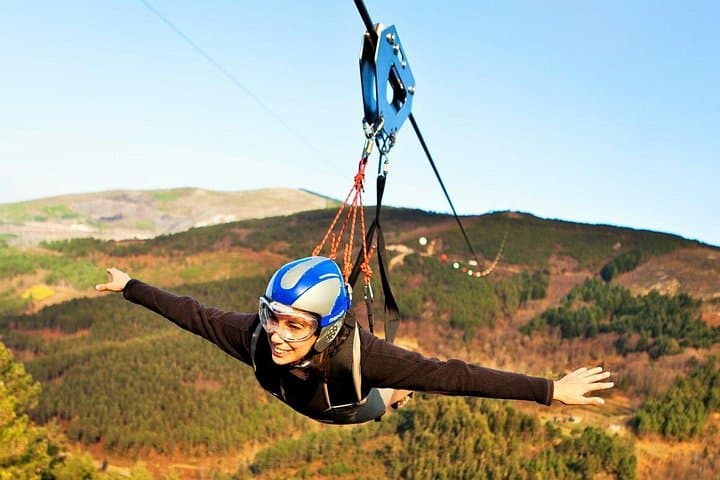
The cable hums, then disappears into wind. For a breathless second you are a silhouette between two slices of green—oak trees leaning like old friends, terraces of vines stacked on the hillsides, and a ribbon of valley that seems to move under you. The fantasticable isn’t a gentle sightseeing line; it pulls you forward the way a current pulls a boat—insistent, exhilarating, and startlingly clean. When the harness catches and the world rights itself, you’re still wearing the quick, bright grin of someone who just pressed the fast-forward on a quiet Portuguese morning.
This is the shape of the Basto Adventure Wine Tour: an adrenaline-first introduction to the Minho region’s landscape followed by a slow, deliberate immersion into its human geography—lunch at a family restaurant and a tasting at a working Vinho Verde quinta. The day compresses two distinct charms of northern Portugal: an outdoors culture that doesn’t shy from speed, and a viticultural tradition that prizes youth, acidity, and the luminous green of new leaves.
Geology here is quiet but insistently present. The hills that cradle Vinho Verde vineyards are made of schist and granite, cracked and folded through millennia, holding enough drainage to force vines to send roots deep and leaves wide. That same resistance sculpts the ridgelines the fantasticable traverses—sudden drops, wind-swept hollows, and viewpoints that make the valley look like paper cutouts arranged deliberately for travelers.
Vinho Verde itself is often misunderstood. The name—literally “green wine”—points less to color than to youth: these are wines meant to be drunk fresh, sometimes with a faint fizz, harnessing acidity and aromatic lift. Grape varieties like Alvarinho, Loureiro, and Trajadura sing of citrus, white flowers, and mineral lines that pair precisely with the local plates—a salted cod fritter, a parsley-heavy caldo, or the region’s grilled seafood. On this tour, the tasting at a farm gives you both glasses and context: you learn the work behind the sip—how steep terraces are tended, how rainfall shapes harvest dates, and why many producers bottle young to preserve verve rather than oak-inflict it.
Culturally, the day feels local in a way that’s carefully curated but not contrived. Lunch is at a neighborhood restaurant where plates arrive with the casual confidence of family cooking: slow-cooked pork, hearty stews, and salads that look like an ode to the season. Conversation leans toward the land—how rains affected the harvest, the best places to forage mushrooms, or the way the river “dares you” to take your boots in on a hot afternoon.
Practical edges keep the day grounded. Expect a full seven-hour outing that mixes short, high-energy segments (the descent, a short guided walk) with languid tasting and the comfort of a sit-down lunch. This isn’t a technical mountaineering route; the physical strain is moderate—more about steady mobility and comfort with heights than endurance. Guides handle rigging, safety briefs, and wine introductions. The tour tends to be private and comes with instant confirmation and free cancellation, which means it’s family-friendly but also good for small groups who want a private pace.
Why bother? Because the contrast is clarifying. The day moves from full-throttle to slow savoring in a way that teaches you the landscape’s tempo: speed shows you the contours; the table shows you how people live on them. Enthusiasts will love the tactile joy of the zip and the detailed tasting notes; casual travelers will appreciate the manageable scale—one well-paced day that delivers the thrill of the outdoors and an education in a wine region often overlooked in favor of Portugal’s more famous coasts.
Planning pointers: shoes with grip, layered clothing, and a compact daypack make the day's transitions smooth. Photographers will want a camera with a fast shutter for the descent and a wide lens for vineyard panoramas at golden hour. Timing matters: spring and early summer give you the most vivid green and comfortable temperatures; harvest months are busy but rich with activity and color.
A note on stewardship: these hills are worked and loved. Stay on designated paths, follow guide instructions during the descent, and treat vineyards like fragile gardens—no trespassing, no clipping grapes. The best souvenirs aren’t bottles alone; they’re the stories the quinta owners share about their methods and the names of grape varieties you’ll want to remember.
By late afternoon, after a thoughtful tasting and a last look at vines tapering down to a river valley, you’ll find the day has taught you two things: that nature can push you forward with a grin, and that food and wine have a patience that patiently undoes that push. Returning to Braga or a nearby village, the memory will split between adrenaline and appetite—an efficient, unexpectedly tender pairing that’s, somehow, exactly what this corner of Portugal does best.
Trail wisdom
Small choices, better day.
Bring grippy shoes
Closed-toe trail shoes with good tread make the landing platforms and short walks comfortable and secure.
Hydrate before you sip
Drink water throughout the day—altitude and adrenaline can dull hydration cues before tasting.
Layer for changing conditions
Mornings can be cool on the ridge while afternoons warm at the quinta; pack a light windbreaker.
Tell the guide about mobility limits
If you have limited mobility or a fear of heights, mention it ahead of time so staff can accommodate.
Local knowledge
Read the place, not just the route.
Watch for native species including Iberian hare, Common buzzard.
Keep an eye out for wildlife during the transition between areas and habitats. Respect distance guidelines.
Vineyards here often employ low-intervention methods to preserve soil health; visitors should stay on paths and avoid disturbing terraces.
Follow the guide's instructions on size limits, ethical handling, and leave-no-trace practices.
Walk the riverbanks near Cabeceiras de Basto for quiet streams and picnic spots. Visit a small quinta outside main routes to taste single-parcel Vinho Verde expressions
Locally recommended viewpoints and quiet spots known best to local operators.
The Minho region has long been agricultural, with smallholders shaping terraces for vines and chestnut groves that have sustained villages for centuries.
Maritime roots and regional tradition shape the waterways and working coasts.
Seasonal guide
Four versions of the same landscape.
Spring
Best forLush green landscapes · Comfortable temperatures · Early wildflowers
ChallengesOccasional rain showers · Muddy paths after storms
Spring delivers the region’s signature green and comfortable weather for both the descent and vineyard walks—pack a light rain layer.
Summer
Best forLong daylight hours · Warmer tasting conditions · Picnic-style lunches
ChallengesAfternoon heat · Possible crowds during peak months
Summer is warm and bright; schedule the descent early to avoid the hottest period and enjoy chilled Vinho Verde at lunch.
Fall
Best forHarvest activity · Rich vineyard colors · Seasonal cuisine
ChallengesBusier wineries · Cooler evenings
Autumn offers harvest energy and dramatic colors—expect a livelier atmosphere at quintas and plan for cooler evenings.
Winter
Best forQuieter tours · Cozy indoor tastings · Lower rates
ChallengesRain and wind · Shorter daylight
Winter is quiet and intimate but can be wet and windy on the ridgelines—dress warmly and expect indoor-focused tastings.
Operator details
What the booking data adds.
Included
- ✓free wifi
- ✓Lunch
- ✓Air-conditioned vehicle
Not included
- —Personal expenses
- —Tips
Good to know
- ✓Infants and small children can ride in a pram or stroller
- ✓Service animals allowed
- ✓Infants are required to sit on an adult’s lap
- ✓Specialized infant seats are available
- ✓Not recommended for travelers with spinal injuries
- ✓Not recommended for pregnant travelers
- ✓Suitable for all physical fitness levels
Pack with intention
What to bring.
Good to know
Common questions.
The tour runs about 7 hours total, combining the descent, lunch, and a winery visit.
Plan the edges
The details that make the day easier.
Vinho Verde refers to the wines' youth and freshness rather than their color; the region is one of Portugal's oldest demarcated wine regions, dating to the 12th century.
After the tour, head to a local tasca for caldo verde or grilled sardines and a cold Vinho Verde. Small family restaurants in villages like Cabeceiras de Basto serve generous portions and friendly conversation—pair the bright wines with simple, well-seasoned food.
- Closest airport
- Francisco Sá Carneiro (Porto) — ~55–70 minutes by car to Braga; Driving from Braga: 30–60 minutes depending on specific meeting point; Cell service: generally good in towns, patchy on ridges; Permits: none required for the tour itself
Respect vineyard boundaries and follow guide instructions—many quintas practice sustainable viticulture to protect soil and biodiversity; pack out what you pack in.
Explore by topic
Follow the threads.
Keep exploring
Make the story part of the trip.
Set out from Bass Harbor for a private, customizable day on Blue Hill Bay — lighthouses, puffins, seals, and the chance to feel Acadia from the water. Small groups, local captains, unforgettable views.
In four hours you can move from shaded canyon ferns to wind-scoured coastal ridgelines, guided by someone who knows where the light—and the hidden views—live. This private half-day hike on the Monterey Peninsula or Big Sur is compact, curated, and perfect for travelers who want depth without a multiday commitment.
 Related story
Beneath a sky of shifting light, Skaftafell’s ice reads like a map of time. This three-hour guided glacier hike mixes technical instruction with geology and culture: compact, safe, and unforgettable.