
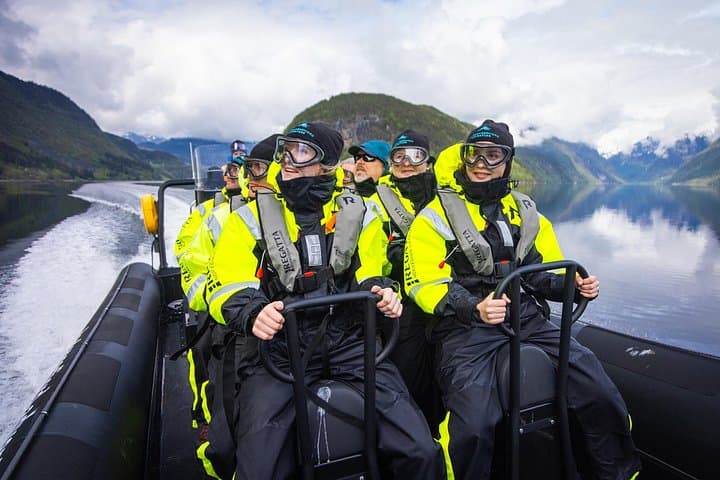
What the day feels like
The motor rasped, the inflatable collar muttered against the dock, and the village of Ulvik—whitewashed boathouses clinging to a glassy fjord—slid away behind us. For one hour the world narrowed to the hull beneath our feet, the spray that dared to kiss your cheeks, and the long spine of the Hardanger Bridge rising ahead like a suspended promise. This is not a languid ferry ride; it’s a Rigid Inflatable Boat (RIB) safari: quick, tactile, and intimate with the water that carved these mountains.
Most visitors come to Hardangerfjord for leisurely drives and orchard-lined roads. The RIB flips the script. From Ulvik you punch out past the fjord’s wide throat, head toward the Hardanger Bridge—the longest suspension bridge in Norway—and then slip into Osafjorden, a narrow 13-kilometer arm where settlements exist without roads and histories are read like living maps on the shoreline. The boat’s wake stitches together natural drama and human resiliency: steep terraces of grass and fruit trees, cascades that tumble from snowmelt, and clusters of rorbuer and boathouses that look unchanged for generations.
Geology here is blunt and old. The fjord was gouged by ice over multiple glaciations, the fjord walls carved to reveal banded rock and hanging valleys that produce dozens of streams in spring runoff. That sculpted past shaped a distinct culture: people settled where cultivable terraces existed or where sheltered coves allowed boats to moor. In Osafjorden you’ll pass villages that have historically been reachable only by water; their isolation preserved a way of life—fishing, piloting, small-scale farming—that your guide will stitch into the ride with local anecdotes and practical context.
There’s contemporary industry here too. You’ll notice salmon pens and fish farms dotting sheltered bays, a reminder that fjord economies now balance tourism, aquaculture, and traditional livelihoods. The guide’s commentary tends to be frank and curious—the best kind of interpretation—about how these threads coexist.
Practical specifics aren’t sacrificed to poetry. The tour is a compact 60 minutes, a tight circuit optimized for maximum shoreline contact and a couple of staged stops where you can stand on pebbled beaches, photograph weathered boathouses, and listen to the fjord breathe. The RIB itself is designed for stability and speed; expect short bursts that raise the adrenaline and long, quiet glides that let the landscape sink in. Dress for spray and wind: layers, a windproof shell, and non-slip shoes.
Why take a RIB instead of a standard fjord cruise? It’s the proximity and contrast. A RIB makes the fjord immediate—rock faces loom, sea birds wheel within arm’s reach, and the bridge’s scale becomes palpable. For photographers, the low profile changes perspectives; for families and active travelers, there’s the kinetic pleasure of speed without sacrificing interpretive stops. For those curious about culture, the route’s emphasis on roadless villages offers a direct look at how geography shaped community life.
Safety and sustainability are woven into the experience. Skippers brief passengers on boarding, seating, and motion etiquette; life jackets are mandatory. Operators often coordinate where they approach shorelines to avoid disturbing nesting birds and sensitive shoreline habitat. If you’re going to take a shoreline stroll during a stop, stick to established paths and pack out any waste.
Timing matters. Summer months bring long daylight and calmer waters; spring swells with meltwater and waterfall drama; fall offers crisp air and color. If your schedule is tight, the RIB’s one-hour footprint makes it an excellent add-on to an active day in Hardanger: a morning hike in the hills, a midday boat, and an afternoon sampling local cider.
How to make the most of it: pick a morning slot when winds are typically lighter, bring a small waterproof camera or a well-sealed phone case, and listen during the guided stops—most of the best stories are about the people who chose to stay here and the practical inventions they developed to live with fjord weather. Expect a mix of adrenaline and reflection. When the engine cuts and the fjord goes quiet, you’ll understand how water both isolates and connects these communities.
This is an honest kind of travel: visceral, landscape-forward, and compact enough to fit into a broader Hardanger itinerary. Whether you’re a first-timer to Norway’s fjords or a repeat visitor looking for a different vantage, the Ulvik RIB puts you on the edge of the fjord—and leaves you wanting more of its ribs and seams.
Practical snapshot: the tour departs from Ulvik harbor and runs about 60 minutes, with several short shoreline stops. The guide is locally informed and provides historical and cultural context. Wear layered clothing and waterproofs, and expect intermittent cell service once you slip into the narrower arms of Osafjorden.
In short: this is the fjord up close—fast when it wants to be, slow when the place asks you to listen. It’s a short investment of time that yields a concentrated sense of place: geology, culture, and the everyday ingenuity of people living at the water’s edge.
Trail wisdom
Small choices, better day.
Dress for spray
Wear a windproof shell and quick-drying layers; even sunny days can be breezy and wet on a RIB.
Bring a dry bag
Protect cameras, phones, and spare clothing from spray—small waterproof bags are lifesavers on RIBs.
Choose morning departures
Mornings typically have lighter winds and calmer water for smoother rides and better photos.
Respect shorelines
When the boat lands for short walks, stay on established paths to protect nesting birds and fragile shoreline plants.
Local knowledge
Read the place, not just the route.
Watch for native species including Atlantic puffin (seasonal coastal sightings), Harbor seal.
Keep an eye out for wildlife during the transition between areas and habitats. Respect distance guidelines.
The fjord ecosystem is sensitive; operators and visitors are encouraged to avoid disturbing wildlife, not feed animals, and pack out all waste to protect water quality.
Follow the guide's instructions on size limits, ethical handling, and leave-no-trace practices.
Small, roadless fjord hamlets in Osafjorden—look for clustered boathouses and terraced gardens. Secluded pebble coves where local guides sometimes pause to tell personal stories
Locally recommended viewpoints and quiet spots known best to local operators.
Osafjorden’s settlements are examples of Norwegian coastal communities shaped by boat access rather than roads; the Hardanger region is also historically tied to fruit cultivation.
Maritime roots and regional tradition shape the waterways and working coasts.
Seasonal guide
Four versions of the same landscape.
Spring
Best forWaterfall displays · Wildflower terraces · Fewer crowds
ChallengesCooler temperatures · Higher runoff and spray
Spring brings dramatic waterfalls and green terraces but expect colder winds and frequent spray from snowmelt.
Summer
Best forCalm water · Long daylight · Warm photography light
ChallengesPeak crowds · Higher demand for bookings
Summer is the optimal time for calmer seas and long days—book early for preferred departure times.
Fall
Best forCrisp air and color · Quiet harbors · Golden light
ChallengesShorter days · Potentially choppier seas
Autumn offers crisp visibility and fewer tourists; windier days are more likely and layers are essential.
Winter
Best forDramatic light on snow · Solitude · Low-season rates
ChallengesCold, rougher water · Short daylight and limited operations
Winter tours are rare but dramatic—expect cold conditions and limited schedules; check operator availability.
Pack with intention
What to bring.
Good to know
Common questions.
The RIB tour runs approximately 60 minutes with several short stops along Osafjorden and views of the Hardanger Bridge.
Plan the edges
The details that make the day easier.
The Hardanger Bridge (Hardangerbrua) opened in 2013 and is the longest suspension bridge in Norway, dramatically changing road access across the fjord.
Hardanger is fruit-country—after the ride, sample locally pressed apple juice or Hardanger cider and look for small quayside cafés and bakeries in Ulvik selling fish and regional snacks; village producers often sell apple products and preserves at seasonal stands.
- Closest airport
- Bergen Flesland (BGO) ~2–3 hours by car; Departure point: Ulvik harbor; Driving distance: Bergen to Ulvik ~2–3 hours depending on route; Cell service: Good near towns, patchy in narrow fjord arms; Permits: None typically required for visitors
Fjord habitats are vulnerable to pollution and noise; choose operators who avoid nesting areas, minimize wake near shores, and follow local waste-disposal practices.
Explore by topic
Follow the threads.
Keep exploring
Make the story part of the trip.
Set out from Bass Harbor for a private, customizable day on Blue Hill Bay — lighthouses, puffins, seals, and the chance to feel Acadia from the water. Small groups, local captains, unforgettable views.
In four hours you can move from shaded canyon ferns to wind-scoured coastal ridgelines, guided by someone who knows where the light—and the hidden views—live. This private half-day hike on the Monterey Peninsula or Big Sur is compact, curated, and perfect for travelers who want depth without a multiday commitment.
 Related story
Beneath a sky of shifting light, Skaftafell’s ice reads like a map of time. This three-hour guided glacier hike mixes technical instruction with geology and culture: compact, safe, and unforgettable.