
What the day feels like
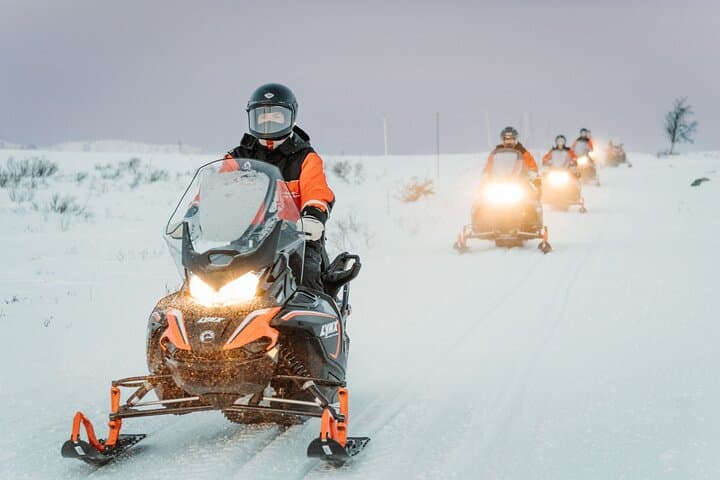
The engine chuffs, then purrs into a steady rhythm, and suddenly the ordered world of town — asphalt, people, radio chatter — falls away. Ahead is a hard, white horizon: snow so bright it seems to have its own light, punctuated by dark pines and the pale geometry of distant ridgelines. You lean into the machine, feel the sled respond beneath you, and the Arctic disperses itself into a series of immediate tasks: steer, breathe, watch for crusted drifts. In that focused quiet, the landscape becomes not a backdrop but an interlocutor, the wind pushing phrases across the plain. This is the core of the <a href="https://app.advcollective.com/local-experts/explore-arctic-wilderness-snowmobile-and-icefishing-adventure-in-alta">Snowmobile and Icefishing Adventure</a>, an all-day route from Alta that threads forest corridors, frozen rivers and a wide, unpeopled plateau where the only echoes are your own and the occasional call of a distant bird.
The day unfolds in three movements. The first is the ride: 40–60 kilometers of trail riding, depending on the itinerary and conditions, with gentle elevation changes—think 200–400 meters of cumulative gain—more about rolling tundra than steep climbs. Trails are a mix of groomed corridors and compacted backcountry: you’ll cross frozen streams, skirt white birch groves, and climb to a vantage that reads like an Arctic map—flat, luminous, endless. The second movement is arrival: setting machines aside, unpacking the fishing kit, and learning how to read the small, insulated hole the guides cut into the ice. The final movement is waiting — a practice in patience historically entwined with local subsistence. You learn to listen: the creak of ice, the whisper of wind, and the quiet tug at the line.
Alta sits high above the Arctic Circle and carries a layered history. Long before tourism, the land belonged to the Sami people, whose reindeer herding and seasonal migrations still shape local life today. Nearby, the Rock Art of Alta—carved into sandstone along fjord shores—records thousands of years of coastal life, hunting scenes and ritual marks. Geologically, the region is a product of glacial scouring and post-glacial rebound, a placid plain that was once squeezed under ice and then left to settle into its present, sparse rhythms. The place you ride across is less a blank canvas than a palimpsest of ice-age geology and human history.
Practically speaking, this is not a fjord cruise or a hotel-based excursion; it’s a field day in Arctic conditions. Expect a 6–7 hour window from pickup to drop-off, including gear briefings, snowmobile instruction for beginners, and 60–90 minutes of dedicated icefishing time. Operators provide cold-weather suits, helmets and basic instruction; your job is to layer effectively, protect extremities and bring an appetite for simple pleasures: a hot thermos, the crispness of still air, the taste of fish fresh off the ice if your catch allows.
Why do this trip? It’s a compact way to sample two classic Arctic experiences in a single, accessible package. Snowmobiling is immediate, kinetic and social; icefishing is quiet, contemplative and intimate. Together they create a balanced day: adrenaline and slowness, motion and pause. There’s also the wildlife angle—look for reindeer tracks, and if you’re lucky a white-tailed eagle or an arctic fox silhouette on the ridge—and the cultural resonance of practicing a northern subsistence craft with guides who understand the seasons.
Safety is straightforward but non-negotiable. Dress in moisture-wicking base layers, carry windproof outer layers, and wear insulated boots with good ankle support. Sunglasses or goggles are essential: snow glare is significant, even on overcast days. Guides will cover basic sled operation—accelerator, brake, weight distribution—and you’ll be fitted with a helmet and overalls before departure. For icefishing, the guides choose and test the spot; you’ll be shown how to cut, drop, and tend the line. Respect the ice, follow your guide’s lead on where to walk, and stay sober enough to respond to conditions.
If you’re thinking seasonality, winter here is long and stable; the prime window for hard, safe ice and reliable snowpack runs from January through April. Aurora season overlaps the tour window—on the ride back as dusk falls, the sky can erupt in green and violet. If that’s a priority, aim for February–March nights when clear-sky probability tends to improve and the cold is crisp rather than numbing.
Ready to plan? Book an operator that includes certified guides, protective suits and clear liability explanations. Consider mornings for better light and calmer wind; the afternoon can get flat and directional light that challenges depth perception. Bring a small daypack with water, snacks, and spare gloves. And leave room for the small, local pleasures after the trip: a steaming bowl of reindeer stew or a hot chocolate in Alta town, where you can swap stories with other travelers over a map of where the day took you.
This is a trip that rewards a short list of practical choices: good layers, a willingness to sit with silence, and curiosity about the place. The Arctic is not theatrical in an obvious way; it is persuasive in its austerity. On this tour you’ll move across its surface fast enough to feel the wind and slow enough to catch the bite. Either way, you come away with the sense that you were part of a day the land will remember long after the sleds are trailered away.
Trail wisdom
Small choices, better day.
Layer for changeable cold
Use a moisture-wicking base, insulating mid-layer and windproof shell to adjust to exertion and Arctic wind.
Protect your eyes
Goggles or sunglasses reduce snow glare and protect against wind-driven ice crystals.
Keep extremities warm
Carry spare gloves and hand warmers; numb fingers ruin both a ride and fishing patience.
Listen to your guide
Stick to marked walking routes on the ice and follow sled-handling tips—local knowledge matters.
Local knowledge
Read the place, not just the route.
Watch for native species including Reindeer, White-tailed eagle.
Keep an eye out for wildlife during the transition between areas and habitats. Respect distance guidelines.
Operators follow strict trails to limit disturbance; stay on marked routes and pack out all waste to protect fragile tundra and winter habitats.
Follow the guide's instructions on size limits, ethical handling, and leave-no-trace practices.
Sorrisniva Igloo Hotel for a post-ride drink or a short walk. Alta Museum and the Rock Art (Hjemmeluft) for regional history
Locally recommended viewpoints and quiet spots known best to local operators.
Alta is a long-inhabited Arctic corridor with Sami heritage and the Rock Art of Alta, which records thousands of years of coastal life.
Maritime roots and regional tradition shape the waterways and working coasts.
Seasonal guide
Four versions of the same landscape.
Spring
Best forLonger daylight · Milder cold · Aurora tail season
ChallengesThawing ice edges · Variable snow density
Late winter into spring (March–April) brings more daylight and milder temperatures but watch for softer ice margins and sun-affected snow.
Summer
Best forNot applicable for this activity · — · —
ChallengesNo snow or ice for this trip · Operators do not run this winter-specific tour
Summer is off-season for snowmobiling and icefishing here; consider other Arctic experiences like hiking or fjord cruises.
Fall
Best forNorthern lights preview · Quieter town · Transition scenery
ChallengesUnreliable ice and early storms · Short days
Early winter conditions are unpredictable in fall; by late November conditions may permit activities but expect shorter daylight and variable trails.
Winter
Best forSnowmobiling · Icefishing · Northern Lights
ChallengesExtreme cold at times · Need for warm clothing
Winter (December–March) is the prime season—reliable snow, solid ice and long opportunities for aurora-viewing after dusk.
Operator details
What the booking data adds.
Included
- ✓Snacks
- ✓Snowmobile rental, fuel, ice fishing equipment, thermal suits, boots, gloves, and helmet
- ✓Coffee and/or Tea
Good to know
- ✓Public transportation options are available nearby
- ✓Not recommended for travelers with spinal injuries
- ✓Not recommended for pregnant travelers
- ✓Not recommended for travelers with poor cardiovascular health
- ✓Travelers should have at least a moderate level of physical fitness
- ✓Not recommended for travelers with limited mobility
Pack with intention
What to bring.
Good to know
Common questions.
No—guides provide instruction for beginners and walk you through basic operation before departure.
Plan the edges
The details that make the day easier.
Alta is home to the Rock Art of Alta, a UNESCO World Heritage site documenting thousands of years of human activity in northern Norway.
After the tour, return to Alta town to warm up with traditional Sami or Arctic cuisine and a hot drink; visit the Alta Museum for context on the rock carvings and local history.
- Closest airport
- Alta Airport (ALF). Driving distance from Alta town to meeting point: typically 15–60 minutes. Cell service: good near town, patchy in remote plateaus. Permits
- passes
- none required for this tour but follow operator and local regulations.
Choose licensed operators that minimize off-trail riding, respect wildlife, and practice leave-no-trace to protect fragile Arctic ecosystems.
Explore by topic
Follow the threads.
Keep exploring
Make the story part of the trip.
Set out from Bass Harbor for a private, customizable day on Blue Hill Bay — lighthouses, puffins, seals, and the chance to feel Acadia from the water. Small groups, local captains, unforgettable views.
In four hours you can move from shaded canyon ferns to wind-scoured coastal ridgelines, guided by someone who knows where the light—and the hidden views—live. This private half-day hike on the Monterey Peninsula or Big Sur is compact, curated, and perfect for travelers who want depth without a multiday commitment.
 Related story
Beneath a sky of shifting light, Skaftafell’s ice reads like a map of time. This three-hour guided glacier hike mixes technical instruction with geology and culture: compact, safe, and unforgettable.