
What the day feels like
You step off the bus into a blur of salt, fish scales and shouted prices. Fishermen in rubber boots sling crates of silvered mackerel and bonito across damp concrete, while gulls wheel and argue over a discarded fillet. This is Chorrillos, the southern district of Lima where the city meets the cold Humboldt Current—and where a single day can move you from the clamor of an artisanal fish market to a quiet plate of ceviche eaten on a family patio. The Fisherman and Ceviche Culture of Lima tour (https://app.advcollective.com/local-experts/lima-fishing-ceviche-culture-tour-chorrillos-market-boat-ride-morro-solar-views) is an invitation to watch a food culture assembled by the sea and to meet the people who sustain it.
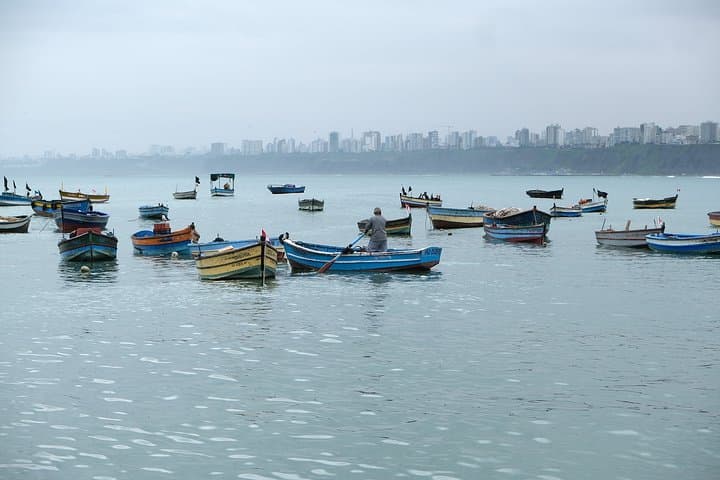
The tour opens on the docks, where nets come ashore and conversations center on tides, markets and weather. From here you board a short boat ride that hugs Lima’s coastline—the waves of the Pacific are steady, almost deliberate, pushing you along, while pelicans and cormorants ride the sea breeze like local commuters. The boat isn’t a flashy charter; it’s the same kind of artisanal craft made locally, and the next stop is often a small boatyard where an artisan builder shows how ribs are lashed and planks are planed by hand. These boats, much like the recipes that travel from table to table, are built out of economy, skill and an understanding of a temperamental sea.
The heart of the experience is culinary and cultural. You’ll visit a tiny family-run cebichería where the ceviche arrives brisk and bright: white fish cut into clean cubes, bathed in sour lime, sliced red onions, a scatter of cancha corn and a dab of ají amarillo. Ceviche in Lima is both museum and laboratory—rooted in coastal traditions that predate the Spanish arrival and continually refreshed by immigrant flavors from the Andes and Amazon. The guide will help decode plates and portions, and you’ll be encouraged to taste slowly and ask how each family balances acid, heat and texture. If you want to go deeper, the same booking page for the tour (https://app.advcollective.com/local-experts/lima-fishing-ceviche-culture-tour-chorrillos-market-boat-ride-morro-solar-views) outlines which local kitchens you’ll visit and why family-run places matter to Lima’s culinary identity.
A short drive brings you to Morro Solar, a wind-swept promontory that has watched Lima’s coastline for generations. History is layered here: pre-industrial fishing lanes, colonial-era navigation points, and the scars of 19th-century conflict—Morro Solar was a strategic lookout during the War of the Pacific. Today the hill is a place to breathe; the city unfurls below like a map, cliffs and neighborhoods carved by trade winds and traffic. It’s the sort of view that turns explanation into memory—where a guide’s story about a fishing family suddenly becomes the backdrop for a plate and a practice you’ve just witnessed.
Why take a structured tour for what could feel like a self-guided wander? Two reasons. First, foodways are living networks. A guide links market stalls, boat builders and kitchens in a single arc so small details—why a particular lime is preferred, when anchovies are plentiful, which boat maker uses recycled timber—make sense. Second, the experience is an ethical exchange: these are working communities, not staged tourism. The tour’s private and instant-confirmation format means visits are coordinated with local families and fishermen, and proceeds go directly to the people you meet.
Practicalities matter: the tour lasts roughly four to five hours, involves short walks on uneven market ramps and a 20–30 minute boat ride, and is best experienced mid-morning when the market hums and the wind hasn’t stiffened. Sea conditions are typically calm but can be choppy in winter months when the garúa brings fog and low clouds. Book in advance during Lima’s high gastronomic season and expect to pay in USD for private options; tipping is customary for guides and kitchen staff.
This is a trip for curious eaters and observant travelers—people who love a good plate but also want to know where it came from and who made it. It’s not a fishing expedition in the angling sense—the emphasis is on culture and craft rather than sport—but you will come away with a layered understanding of Lima’s coast: the boats, the markets, the kitchens and the very particular chemistry that makes ceviche sing.
If you go, bring sun protection, be ready for a sensory overload at the market, and leave space to ask questions. The best souvenirs from this day aren’t canned sauces but the names of people you met and the exact ratio of lime to chili that made you close your eyes at the first bite. For a deeper look and booking details, see the local experts listing for the tour (https://app.advcollective.com/local-experts/lima-fishing-ceviche-culture-tour-chorrillos-market-boat-ride-morro-solar-views). It’s a simple loop—dock, kitchen, hill—but it folds centuries of coastal life into a single, memorable morning.
Trail wisdom
Small choices, better day.
Bring small bills and cash
Local markets and family restaurants often prefer soles or small USD for quick purchases and tips.
Wear non-slip shoes
Market ramps and the boat deck are wet; sturdy soles reduce slips and make walking more comfortable.
Protect against sun and wind
A hat and sunscreen are useful on the boat and at Morro Solar where the wind and sun are constant.
Bring motion-sickness remedies
The short coastal ride is gentle for most, but those prone to seasickness should prepare.
Local knowledge
Read the place, not just the route.
Watch for native species including Peruvian Pelican, South American Sea Lion.
Keep an eye out for wildlife during the transition between areas and habitats. Respect distance guidelines.
Local communities are facing pressures from overfishing and pollution—support local, sustainable cevicherías and avoid single-use plastics to reduce impact.
Follow the guide's instructions on size limits, ethical handling, and leave-no-trace practices.
A private boatbuilder’s workshop in Chorrillos where boats are made by hand. A family-run cebichería off the main market street with a unique ají amarillo recipe
Locally recommended viewpoints and quiet spots known best to local operators.
Morro Solar in Chorrillos was a strategic coastal lookout and the site of conflict during the War of the Pacific; fishing families here have worked these waters for generations.
Maritime roots and regional tradition shape the waterways and working coasts.
Seasonal guide
Four versions of the same landscape.
Spring
Best formilder temperatures · active markets · birdwatching
Challengesoccasional garúa fog · cool mornings
Spring brings moderate temperatures and lively markets; mornings can be foggy but clear into the day.
Summer
Best forclear coastal views · warm weather · peak ceviche season in local kitchens
Challengeslarger crowds · strong sun
Summer (Dec–Mar) offers the sunniest conditions and the most vibrant food scene—bring sun protection.
Fall
Best forfewer tourists · steady seafood supply · pleasant walking conditions
Challengescooler evenings · possible overcast days
Fall keeps the market active and is a good window for quieter tours with consistent seafood availability.
Winter
Best formoody coastal photography · seasonal fish varieties · off-peak pricing
Challengesgarúa fog and overcast skies · chillier air
Winter can be foggy and cool due to the garúa—perfect for photos but expect softer light and brisk air.
Operator details
What the booking data adds.
Included
- ✓Private transportation
- ✓Delicious and fresh from the ocean ceviche lunch at a local and authentic family restaurant.
Good to know
- ✓Infants and small children can ride in a pram or stroller
- ✓Service animals allowed
- ✓Suitable for all physical fitness levels
Pack with intention
What to bring.
Good to know
Common questions.
Yes—boat rides are short and usually calm; notify your operator of mobility concerns and they can recommend the best seating.
Plan the edges
The details that make the day easier.
Morro Solar was a key lookout during the 1881 Battle of Chorrillos in the War of the Pacific, and the promontory still displays historic cannons and memorials.
After the tour, head to a family cebichería in Chorrillos for another plate of ceviche and a cold cerveza or chicha morada. For nightlife, nearby Miraflores and Barranco offer craft beers and music, but the local daytime markets are the best place for authentic flavors.
- Closest airport
- Jorge Chávez International Airport (LIM). Driving time to Chorrillos: ~30–50 minutes depending on traffic. Meeting point: Chorrillos pier
- fish market. Cell service
- reliable in town, intermittent on coastal stretches. Permits: none required; private tour booking recommended.
Support community-based fishing by buying from family-run cebicherías, avoid single-use plastics, and respect marine wildlife—do not feed birds or sea lions.
Explore by topic
Follow the threads.
Keep exploring
Make the story part of the trip.
 Related story
Less than two hours from Nairobi, Kereita Forest pairs hands-on canopy adventure with quiet montane trails and a sobering colonial history—perfect for families, teams, and curious travelers seeking a full-day pulse of nature.
Set out from Bass Harbor for a private, customizable day on Blue Hill Bay — lighthouses, puffins, seals, and the chance to feel Acadia from the water. Small groups, local captains, unforgettable views.
In four hours you can move from shaded canyon ferns to wind-scoured coastal ridgelines, guided by someone who knows where the light—and the hidden views—live. This private half-day hike on the Monterey Peninsula or Big Sur is compact, curated, and perfect for travelers who want depth without a multiday commitment.