
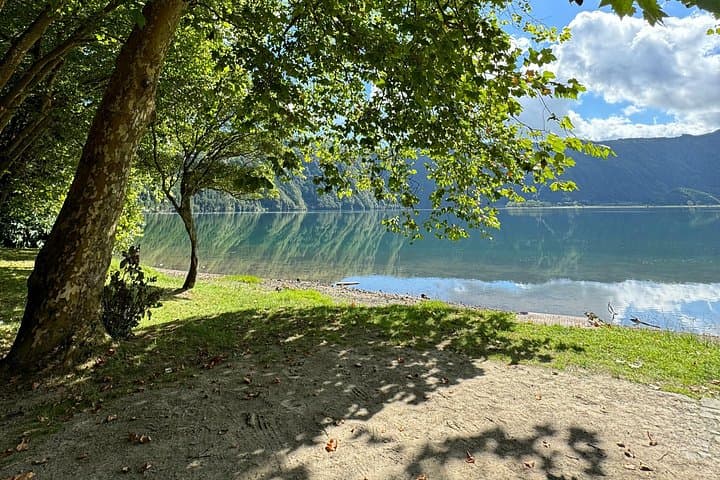
What the day feels like
You arrive at the Miradouro do Rei before the buses spill in—early light pools in the hollow of the crater, and the twin lakes below glimmer like two mismatched eyes: one blue, one green. The rim exhales—a cool Atlantic wind that smells faintly of sea salt and wet volcanic rock. From this vantage the caldera reads like a map of time: concentric ridges scored by lava and erosion, terraced pasture, a scattering of white-walled houses clinging to the lake shore. The driver shuts the van door and for a moment the only sound is the water, daring you to cross the divide and move closer.
Sete Cidades is a place that invites simple verbs—look, walk, paddle. It is not an alpine summit to be conquered or a wilderness where you must navigate for days; it is a volcanic amphitheater scaled to a morning or a long afternoon, and it rewards curiosity with views, geology, and a gentle, particular kind of wild. The crater—one of São Miguel’s most photographed landmarks—was born of fire: explosive eruptions and the slow collapse of land formed the caldera whose rain-filled hollows became Lagoa Azul and Lagoa Verde. Locals lean into the legend—two star-crossed lovers whose tears made the lakes—and the story fits because the place asks you to feel something plain and true.
Geology here reads like a live textbook. The rim you walk is basalt, cooling in sheets and columns; centuries of tephra and ash have been reworked into lush pasture. The soils are fertile, which is why farmsteads and pasturelands sit where lava once ruled. From viewpoints like Miradouro do Rei and Vista do Cerrado das Freiras you can see the rim’s radial faults and the terraces that shepherd centuries of sheep and pastoral life. The Azores’ position on the triple junction of tectonic plates gives the archipelago a restless energy: hot springs burble in Furnas, fumaroles steam inland, and the sea around São Miguel hides cliffs and coves shaped by the same processes that carved Sete Cidades.
Culture here is small-scale and attentive. The village of Sete Cidades—no more than a couple of streets—has a handful of cafés where fishermen and farmers meet for strong coffee. On a private tour, your guide will likely point out local agriculture (pineapple greenhouses are a curious micro-economy across São Miguel), and you’ll sample regional hospitality in a lunch that leans on Atlantic fish, root vegetables, and Azorean cheeses.
Practically: this tour blends driving viewpoints with short hikes and a water activity—snorkeling in nearby clear waters—over roughly 3.5 hours. Expect short rim walks (1–4 km total depending on stops) with modest elevation changes—roughly 100–300 meters on the steeper lookouts. Trails are a mix of paved viewpoints, dirt tracks, and lakeside paths that can be muddy after rain. The snorkeling portion happens on a sheltered coast rather than inside the crater; water is cool and often clear, so basic swim competence and a sense of comfort in the ocean are needed. The pace is accommodating, making this an excellent choice for travelers who want phenomenal scenery without a grueling mountaineer’s itinerary.
Timing matters. Morning light slants into the crater and gives the lakes their most photogenic contrast; late afternoon can be quieter, warmer, and gentler on lenses. If you want to avoid crowds, request an early pickup from Ponta Delgada. Weather in the Azores changes fast—sun can flip to mist in an hour—so layers are your best ally. Your guide will handle permits and parking; the route is popular but manageable with a private tour, which also means you can customize stops or opt for longer shoreline time.
Safety and logistics are straightforward. Footwear with traction is recommended—crater trails are uneven and can be slick. For snorkeling bring a wetsuit or rent one through the operator; Atlantic temperatures average around 18–22°C in summer. Bring reef-safe sunscreen, a quick-dry towel, and a small dry bag for valuables during water time. Respect private land—many viewpoints border working farms—and take only photographs, leaving the pastures and shoreline intact.
Why book this trip? Sete Cidades is a compact, emotionally resonant example of what makes the Azores special: dramatic volcanic topography, accessible outdoor experiences, and local culture that feels human-scaled rather than packaged. The combination of crater viewpoints, a lakeside walk, and a coastal snorkel gives you three very different Azorean moods in one outing—mountainous calm, mirror-surface quiet, and the immediate sensory shock of the Atlantic.
For photographers, hikers, families, and couples, the trip lands in a sweet spot: not too difficult, richly rewarding, and easily tailored by a private guide. And when the guide pours a simple lunch—fresh grilled fish, garden vegetables, a glass of local vinho verde or banana-shaped pineapples from greenhouse grower—you’ll understand the appeal of São Miguel as a place where volcano and sea conspire to make straightforward things feel extraordinary.
If you go, arrive curious and leave with a small notebook of impressions: the exact color of the blue lake as the sun breaks the rim, the taste of salt and smoke on a grilled fish, the way the wind fingers the reeds at the water’s edge. Sete Cidades is not a place you conquer; it is a place you let move you, in small, steady ways. And those small changes can be the truest souvenirs.
Trail wisdom
Small choices, better day.
Go early for light and crowds
Sunrise and early morning offer the best light on the twin lakes and fewer tour buses at key viewpoints.
Layer for Atlantic changeability
Temps can swing quickly on the crater rim—windproof shell plus midlayer keeps you comfortable between viewpoints.
Bring reef-safe sunscreen
Protect skin and local marine life during the snorkeling portion—choose a reef-safe, biodegradable formula.
Wear grippy shoes
Trails and lakeside paths can be muddy and uneven; trail runners or light hiking boots are best.
Local knowledge
Read the place, not just the route.
Watch for native species including Common tern and other seabirds, Azorean chaffinch.
Keep an eye out for wildlife during the transition between areas and habitats. Respect distance guidelines.
The Azores are part of a protected network and the islands are a UNESCO Biosphere Reserve—stay on marked paths and avoid disturbing pastureland and shoreline habitats.
Follow the guide's instructions on size limits, ethical handling, and leave-no-trace practices.
Miradouro do Escalvado—less visited lookout with a sweeping crater sweep. Lakeside path near the village of Sete Cidades for quiet birdwatching
Locally recommended viewpoints and quiet spots known best to local operators.
Sete Cidades sits in the caldera of a Pleistocene volcanic complex; local legend of two lovers—one with green eyes, one blue—explains the twin lakes’ colors in folklore.
Maritime roots and regional tradition shape the waterways and working coasts.
Seasonal guide
Four versions of the same landscape.
Spring
Best forWildflowers · Mild hiking · Fewer crowds
ChallengesIntermittent rain · Cooler water temps for snorkeling
Spring brings blooming pasture and softer light—great for walks and photography, but pack a rain layer and expect cooler ocean temperatures.
Summer
Best forClear skies · Warmest water for snorkeling · Longer daylight
ChallengesPeak crowds · Higher prices
Summer is ideal for snorkeling and sunny crater views; book early and aim for morning slots to beat the crowds.
Fall
Best forCrisp light · Fewer visitors · Comfortable hiking temps
ChallengesUnpredictable showers · Shorter days
Autumn offers crisp air and dramatic skies—excellent for landscape shots—but be ready for sudden showers.
Winter
Best forStorm-watching · Empty trails · Low-season pricing
ChallengesRough seas for snorkeling · Cool, wet conditions
Winter is the quietest season with moody weather; skip snorkeling when seas are rough and prioritize viewpoints.
Operator details
What the booking data adds.
Included
- ✓Private transportation
- ✓Pick-up and drop off at your accommodation
- ✓All Fees and Taxes
- ✓Air-conditioned vehicle
- ✓Premium Comfortable Transportation
- ✓Guide Certified by the Government of the Azores
Good to know
- ✓Infants and small children can ride in a pram or stroller
- ✓Service animals allowed
- ✓Public transportation options are available nearby
- ✓Specialized infant seats are available
- ✓Suitable for all physical fitness levels
- ✓Vehicle is sanitized before and after each excursion
- ✓USB charge
Pack with intention
What to bring.
Good to know
Common questions.
The full experience runs about 3.5 hours; expect roughly 60–90 minutes visiting crater viewpoints and lakeside paths, plus time for a coastal snorkeling stop and lunch.
Plan the edges
The details that make the day easier.
The Azores were designated a UNESCO Biosphere Reserve in 2009—protecting unique volcanic landscapes, endemic species, and traditional farming practices across the islands.
After the outing, head to Ponta Delgada’s Mercado da Graça for fresh fish and cheeses, sample local limpets (lapas) grilled with garlic, and look for small cafés pouring strong Azorean coffee—a simple meal and a pint at a harbour-side spot ties the geological spectacle back to island life.
- trailhead
- Ponta Delgada (PDL)
- Miradouro do Rei. Driving distance from Ponta Delgada
- ~25–35 minutes (25 km). Cell service: good in Ponta Delgada, intermittent on crater rim. Permits: none for tourists but respect private farmland and designated viewpoints.
This area is ecologically sensitive—stay on marked paths, avoid disturbing shoreline vegetation, use reef-safe sunscreen, and pack out all trash to protect native habitats.
Explore by topic
Follow the threads.
Keep exploring
Make the story part of the trip.
In four hours you can move from shaded canyon ferns to wind-scoured coastal ridgelines, guided by someone who knows where the light—and the hidden views—live. This private half-day hike on the Monterey Peninsula or Big Sur is compact, curated, and perfect for travelers who want depth without a multiday commitment.
 Related story
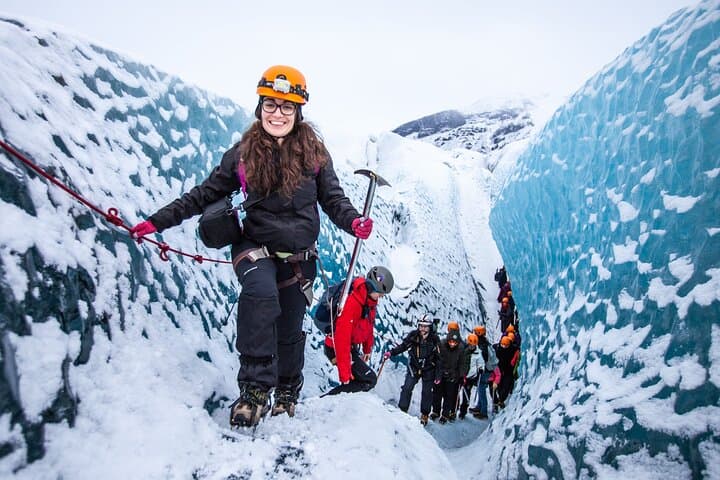
Beneath a sky of shifting light, Skaftafell’s ice reads like a map of time. This three-hour guided glacier hike mixes technical instruction with geology and culture: compact, safe, and unforgettable.
 Related story
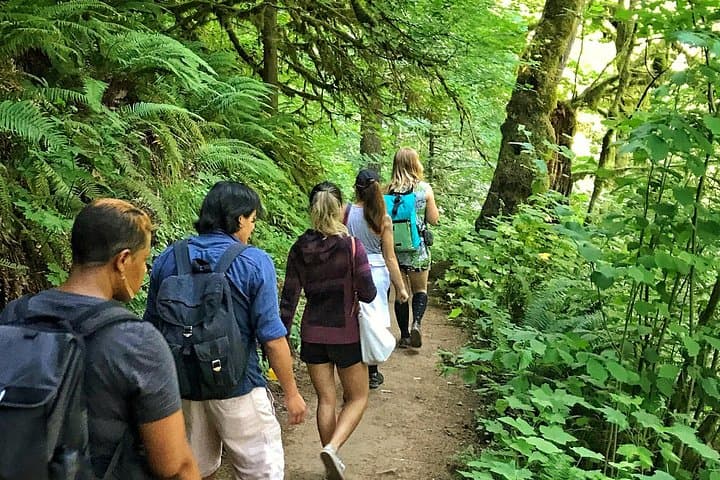
Lose the city for a few hours without leaving it: this 5-mile, 900-foot-gain Forest Park loop threads old-growth pockets, city viewpoints, and cultural landmarks for a compact taste of Portland’s wild side. Expect moss, roots, and stories.