
What the day feels like
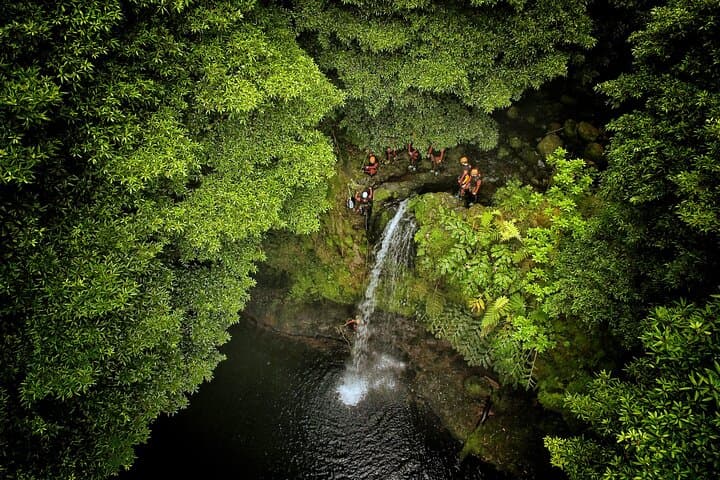
You don your wetsuit at the trailhead while the island smells of damp laurel and sea salt. A local guide checks your harness, clicks a carabiner into place, and points to the channel where Ribeira da Salga slips between basalt walls. The stream chuckles and coaxes; it moves not in a hurry but with intent, sliding over rock shelves and gathering strength. For the next five hours you’ll trade the flat certainty of a road for a vertical choreography of leaps, slides, and controlled descents—an intimate way to read São Miguel’s volcanic language.
Canyoning here is less about conquering nature than listening to it. Ribeira da Salga is a narrow, green-hooded corridor where water has been carving basalt for millennia. The route on offer is guided, rated accessible to adventurous beginners while still offering tension and payoff for experienced canyoners. Between the warm, Atlantic air and the cool river’s pull, the experience feels like a signature Azorean handshake: rugged, unpretentious, surprisingly gentle in its welcome.
The geology is obvious underfoot. São Miguel is a young volcanic island, a chain of calderas and lava flows that resolutely refuses to lie flat. Basalt columns, worn smooth by centuries of water, frame each plunge pool. The island’s volcanic past is also the reason Ribeira da Salga exists—the river follows weaknesses in the bedrock left from earlier eruptions and collapses. Botanically, you’ll notice laurel and ferns in profusion; these humid microclimates feed rare mosses and orchids and give the canyon its soft, green edges.
There’s a human history braided through these valleys too. The Azores were settled in the 15th century by Portuguese navigators, and rural communities historically relied on these streams for irrigation, mills, and, later, for small-scale hydro and freshwater resources. Today, canyoning is part-adventure-tourism, part-environmental education: local guides double as stewards, translating geological processes and conservation concerns into language that’s immediate and useful.
Why travel here? Because Ribeira da Salga offers a compact, high-value outdoor immersion. You get rainforest-thin canyons, waterfall descents, and a consistent dose of ocean-facing island atmosphere without the long approaches common in continental canyoning. It’s an ideal single-day commitment from Ponta Delgada and can be done in almost any weather—rain only sharpens the river’s character. For families and mixed-ability groups, the guided format makes the risk-managing choices for you, while still allowing you to push personal limits—one controlled rappel at a time.
Practical note: this is a five-hour experience (about 300 minutes), typically priced from approximately USD 161.86, and it comes with instant confirmation—so it’s a good fit for the flexible traveler building a last-minute island itinerary. Guides provide core technical kit (helmets, harnesses, ropes, and often wetsuits); still, your comfort and safety improve with proper footwear and layering. Expect a mix of walking, short scrambles, jumps into pools, and several rappels; while you won’t need specialty climbing credentials, a basic comfort with heights and a willingness to follow technical instruction is essential.
How to prepare: hydrate well the day before, eat a sustaining breakfast, and choose shoes with aggressive grip that can get wet. Bring a small dry bag for a phone or camera; many guides will carry group rescue gear and first aid. Time your visit for morning light if you want the canyon to feel cinematic—sun elevates the greens, while an overcast sky makes the basalt colors richer and contrasts crisper.
Beyond the canyon itself, allow time to experience the island’s food and community rhythm. After a wet morning in Ribeira da Salga, a bowl of cozido das Furnas or a local fish stew in Ponta Delgada feels earned; finish with an Azorean queijo (cheese) and a craft beer or cappuccino. Guides often have recommendations for a local farm shop or viewpoint, and the conversation at the van ride back—about birds, tides, or the day’s most elegant jump—often feels like an essential part of the trip.
If you go: respect the canyon. Avoid leaving gear behind, listen to your guide’s safety brief, and be mindful of slippery surfaces. These streams support delicate mosses and microhabitats—small choices in the canyon have outsized effects. With the right preparation, Ribeira da Salga is an accessible pocket of island wilderness that rewards curiosity, steadies breath, and leaves you with a concrete sense of how water shapes land (and how land, in turn, shapes experience).
Who should book it? Active travelers who want a full-day, hands-on adventure with manageable logistics; families with older children who are comfortable in water and heights; seasoned outdoorspeople looking for playful terrain rather than raw technical challenge. The guides do the heavy rigging and risk assessment—your part is to arrive curious, focused, and ready to be pulled along by a river that knows where it’s going.
Final practical beat: this is a five-hour guided canyoning loop on São Miguel—brief enough to fit into a multi-day Azores itinerary, long enough to feel like a small pilgrimage. You’ll come away with a few bruises of confidence, a camera memory card full of waterfalls, and a better understanding of why this island tends to rearrange priorities: nature first, the rest later.
Trail wisdom
Small choices, better day.
Footwear Matters
Wear closed-toe shoes with aggressive wet traction—Keens or approach shoes; flip-flops and running sneakers won’t cut it on slippery basalt.
Hydrate and Fuel
Bring a high-energy snack and hydrate before the trip; cold water and exertion sap energy fast in canyon environments.
Listen to Your Guide
Follow rigging and jump instructions precisely; guides set safe lines and will show you the easiest options for each move.
Protect Electronics
Leave non-waterproof electronics behind or use a watertight case—phones can be damaged in jumps and splashes.
Local knowledge
Read the place, not just the route.
Watch for native species including Common tern and other coastal seabirds, Atlantic marine life visible from overlooks such as dolphins off the coast.
Keep an eye out for wildlife during the transition between areas and habitats. Respect distance guidelines.
Canyoning operators in the Azores often follow strict group-size and route-use practices to limit erosion and disturbance, and visitors are encouraged to pack out all waste and respect riparian vegetation.
Follow the guide's instructions on size limits, ethical handling, and leave-no-trace practices.
Miradouro da Ponta do Sossego — a nearby cliff viewpoint with Atlantic panoramas. A small roadside dairy stand outside Ponta Delgada selling Azorean cheeses and jams
Locally recommended viewpoints and quiet spots known best to local operators.
São Miguel’s stream networks were shaped by volcanism and later harnessed by early settlers for mills and agriculture; local place names reflect this agrarian past.
Maritime roots and regional tradition shape the waterways and working coasts.
Seasonal guide
Four versions of the same landscape.
Spring
Best forWater volume and dramatic flows · Wildflowers and greener canyon walls
ChallengesCooler water temperatures · Unpredictable spring showers
Spring brings fuller rivers and a lush canyon palate; water will be cool and guides may recommend thicker wetsuits.
Summer
Best forWarmer air temps · Stable weather and clearer skies
ChallengesHigher visitor demand · Brighter sun and UV exposure between canyon walls
Summer is the most comfortable season for wetsuit-free moments and clearer approach roads, but book early—slots sell out.
Fall
Best forCrisp air and fewer tourists · Rich autumnal hues in the plant life
ChallengesVariable river conditions after storms · Shorter daylight hours
Fall balances warmth and solitude; expect occasional surges after rain and bring a warm layer for post-canyon chill.
Winter
Best forMoody, dramatic scenery · Higher water flows for more intense runs
ChallengesColder temperatures and rougher seas affecting approach · Some operators limit trips in heavy storms
Winter delivers powerful river character and fewer crowds but requires robust wetsuits and flexible scheduling around storm systems.
Operator details
What the booking data adds.
Included
- ✓Acreddited guides;
- ✓Pick-up and Drop-off – if respective option is chosen and available;
- ✓Picnic Lunch;
- ✓Free photos / videos from the activity;
- ✓Insurances;
- ✓All Canyoning equipment (fully equipped harness, wetsuits, socks, helmet and boots);
Good to know
- ✓Public transportation options are available nearby
- ✓Not recommended for travelers with spinal injuries
- ✓Not recommended for pregnant travelers
- ✓Not recommended for travelers with poor cardiovascular health
- ✓Travelers should have at least a moderate level of physical fitness
- ✓Children must be accompanied by an adult.
- ✓Remember to wear swimwear and comfortable clothes and shoes.
- ✓Bring your individual beach towel, water bottle, hair elastic (if applicable), and sunscreen.
- ✓Shoe size* (*please inform woman or man and US, UK or E.U size)- kindly indicate it under :"Special Requirements" on the checkout page
Pack with intention
What to bring.
Good to know
Common questions.
No formal experience is required; guides teach rappelling and safety techniques on-site and tailor routes to group ability.
Plan the edges
The details that make the day easier.
São Miguel is the largest island in the Azores and was formed by volcanic activity over the last few million years, creating the basalt canyons you’ll canyon today.
After the canyon, head back to Ponta Delgada for fresh grilled limpets or a fish stew and a locally produced beer—town taverns and seaside cafés offer a welcoming end to an active day.
- Closest airport
- João Paulo II Airport (Ponta Delgada, PDL)
- Driving from Ponta Delgada
- ~30–60 minutes depending on site
- Cell service
- intermittent in valleys; expect limited signal inside the canyon
- Permits
- none typically required for guided tours, but book with licensed operators.
Operators emphasize Leave No Trace: stick to established access routes, avoid disturbing vegetation, and pack out any trash—local guides often contribute to trail maintenance and habitat monitoring.
Explore by topic
Follow the threads.
Keep exploring
Make the story part of the trip.
Set out from Bass Harbor for a private, customizable day on Blue Hill Bay — lighthouses, puffins, seals, and the chance to feel Acadia from the water. Small groups, local captains, unforgettable views.
In four hours you can move from shaded canyon ferns to wind-scoured coastal ridgelines, guided by someone who knows where the light—and the hidden views—live. This private half-day hike on the Monterey Peninsula or Big Sur is compact, curated, and perfect for travelers who want depth without a multiday commitment.
 Related story
Beneath a sky of shifting light, Skaftafell’s ice reads like a map of time. This three-hour guided glacier hike mixes technical instruction with geology and culture: compact, safe, and unforgettable.