
What the day feels like
The bus lets you out at a narrow pullout where the Atlantic unclenches itself into a raw, glinting horizon. Salt tang rides the air and a stone wall, slick with moss, hums under your hand. You can feel the island’s bones here—the same volcanic spine that shaped São Miguel has been weathered into terraces, cliffs, and sudden plunges of water. On a guided day tour to Nordeste’s waterfalls and viewpoints the landscape is at once patient and insistent: the cliffs dare you to look over, the streams urge you down to their pools, and the trails, sometimes only ribbon-thin, ask for steady boots and an open head.
This is not a march up a single summit. It’s a day of short hikes, lookout stops, and intimate encounters with basalt ravines and forested pockets where the Azores’ trademark hydrangeas press close to stone steps. Expect a program of viewpoints (miradouros), villages with tile-front houses, and a handful of falls that are loud enough to steal the conversation. The guided format—four to eight hours on the road including easy walks—means you move deliberately, harvesting scenes rather than racing through them.
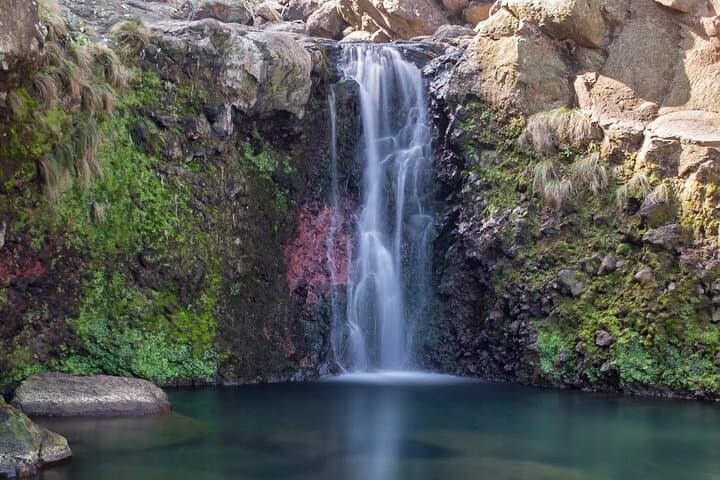
The geology here is simple and dramatic: São Miguel is an island born of fire. The Nordeste sector sits on the island’s eastern rim, a line of ridges and ancient craters that drop steeply to the Atlantic. Rain is frequent; streams cut deep canyons in black volcanic rock and over millennia have created the waterfalls you’ll visit. To stand beside one is to feel geological time in miniature—water carving, moss colonizing, cliffs shrugging off rockfall.
History and culture thread through these views too. Nordeste’s small parishes were shaped by an economy of cattle, dairy and fishing; terraces were hand-cut into the slopes and stone walls built to hold soil and livelihood. You’ll pass chapels and small squares where locals still gather—places where tilework whispers of Portuguese craft and where coastal winds bring stories of boats and storms. The tour’s lunch usually centers on island ingredients—fresh fish when available, local cheeses, and the ubiquitous bolo lêvedo or fresh bread—simple food that tastes close to where it came from.
Why book a guided day instead of driving yourself? For one, the guide knows the litany of viewpoints and the conditions that change by the hour—fog can lift in minutes or descend just as fast. They’ll point out geological features, local flora such as endemic azorean heather and tree ferns, and give cultural context at each stop. For photographers and storytellers, that local knowledge multiplies good shots into great ones.
Practical specifics: this is an all-day experience—roughly 8 hours total with multiple short walks, totaling about 5–8 km of walking and cumulative elevation change around 250–350 m. Terrain varies: paved village roads, gravel tracks, and damp forest paths with basalt steps. Footing can be slippery after rain. The dress code is practical: layers, waterproof shell, and grippy hiking shoes. The tour is family-friendly for reasonably fit travelers and is an excellent introduction to island hiking without committing to long alpine efforts.
Timing matters. Morning brings clearer air at many eastern viewpoints, but late afternoon can give warmer light on cliffs and waterfalls. Summer (June–September) has the most stable weather; spring shows the island in riotous green and fall can be quieter but wetter. Regardless of season, a compact rain jacket and quick-drying base layers earn their keep.
Beyond logistics, the experience offers small rewards: a viewpoint where ocean and hedgerow meet like two different maps; a hidden cataract fed by an underground spring; the hush of a forest slope where only small birds and the thrum of water interrupt your pace. For anyone who values both comfort and discovery, this guided loop—introduction to Nordeste’s natural architecture—feels like stepping into the island’s private room.
If you want to deepen the day, consider pairing the trip with a stop at a local tea plantation or a late afternoon walk on a coastal trail. And if you’ll be photographing, bring a small tripod and a circular polarizer: the polarizer drops glare on wet rocks and deepens the greens of moss and fern. For bookings and full itinerary details, see the local guided option here: <a href="https://app.advcollective.com/local-experts/northeast-sao-miguel-waterfalls-viewpoints-guided-day-tour">Northeast São Miguel waterfalls & viewpoints guided day tour</a>—it’s a practical way to leave the navigation to someone who lives where the mist clears fastest.
Bottom line: Nordeste’s waterfalls and viewpoints are about scale and intimacy. The Atlantic is enormous and indifferent; the ravines and falls are small and persistent. Together they make a day that rewards patient watching and light hiking—a slice of São Miguel that feels both wild and domestic, dramatic without being remote.
Trail wisdom
Small choices, better day.
Grip and traction
Wear waterproof hiking shoes with good tread—basalt steps and wet trails can be slippery even on summer afternoons.
Layer for changeable weather
Bring a lightweight waterproof shell and breathable mid-layer; fog and sun can alternate quickly on ridge viewpoints.
Hydration & snacks
Pack 1–1.5 liters of water and compact snacks—stops include lunch but snacks sustain energy during short walks.
Follow your guide
The guide times stops for light and safety—trust local route choices, especially when visibility is reduced.
Local knowledge
Read the place, not just the route.
Watch for native species including Common kestrel, Atlantic canary.
Keep an eye out for wildlife during the transition between areas and habitats. Respect distance guidelines.
The Azores prioritize habitat protection and responsible tourism—stay on marked paths, pack out waste, and avoid disturbing fragile stream banks.
Follow the guide's instructions on size limits, ethical handling, and leave-no-trace practices.
Miradouro da Ponta do Sossego (less crowded early morning). Small inland ravines with fern-lined pools—ask your guide for access
Locally recommended viewpoints and quiet spots known best to local operators.
Nordeste’s parishes evolved around subsistence farming and fishing; stone walls and terraces visible on the drives are remnants of that rural past.
Maritime roots and regional tradition shape the waterways and working coasts.
Seasonal guide
Four versions of the same landscape.
Spring
Best forWildflowers & hydrangeas · Cooler hiking weather
ChallengesUnpredictable showers · Muddy trails
Spring makes Nordeste lush and colorful; expect rain showers and soft ground—good layers and waterproof footwear make this a fine time to visit.
Summer
Best forStable weather · Longer daylight · Clear ocean views
ChallengesHigher visitor numbers · Afternoon haze some days
Summer offers the most reliable conditions for viewpoints and waterfall walks; mornings often give the clearest coastal vistas.
Fall
Best forQuieter trails · Rich, late-season light
ChallengesIncreased rain events · Cooler temperatures
Autumn brings softer light and fewer crowds, but be ready for wet spells and slick rocks on trails.
Winter
Best forStorm-watching from safe lookouts · Dramatic skies
ChallengesFrequent rain and wind · Some routes may be closed
Winter is moodier and wetter—great for dramatic photos but less reliable for extensive walking; follow guide advice on accessible stops.
Operator details
What the booking data adds.
Included
- ✓Private transportation
- ✓Bottled water
- ✓Lunch
- ✓Drop - Off
- ✓Pick-up
- ✓Guide
Not included
- —Pick-up at the Airport
Good to know
- ✓Infants and small children can ride in a pram or stroller
- ✓Suitable for all physical fitness levels
Pack with intention
What to bring.
Good to know
Common questions.
This guided tour runs about 8 hours and includes multiple short walks, viewpoint stops, and a lunch break.
Plan the edges
The details that make the day easier.
São Miguel is the largest island in the Azores and was formed entirely by volcanic activity; Nordeste sits on the island’s eastern volcanic ridgeline with many volcanic-formed cliffs and ravines.
After the tour, head into Nordeste village to sample local cheeses, fresh seafood, and bolo lêvedo at a neighborhood café; seek out a small tasca for an informal meal and chance to chat with locals.
- trailhead
- Ponta Delgada (Aeroporto João Paulo II)
- drive to Nordeste ~50–60 minutes; Driving distance from nearest town
- ~45–60 km from Ponta Delgada; Cell service: Generally available in towns and viewpoints but spotty in ravines; Permits: None required for day tours.
Nordeste’s freshwater streams and coastal habitats are sensitive—stay on marked trails, pack out trash, and avoid disturbing vegetation or shoreline wildlife.
Explore by topic
Follow the threads.
Keep exploring
Make the story part of the trip.
Set out from Bass Harbor for a private, customizable day on Blue Hill Bay — lighthouses, puffins, seals, and the chance to feel Acadia from the water. Small groups, local captains, unforgettable views.
In four hours you can move from shaded canyon ferns to wind-scoured coastal ridgelines, guided by someone who knows where the light—and the hidden views—live. This private half-day hike on the Monterey Peninsula or Big Sur is compact, curated, and perfect for travelers who want depth without a multiday commitment.
 Related story
Beneath a sky of shifting light, Skaftafell’s ice reads like a map of time. This three-hour guided glacier hike mixes technical instruction with geology and culture: compact, safe, and unforgettable.