
What the day feels like
The morning starts like an invitation: a low fog clinging to basalt cliffs, gulls arguing over breakfast, and the harbor at Ponta Delgada yawning open to the Atlantic. You stand on the marina—coffee still warm in your hands—while a small knot of local vigias scan the sea from a cliffside lookout. Their trade, passed down through generations, is a practiced choreography of binoculars and shouted coordinates. When they spot a blow, the word moves with the patience and speed of the ocean itself, and the boats slip away like answers to a summons.
On a Picos de Aventura whale-watching tour, that ritual is the prelude to a very particular kind of theater: not the dark, distant silhouettes of commercial tourism, but close, considered encounters curated by marine biologists and guided by island-born lookout teams. That human expertise is the difference between a pleasant boat ride and an encounter that feels like the sea itself choosing to show you a secret. On good days, a blow cracks the surface a few hundred meters off the bow and a whale rises and exhales—a brief, foggy punctuation that draws a hush. Dolphins, quicker and more insistent, will race the bow wave, often coming close enough to inspect the hull as if checking your credentials.
This stretch of the North Atlantic is no accident of geography. São Miguel—largest of the Azores—is a knot of volcanic islands strung along the Mid-Atlantic Ridge, where tectonic plates pull apart and deep ocean trenches funnel nutrients upward. Those currents make the Azores a magnet for marine life: sperm whales, common dolphins, Risso’s dolphins, pilot whales, and a dozen other cetaceans visit these waters seasonally or year-round. The archipelago’s seas are both highway and pantry; animals follow migrations and feast on squid and baitfish concentrated by underwater cliffs and seamounts.
The local methods are as interesting as the wildlife. Before any boat slips its lines, lookouts—vigias—scan from headlands, using visual cues and local knowledge of currents to direct captains to likely spots. This old-school strategy raises sighting odds dramatically and keeps boat traffic focused where marine mammals are already present—a gentler approach than casting a wide net of fast boats across the open water.
The guiding biologists add another layer. Their live commentary on species, behavior, and conservation turns every sighting into a lesson in context: why a sperm whale’s slow, deep dives matter, how dolphins use the bow wave like a playground, and what the presence of calves says about nearby feeding grounds. Ethical observation is the rule here—boats keep respectful distance, approaches are controlled, and the goal is always to watch without altering behavior.
There’s also a choice in how you take that ride. For adrenaline, a rigid inflatable speedboat trims across swell with a grin-inducing punch; for ease and steady sightlines, a catamaran offers stability and space to move around with a camera. Both have their pleasures: speedboats make the sea feel immediate, catamarans turn the trip into a relaxed natural-history cruise.
Practicalities are straightforward. Tours run 2–3 hours, a window long enough to reach nearby feeding areas and return with time to spare. The boats launch from Ponta Delgada’s marina, an easy walk from town hotels and restaurants—handy if you plan to pair the morning on the water with an afternoon of exploring Furnas or a coastline drive. Bookings are instant and flexible; many tours include free cancellation, and prices are competitive for the experience.
For first-timers, there are small but important things to know. Seas can be choppy; dress in layers and bring a windproof shell. Motion can affect the young and the very sensitive, so consider where you sit on the boat—midline and lower deck minimize sway. Sunscreen matters: wind and water reflect UV more than you expect. And bring binoculars and a good telephoto lens if you want frames beyond the iPhone’s default reach.
Beyond the sightings, the trip connects to island life. The Azores are a place where community, geology, and ocean converge; the islands’ economy has always paired land-based farming—unique microclimates produce the archipelago’s famed pineapples—with seafaring knowledge. Expect your guides to drop cultural notes as naturally as they point out a dorsal fin: how vigias evolved to increase sighting success, or how local fishermen respect seasonal closures to protect spawning grounds.
Why go? Because this tour is both efficient and humane: it gives you a real chance to see large cetaceans in near-natural conditions while providing interpretation that deepens the encounter. It’s for travelers who want more than a postcard photo—those who want to understand the where and why of what they’re seeing, and to know that their presence on the water didn’t disrupt it.
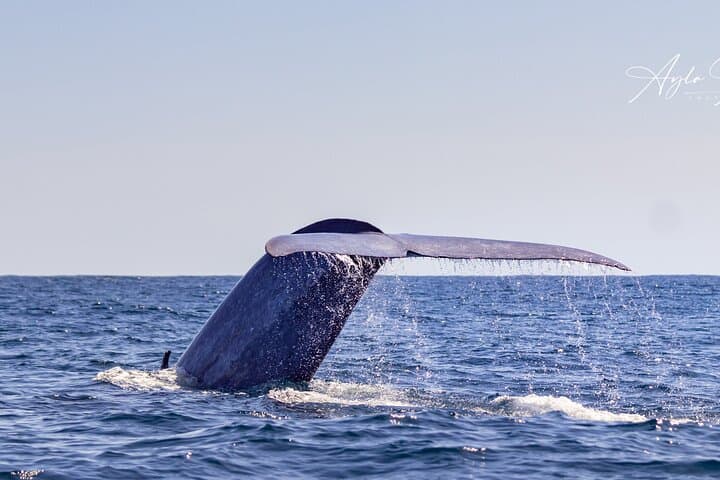
If you time it right—arrive with patience, choose the vessel that matches your comfort, and listen to the people who live with these seas—you’ll come away with an image that stays: a whale punching a silver cylinder of breath into morning light, a dolphin sketching a grin beside the hull, and the quiet assurance that, for a few hours, you were let into the Atlantic’s longer story.
Practical snapshot: Tours last about 2–3 hours, depart from the Ponta Delgada marina, and are guided by on-board biologists with land-based vigia support. Expect 77.97 USD and instant confirmation—book online for the best windows and remember that the sea decides the schedule.
Trail wisdom
Small choices, better day.
Sit mid-boat for comfort
Choose a seat near the centerline on a lower deck to reduce the feeling of motion on choppy days.
Bring binoculars
A compact pair will extend your viewing and help you spot blows and behaviors before they come close.
Respect the guides' instructions
Captains and biologists manage boat distance and approach—follow their directions to keep encounters ethical and safe.
Dress in layers and waterproofs
Wind off the Atlantic chills quickly; a windproof shell and an insulating layer make the trip more enjoyable.
Local knowledge
Read the place, not just the route.
Watch for native species including Sperm Whale, Common Dolphin.
Keep an eye out for wildlife during the transition between areas and habitats. Respect distance guidelines.
Operators prioritize non-invasive approaches—boats maintain distance and biologists interpret behavior to avoid disturbance; support companies that follow these guidelines.
Follow the guide's instructions on size limits, ethical handling, and leave-no-trace practices.
Vigia lookout points along São Miguel’s west coast—watching from land before you board can add local context. Drive the coastal roads toward Ferraria for quick thermal seawater pools after your trip
Locally recommended viewpoints and quiet spots known best to local operators.
The Azores’ vigia system evolved as a local, low-tech whale-spotting method that predates modern flotillas and increases sustainable sighting success.
Maritime roots and regional tradition shape the waterways and working coasts.
Seasonal guide
Four versions of the same landscape.
Spring
Best forMigratory species · Fewer crowds
ChallengesChangeable weather · Cooler sea temperatures
Spring offers increasing daylight and seasonal migrations; expect variable weather and bring warm layers.
Summer
Best forCalmer seas · Higher sighting odds · Family-friendly trips
ChallengesBusiest season · Hotter days in town
Summer is the easiest time for smooth seas and frequent sightings—book early for popular time slots.
Fall
Best forActive feeding nearshore · Good light for photography
ChallengesOccasional storms · Shortening days
Autumn can concentrate feeding animals near nutrient upwellings; expect dynamic weather windows.
Winter
Best forSperm whale opportunities · Compact tour schedules
ChallengesRougher seas · Short daylight hours
Winter brings rougher seas but solid chances to see resident species like sperm whales; choose comfortable seating.
Operator details
What the booking data adds.
Included
- ✓Two boat types available: Catamaran or Rigid Inflatable Speedboat.
- ✓Cetacean sightings guaranteed! Full-refund if we don't spot any whales OR dolphins.
- ✓Rain Coat and Life Vest (mandatory on the small boats)
- ✓Professional Marine Life Experts on board!
Not included
- —Food and drinks
- —Hotel drop-off
- —Hotel Pick-up
Good to know
- ✓Infants and small children can ride in a pram or stroller
- ✓Public transportation options are available nearby
- ✓Not recommended for pregnant travelers
- ✓Not recommended for travelers with poor cardiovascular health
- ✓Suitable for all physical fitness levels
- ✓We offer tours on 2 different types of boats: A zodiac-style rigid inflatable speedboat (minimum age: 6), designed for speed, safety, and a thrilling close-to-the-water experience OR or a modern Catamaran with plenty of space to move around where you can relax inside the covered cabin or soak up the views from the open-air upper deck. This larger boat offers a more comfortable experience and amenities like toilets for your convenience. Perfect for families with small children.
- ✓Children must be accompanied by an adult
- ✓May be operated by a multi-lingual guide
- ✓Weather conditions may limit the participation of children due to safety concerns.
Pack with intention
What to bring.
Good to know
Common questions.
Tours run approximately 2–3 hours, giving enough time to reach common feeding areas and return comfortably to the marina.
Plan the edges
The details that make the day easier.
The Azores are one of the best places in Europe to see sperm whales year-round—these islands sit over deep waters and seamounts that attract squid, the whales’ primary prey.
After the water, head into Ponta Delgada for seafood and local pineapple desserts—look for small tavernas serving lapas (grilled limpets) or a glass of locally produced beer. If you have time, try a thermal meal in Furnas or stop at a harbor-side café near the marina.
- Closest airport
- João Paulo II Airport (PDL); Departure point: Ponta Delgada marina (walkable from most city hotels); Driving distance from town center: <10 minutes or walkable; Cell service: Good near coast, patchy offshore; Permits: None required for tourists; Bookings: Instant confirmation with free cancellation
This tour emphasizes ethical observation—boats use regulated approaches, biologists monitor behavior, and land-based vigias reduce unnecessary motoring. Pack out all trash and avoid single-use plastics.
Explore by topic
Follow the threads.
Keep exploring
Make the story part of the trip.
Set out from Bass Harbor for a private, customizable day on Blue Hill Bay — lighthouses, puffins, seals, and the chance to feel Acadia from the water. Small groups, local captains, unforgettable views.
In four hours you can move from shaded canyon ferns to wind-scoured coastal ridgelines, guided by someone who knows where the light—and the hidden views—live. This private half-day hike on the Monterey Peninsula or Big Sur is compact, curated, and perfect for travelers who want depth without a multiday commitment.
 Related story
Beneath a sky of shifting light, Skaftafell’s ice reads like a map of time. This three-hour guided glacier hike mixes technical instruction with geology and culture: compact, safe, and unforgettable.