
What the day feels like
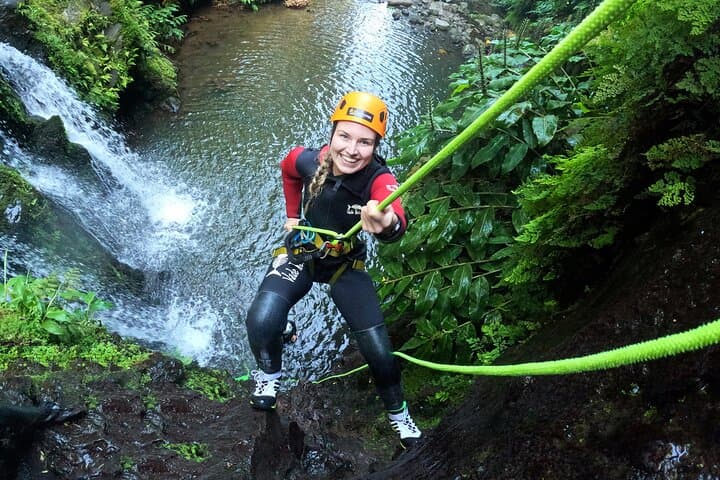
You push through a thicket of ferns and the forest opens like a curtain. Sunlight strips through basalt leaves and the river—glassy, patient—darts ahead, daring you. The sound builds: a layered roar of water taking the easy line down a long stair of rock. You strap on a harness, feel the guide’s confident nod, and the world narrows to the next ledge, the next jump, the cool bite of spray on your face. This is canyoning at Ribeira dos Caldeirões, on São Miguel island in the Azores—part hike, part ropes work, part playground for anyone who wants to meet the Atlantic with arms wide open.
The park itself wears its history plainly: old watermills peek through moss, channels cut by hands a century ago still divert streams to turn wooden wheels. Geologically the scene is younger—São Miguel is a child of volcanism and the island’s grooves and gullies are a ledger of lava flows, landslides, and centuries of rain. Ribeira dos Caldeirões Park, tucked into the northeastern flank of the island near Nordeste, funnels springwater over basalt ledges that are at once treacherous and inviting. Guides take advantage of natural drops and chutes—some you rappel, some you slide, and a few you step off like a human stone in a clear pool.
Canyon runs here tend to be compact and concentrated: you’ll cover waterfalls, freshwater pools, and short hikes between rigging points in a half day. That makes Ribeira dos Caldeirões perfect for travelers who want adrenalized nature without a full-day commitment. It’s also a cultural snapshot: the mills speak to the islanders’ old relationship with freshwater, and nearby Nordeste remains quieter, where seafood and local cheeses feel like a natural punctuation to a wet morning.
What you won’t find is glorified risk for risk’s sake. Tours are guided, safety-focused, and geared toward people who are comfortable with heights and water rather than seasoned climbers only. Still, this isn’t a stroller-friendly stroll—expect rappels, jumps of varying sizes, and the constant negotiation of wet rock that wants to send your shoe sideways. The guides teach techniques, rig ropes, and choose lines to fit the group. If you’re on the fence about water exposure, there are options: you can opt for smaller jumps and rely on rappels, or pick a more adventurous line if you want corkscrew slides and a splashy finish.
Practicalities matter. The outfitters generally provide neoprene wetsuits, helmets, harnesses, and ropes—so you won’t need to own a rack of climbing gear. But footwear that grips and dries fast, plus layered insulation for the drive back, will make the day dramatically more enjoyable. Timing is a simple lever: late spring through early fall brings more comfortable water and more predictable weather, but the real show is in late spring when flows are higher and the pools are colder and electrifying.
There’s a particular clarity to canyoning in the Azores: the Atlantic hovers like a constant punctuation, humidity and shellfish restaurants a few kilometers away, and plate tectonics written into each outcrop. For photographers, the green-black basalt against bright water makes arresting frames; for birders there are cliffside warblers and the occasional raven watching from above; for anyone who wants to call themselves an adventurer without becoming one permanently, this half-day tour is a manifesto in efficient joy.
If you plan to book, look for operators that emphasize low group sizes and local knowledge. Read reviews and check what’s included—most reputable tours here are all-in: transportation from a central meeting point or negotiated pickup, a wetsuit and helmet, certified guides, and clear emergency plans. For those who want to lengthen the day, combine canyoning with a loop drive on the Nordeste cliffs or a stop at a tea plantation on your way back to Ponta Delgada.
Temper your expectations with preparation. Hydrate before you arrive; the cold hits harder when you’re dehydrated. Wear secure, lace-up shoes that can handle both trail and slippery rock. Don’t be afraid to communicate with your guide—if you’re nervous about a jump, they’ll put you on a different line. And when you do take that plunge, let the water take you. The pools are generous and the guides pick landing zones carefully.
Canyoning at Ribeira dos Caldeirões is a short, sharp conversation between human and landscape: the river asks how bold you’re willing to be, and the island answers back with basalt, spray, and the satisfaction of a clean descent. For travelers to São Miguel looking to feel the island in motion—rather than just see it—this is the most physical, immediate way to understand the Azores’ wild heart. For booking and detailed local logistics, check a trusted local operator here: <a href="https://app.advcollective.com/local-experts/canyoning-in-ribeira-dos-caldeiroes-azores-waterfall-rappels-and-jumps">canyoning in Ribeira dos Caldeirões</a>. They list routes, group sizes, and equipment so you can match the run to your appetite for exposure. Whether you rappel, slide, or jump, the memory is the same: cold Atlantic water on your skin and a basalt stair that carried it here long before any of us arrived.
Trail wisdom
Small choices, better day.
Hydrate Before You Go
Cold water increases perceived exertion—drink water before arrival and bring an electrolyte snack for after the run.
Wear Secure Footwear
Closed, lace-up water shoes or old trail runners with good tread protect your feet on slippery basalt.
Mind the Thermal Shock
If you skip the wetsuit, expect cold shock on first immersion—ease in gradually and communicate with your guide.
Trust Your Guide
Routes are chosen for flow, landing depth, and group ability—follow briefings and ask questions early.
Local knowledge
Read the place, not just the route.
Watch for native species including Common buzzard, Atlantic shellfish and freshwater crabs in pools.
Keep an eye out for wildlife during the transition between areas and habitats. Respect distance guidelines.
Tours operate within protected park boundaries—pack out waste, avoid soap or sunscreen in pools, and follow guide instructions to minimize erosion and vegetation damage.
Follow the guide's instructions on size limits, ethical handling, and leave-no-trace practices.
Old watermills and wooden sluices tucked near the main cascades. A short overlook trail above the canyon with panoramic views of the Nordeste coast
Locally recommended viewpoints and quiet spots known best to local operators.
Ribeira dos Caldeirões features historical watermills that served local communities; water management shaped farming life here for centuries.
Maritime roots and regional tradition shape the waterways and working coasts.
Seasonal guide
Four versions of the same landscape.
Spring
Best forHigher flows · Lush vegetation · Photogenic waterfalls
ChallengesColder water · Variable weather · Stronger currents
Spring brings fuller streams and dramatic falls—excellent for bigger jumps but expect colder water and more variable weather.
Summer
Best forWarmer air · Stable weather · Comfortable water temps
ChallengesMore tourists · Hotter approach hikes
Summer is the most comfortable season for canyoning with warmer air and more predictable conditions—book early for smaller groups.
Fall
Best forFewer crowds · Mild temperatures · Good visibility
ChallengesOccasional rainstorms · Cooling water temps
Fall offers quieter runs and good conditions, but sudden Atlantic storms can affect flows—check forecasts.
Winter
Best forDramatic skies · Off-season solitude
ChallengesCold water and air · Higher flow and slippery conditions
Winter is the most rugged season—only for experienced, well-equipped groups and guided runs with high safety margins.
Operator details
What the booking data adds.
Included
- ✓Pick-up and Drop-off (if respective option is chosen and available).
- ✓Insurances;
- ✓Accredited guides;
- ✓All Canyoning equipment (fully equipped harness, wetsuits, socks, helmet and boots);
- ✓Photos / Videos;
Good to know
- ✓Not recommended for travelers with spinal injuries
- ✓Not recommended for pregnant travelers
- ✓Not recommended for travelers with poor cardiovascular health
- ✓Suitable for all physical fitness levels
- ✓Children must be accompanied by an adult.
- ✓Remember to wear swimwear and comfortable clothes and shoes.
- ✓Bring your personal beach towel, water bottle, hair elastic (if applicable), and sunscreen.
- ✓You don’t need to know how to swim, just be comfortable in the water.
- ✓Height min. 1.20 m (3 ft 11 in)
- ✓Weight min. 20 Kg (44 lb)
- ✓Weight max. 120 Kg (265 lb)
- ✓Maximum waist circumference (harness): 1.40 m (55 in)
Pack with intention
What to bring.
Good to know
Common questions.
No—tours are guided and designed for beginners to experienced participants; guides teach rope techniques and control the safety lines.
Plan the edges
The details that make the day easier.
Ribeira dos Caldeirões is known for its historic watermills (moinhos), some of which date back to the 18th century and are preserved within the park.
After the run, head to a local tasca in Nordeste for fresh grilled fish, locally produced cheeses, and bolo lêvedo bread; pair with a cup of Azorean tea or a craft beer in Ponta Delgada to round out the day.
- Closest airport
- João Paulo II Airport (Ponta Delgada, PDL); Driving distance: ~1–1.5 hours to Ribeira dos Caldeirões; Cell service: intermittent in the canyon; Permits: none, but book a guided tour in advance
The canyon routes run through protected parkland—use established access points, never introduce foreign gear or detergents into pools, and carry out all trash to protect aquatic and riparian habitats.
Explore by topic
Follow the threads.
Keep exploring
Make the story part of the trip.
Set out from Bass Harbor for a private, customizable day on Blue Hill Bay — lighthouses, puffins, seals, and the chance to feel Acadia from the water. Small groups, local captains, unforgettable views.
In four hours you can move from shaded canyon ferns to wind-scoured coastal ridgelines, guided by someone who knows where the light—and the hidden views—live. This private half-day hike on the Monterey Peninsula or Big Sur is compact, curated, and perfect for travelers who want depth without a multiday commitment.
 Related story
Beneath a sky of shifting light, Skaftafell’s ice reads like a map of time. This three-hour guided glacier hike mixes technical instruction with geology and culture: compact, safe, and unforgettable.