
What the day feels like
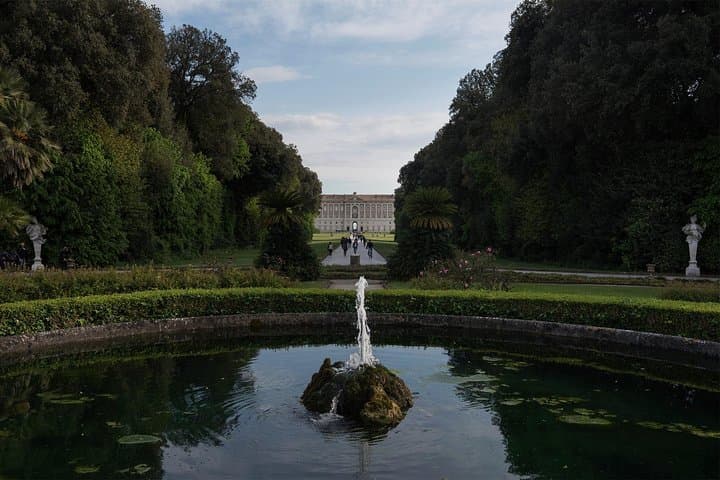
You round a lip of clipped laurel and the world opens into water. Fountains march down an axial avenue like an orchestra—bubbling basins, bronze sculptures, and a waterfall that throws silver into the late-morning light. The sounds of the city fall away; the only insistence is the park itself, a theatrical landscape staged for Bourbon kings and their favored guests. As you walk, the air smells faintly of damp stone and clipped grass. Plane trees hunch over wide promenades, and the path plays with you: a gentle incline, a straightaway of gravel, a puddled terrace reflecting sky.
This is the Park of the Royal Palace of Caserta—landscape as spectacle. A three-hour guided ramble here feels less like a tour and more like eavesdropping on history. You’ll move from the palace forecourt into an English Garden designed to rival Versailles’ Petit Trianon, passing neoclassical temples and secret groves that once hosted salons and, according to local lore, Masonic initiation ceremonies. Queen Maria Carolina of Austria poured private funds into the park, shaping it as a personal refuge—more intimate, in her vision, than even Marie Antoinette’s famed garden.
Geology and design work together here. The palace and park sit on the gentle Campanian plain; the builders manipulated water first and foremost—cascade after cascade channels gravity into ornate procession. The Fountain of Diana and the cascade that terminates the main axis are hydraulic feats: gravity-fed systems that were marvels of 18th-century engineering. Walk the long central axis and you can almost feel the designers’ intent—the park leads the eye to vanishing points, to surprises tucked into the tree line, to framed views of the palace like a stage set.
Culturally, the park is an emblem of Bourbon ambition. The Reggia di Caserta was intended to outshine rival courts; its garden shows the same appetite for grandeur but with a softer mood. The English Garden’s rare trees—collector specimens brought from around the globe—give it a museum-of-plants feel. You’ll spot horticultural oddities if you’re looking: cedars and camphors that feel like travelers themselves, planted by patrons who wanted the exotic in their backyard.
Why take a guided route rather than wandering? A local guide unpacks the layered stories: which fountain was a political statement, where Queen Maria Carolina paced while weighing court intrigues, and which groves were rumored meeting spots for secret societies. For a deeper introduction that ties the park’s history, gardens, and waterfalls together, see this local expert overview: <a href="https://app.advcollective.com/local-experts/exploring-royal-palace-caserta-park-history-gardens-waterfalls">Exploring the Royal Palace of Caserta Park — history, gardens & waterfalls</a>. The same resource makes it easy to book a guided experience and learn specific access details for the day you plan to visit.
Practical particulars: the recommended walking route during a 180-minute tour covers roughly 4–5 kilometers on mixed paved and gravel paths, with minimal elevation gain—this is a park for strolling, not scrambling. Expect firm walkways near the palace and softer, root-strewn tracks in the English Garden. Bring water and sun protection: Italian summers are fierce and some long axes are exposed. Plan for morning or late-afternoon touring to avoid the heat, and leave room to linger at a fountain or bench.
The park is also quietly alive. Birds patrol the treetops; foxes slip the margins at dusk; seasonal blooms change the mood from crisp spring palettes to the lush green of summer. Respect the plantings—this site is historic and the gardens are fragile. That’s part of what makes a guided tour valuable: you leave having learned not only what you saw, but why it matters.
If you want to extend the experience, the palace interior is worth a separate visit for its grand staircases and frescoed rooms, though it requires a different ticket and more time. Otherwise, the park stands on its own as a three-hour dose of landscape theater and local story.
A final note on timing and logistics: Caserta sits about 30–40 minutes north of Naples by car (less by fast train), making this a perfect half-day escape from the city. For the best weather and the least crowding, aim for late spring or early fall. And when you leave, consider making space for a meal that reflects Campania—fresh buffalo mozzarella, a simple pasta and a regional white—there’s comfort in a local table after wandering a royal garden.
For anyone who loves landscape design, quiet history, and a walk that rewards attention, the Royal Park of Caserta offers an uncommon combination: theatrical scale, intimate corners, and water that insists you slow down. Book a guided stroll and you’ll come away with sharper eyes and the kind of stories that make travel feel like a genuine exchange with place. And if you want a primer that ties the park’s waterfalls, gardens and history together before you go, check this local guide: <a href="https://app.advcollective.com/local-experts/exploring-royal-palace-caserta-park-history-gardens-waterfalls">Exploring the Royal Palace of Caserta Park — history, gardens & waterfalls</a>. It’s the best way to arrive informed and curious.
Trail wisdom
Small choices, better day.
Start early or late
Heat and crowds peak midday—book morning or late-afternoon tours for cooler light and fewer people.
Wear stable footwear
Paths vary from paved promenades to gravel and packed earth; low-ankle hiking shoes or sturdy sneakers work best.
Hydrate and snack
Three hours of walking with limited services nearby—bring a liter of water and a small snack.
Respect plantings
Stay on marked paths to protect historic grooves, rare specimens, and engineered waterworks.
Local knowledge
Read the place, not just the route.
Watch for native species including Common kingfisher (along water channels), Red fox and various songbirds.
Keep an eye out for wildlife during the transition between areas and habitats. Respect distance guidelines.
The park’s historic plantings and hydraulic systems require careful upkeep—stay on paths, avoid picking plants, and follow guide instructions to minimize impact.
Follow the guide's instructions on size limits, ethical handling, and leave-no-trace practices.
The small neoclassical temple tucked in the English Garden—quiet and often empty. A vantage point near the cascade where the engineered water flow is visible up close
Locally recommended viewpoints and quiet spots known best to local operators.
The Reggia di Caserta and its park were an 18th-century Bourbon project; Queen Maria Carolina financed garden improvements to rival the Petit Trianon.
Maritime roots and regional tradition shape the waterways and working coasts.
Seasonal guide
Four versions of the same landscape.
Spring
Best forBlooming trees · Mild temperatures · Birdwatching
ChallengesOccasional rain · Mud on unpaved paths
Late April to May yields the park in bloom—comfortable temps and vibrant gardens, but pack a light rain layer.
Summer
Best forLong light for photography · Full water displays · Evening promenades
ChallengesHigh heat · Stronger sun exposure · More visitors
Sunny and lush; avoid midday heat and carry sun protection and ample water.
Fall
Best forCrisp air · Gold and russet foliage · Fewer crowds
ChallengesShorter daylight · Cooler mornings
September–October offers pleasant walking weather and rich autumn colors—ideal for longer visits.
Winter
Best forQuiet park access · Crisp, clear days · Low tourist numbers
ChallengesCold mornings · Some plant displays dormant
Winters are mild but cool—layers recommended; services may be limited on off-season days.
Operator details
What the booking data adds.
Included
- ✓Entrance and guided tour of the park and the English Garden
Not included
- —Entry ticket to the park: Adults: €9 ; EU citizens aged 18–24: €2 ; Under 18: free
- —Entrance and guided tour of the Royal Palace
Good to know
- ✓Wheelchair accessible
- ✓Infants and small children can ride in a pram or stroller
- ✓Public transportation options are available nearby
- ✓All areas and surfaces are wheelchair accessible
- ✓Suitable for all physical fitness levels
Pack with intention
What to bring.
Good to know
Common questions.
The advertised tour duration is three hours (approximately 4–5 km of walking) and covers the palace forecourt, main water axis, and the English Garden.
Plan the edges
The details that make the day easier.
The Royal Palace of Caserta (Reggia di Caserta) is a UNESCO World Heritage Site, inscribed in 1997 for its outstanding Baroque and neoclassical architecture and landscape.
After the walk, head into Caserta’s centro for fresh buffalo mozzarella, a plate of seasonal pasta and a glass of Falanghina; small trattorie near the Piazza Vanvitelli offer uncomplicated regional fare that feels like home after a day in the gardens.
- Closest airport
- Naples International (NAP, ~30–40 min). Main entrance
- trailhead
- Reggia di Caserta forecourt. Driving distance from Naples: ~30 km. Cell service: Generally good near entrances, intermittent deeper in the park. Permits: No permits for park access; palace interior requires a separate ticket. Notes: Tour offers free cancellation and private options.
The park’s historic trees and engineered waterways are sensitive—stay on paths, pack out trash, and avoid touching vulnerable plant specimens to preserve them for future visitors.
Explore by topic
Follow the threads.
Keep exploring
Make the story part of the trip.
Set out from Bass Harbor for a private, customizable day on Blue Hill Bay — lighthouses, puffins, seals, and the chance to feel Acadia from the water. Small groups, local captains, unforgettable views.
In four hours you can move from shaded canyon ferns to wind-scoured coastal ridgelines, guided by someone who knows where the light—and the hidden views—live. This private half-day hike on the Monterey Peninsula or Big Sur is compact, curated, and perfect for travelers who want depth without a multiday commitment.
 Related story
Beneath a sky of shifting light, Skaftafell’s ice reads like a map of time. This three-hour guided glacier hike mixes technical instruction with geology and culture: compact, safe, and unforgettable.