
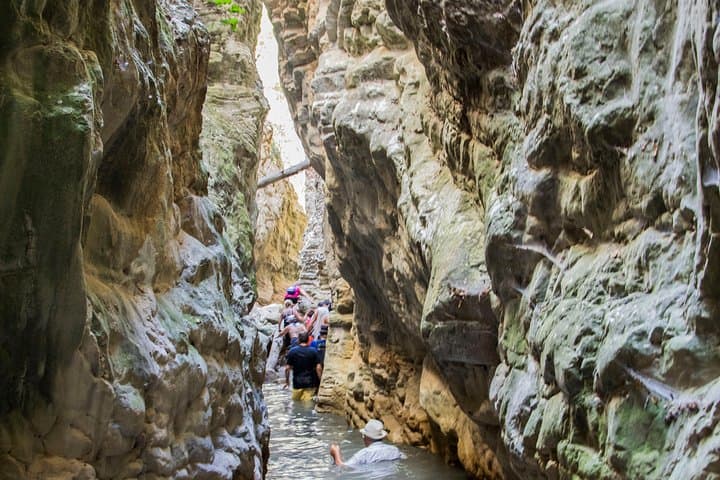
What the day feels like
The splash comes before the view. One step off a sun-warmed boulder and the river takes your weight like a willing companion, cool fingers tugging at the hems of your shorts, urging you downstream. Gorge Arini doesn't announce itself with a sudden cliff-face revelation; it reveals itself in a sequence of small decisions—an ankle-deep ford, a scramble across slick limestone, a narrow chute that funnels the creek into a glassy pool big enough for a slow, astonished swim. Over three hours you alternate between walking, boulder-hopping and short swims, the canyon folding and unfolding like a story as you move deeper into its carved, geological chapters.
This is river trekking in the Peloponnese: part hike, part canyon play, and wholly Mediterranean. Located a drive from the coastal city of Kalamata, Gorge Arini threads the hinterland of Messinia, where olive groves slope toward the sea and the Taygetos massif keeps a patient watch. The rock here is limestone, softened by millennia of water, sculpted into inviting pools, narrow squeezes, and occasional slabs that reflect the sun like mirrors. In late spring and early summer the water runs clear and cool; by late summer the flow is reduced to a chain of emerald basins that encourage long swims.
A short history of place helps set the rhythm. The Peloponnese is an archaeological palimpsest—Mycenaean ruins, Byzantine monasteries, and Ottoman traces are threaded through a landscape shaped by seismic uplift and erosion. Gorge Arini feels smaller-scale but no less rooted: farmers have shepherded flocks and tended olives in the surrounding valleys for generations, and the gorge itself has been a seasonal route for local people and wildlife. Geologically, the canyon is a textbook of karst processes—limestone dissolved and sculpted by persistent water, creating the scalloped walls and plunge pools you'll encounter. Culturally, a day here is as much about the people who live nearby as it is about the water: the old stone cottages you pass on the drive, the roadside woman selling jars of thyme honey, the local guide who knows where the pools hide in shadow.
Why go? The appeal is immediate: it's active without being extreme, social without being crowded, and singularly sensory. You move through a landscape that alternates cool, dripping shade and sudden open terraces with views back toward the Messinian Gulf. For travelers based in Kalamata, it's an accessible half-day adventure that feels like an expedition—without the need for technical climbing gear. The activity is suited to anyone comfortable with scrambling and short swims; families with older kids, fit weekend hikers, and travelers seeking an off-beat coastal-day escape will all find something to love.
Practical details anchor the romance. The experience runs roughly three hours (the operator lists a fixed duration of 180 minutes), often priced around $42 per person if booked through organized tours. Expect a moderate exertion level—there are no fixed trails in the bottom of the gorge, and surfaces are wet and slippery. Most operators provide a guide, basic safety advice, and sometimes a short transfer from Kalamata. Bring a lightweight dry bag for your phone, quick-dry clothing, sturdy water shoes with grip (not flip-flops), and a mindset ready for river logic: take smaller steps, trust the guide, and look for the safest lines across wet rock.
Season and timing matter. Spring delivers the best water flow and wildflowers; early summer offers warm pools and long daylight; late summer can be low-water but excellent for swimming; fall returns cooler air and clearer water after seasonal rains. Midday in summer is hot on the drive and the shelves; plan to start early to catch the cool morning shade and to avoid returning to town in the late-afternoon heat.
Safety and leave-no-trace thinking are simple but non-negotiable. Keep an eye on the weather—mountain storms can make an otherwise benign canyon dangerous. Wear a helmet only if the operator recommends it for specific sections; otherwise, a good pair of gripping shoes and a comfortable pack are your best bets. Carry enough water to rehydrate between swims; Mediterranean sunshine drains you faster than expected. Finally, respect local land and livelihoods—stay on sensible lines, avoid disturbing olive groves, and take your trash back to town.
After the final pool and a short climb out, the world re-enters at a different tempo. Drive back toward Kalamata with salt and river-scent in your hair, then settle at a taverna for grilled fish, a plate of fresh greens drizzled with local olive oil, and a glass of chilled retsina or regional rosé. Gorge Arini is ultimately a compact, three-hour conversation with water and stone—an easily staged wild interlude that opens up a larger appreciation for the Peloponnese's layered landscape. It's accessible, scenic, and precise in its pleasures: a guide-led river trek that rewards a curious, moderately fit traveler with tangible experiences—cool swims, algae-smudged limestone, and the steady, steady presence of the canyon itself.
Trail wisdom
Small choices, better day.
Water Shoes Over Sandals
Choose closed-toe water shoes with a grippy sole to protect feet on wet limestone and in shallow swims.
Start Early
Begin in the morning for cooler light, thinner crowds, and better water flow in spring and early summer.
Keep Electronics Dry
Use a small dry bag or waterproof phone case—pools are inviting and sudden slips are common.
Follow Your Guide’s Lines
Guides know the safest routes through narrow sections and how to time swims between deeper pools.
Local knowledge
Read the place, not just the route.
Watch for native species including European otter (rare sightings), Audible craggy calls of raptors like Bonelli’s eagle in surrounding cliffs.
Keep an eye out for wildlife during the transition between areas and habitats. Respect distance guidelines.
Stick to established lines through the gorge, take all litter back to town, and avoid disturbing nesting sites or shoreline vegetation to protect fragile karst habitats.
Follow the guide's instructions on size limits, ethical handling, and leave-no-trace practices.
A shaded rock terrace mid-gorge that makes a quiet picnic spot. A spring-fed pool just upstream of the narrowest squeeze, often overlooked by larger groups
Locally recommended viewpoints and quiet spots known best to local operators.
The Peloponnese is layered with ancient and Byzantine history; local villages around Kalamata still practice centuries-old olive cultivation traditions.
Maritime roots and regional tradition shape the waterways and working coasts.
Seasonal guide
Four versions of the same landscape.
Spring
Best forWildflowers · Strong water flow · Cool swims
ChallengesOccasional muddy approaches · Cooler air temps · Variable weather
Spring brings lively flow and vivid flowers—expect brisk water and occasional wet, muddy approaches.
Summer
Best forWarm swimming · Long daylight · Stable weather
ChallengesHot midday sun on exposed sections · Lower water in late summer · Higher visitor numbers
Summer offers warm pools and reliable sunshine—start early to avoid heat and sparser water later in the season.
Fall
Best forClear light · Comfortable hiking temps · Post-season solitude
ChallengesColder water temperatures · Shortening daylight · Potential for sudden storms
Fall cools the air and clears the light; water is refreshing but brisk—pack a light layer for after-swim comfort.
Winter
Best forOff-season solitude · Lush valley views · Photographic rock textures
ChallengesCold water and air · Higher flow after rains · Some operators may not run trips
Winter makes the gorge dramatic and wet—trips are best for experienced, well-prepared participants and often run only with guides.
Pack with intention
What to bring.
Good to know
Common questions.
The organized experience is listed at a fixed duration of approximately 180 minutes (about 3 hours), including short transfers and time for swims.
Plan the edges
The details that make the day easier.
The Kalamata region lends its name to the famous Kalamata olive, a cultivar traditionally grown in the surrounding hills and valley of Messinia.
After the trek, head back to Kalamata’s old harbor for grilled fish and a glass of local rosé, or try a traditional taverna for dakos (rusk salad) and olives—many small family-run places source olive oil and wine from nearby plots.
- Closest airport
- Kalamata International Airport (KME); Typical drive from Kalamata: 30–60 minutes depending on exact pick-up; Cell service: patchy in the gorge; Permits: none, but book through a licensed operator for safety.
This is an ecologically sensitive karst canyon—pack out all trash, avoid stepping on shoreline vegetation, and support local operators who follow leave-no-trace practices.
Explore by topic
Follow the threads.
Keep exploring
Make the story part of the trip.
Set out from Bass Harbor for a private, customizable day on Blue Hill Bay — lighthouses, puffins, seals, and the chance to feel Acadia from the water. Small groups, local captains, unforgettable views.
In four hours you can move from shaded canyon ferns to wind-scoured coastal ridgelines, guided by someone who knows where the light—and the hidden views—live. This private half-day hike on the Monterey Peninsula or Big Sur is compact, curated, and perfect for travelers who want depth without a multiday commitment.
 Related story
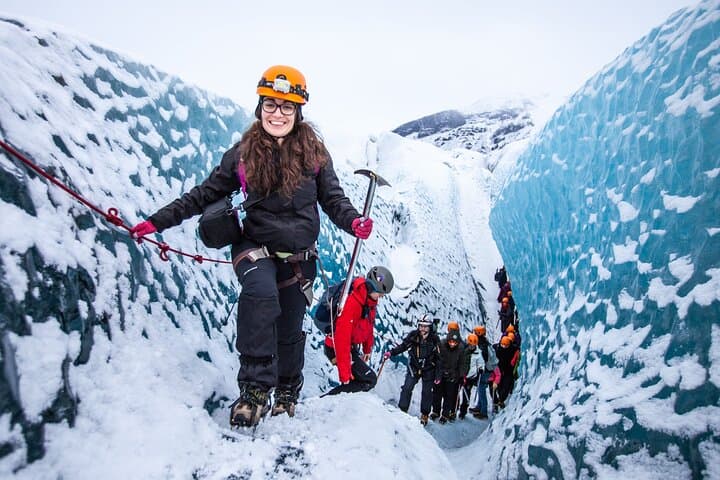
Beneath a sky of shifting light, Skaftafell’s ice reads like a map of time. This three-hour guided glacier hike mixes technical instruction with geology and culture: compact, safe, and unforgettable.