
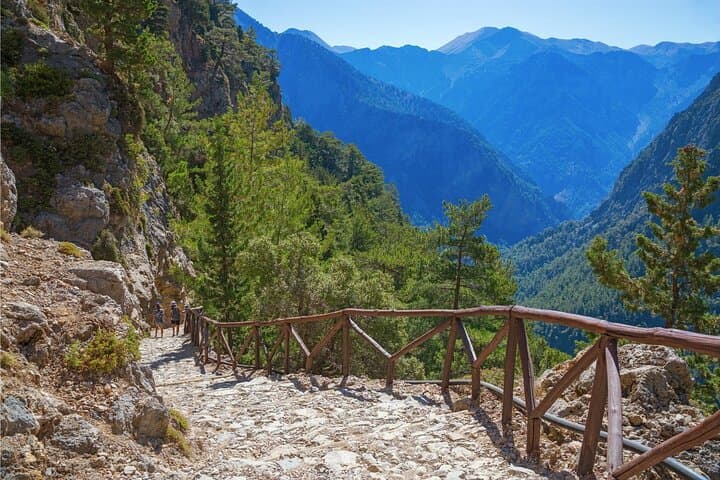
What the day feels like
By the time the plateau thins and the pines give way, the air has already changed—drier, cooler, charged with the salt that will come later from the sea. You step off the dusty Omalos trailhead and the world narrows: limestone walls close in, a torrent's bed becomes a river of stones, and the path threads through a canyon that looks older than the island itself. This is the Samaria Gorge, and its 16 km of descent is as much a geography lesson as it is a daylong rite of passage.
The first kilometers are generous: switchbacks through fragrant cedar and wild thyme, views across the White Mountains, and intermittent spring water that tastes impossibly fresh. Then the gorge tightens. The famous 'Iron Gates' squeeze the path to barely five meters across and tower above you to 300 meters. The light slants differently here—shadows are long, the rock seems layered with history, and the occasional cry of a bird sounds almost like an invitation to keep walking.
Samaria is both dramatic and humane. Geologically, the gorge is a raw record of Crete's tectonic lift and river erosion, a chiseled incision through calcite and dolomite that reveals strata and fossilized shells. Culturally, it's stitched to local memory: shepherd routes, wartime refuges, and the hardy villages scattered along the southern coast. In 1962 it became a national park, a formal recognition of a landscape locals had long respected. And there’s wildlife—most famously the kri-kri, the endemic Cretan wild goat that sometimes clambers on impossible ledges, more curious than threatening.
If you go with a guided group (recommended for first-timers), expect a long descent that most people take five to six hours to complete. The trail begins at Xyloskalo on the Omalos plateau, shedding roughly 1,200 meters of elevation by the time you hit sea level at Agia Roumeli. The path is varied—packed dirt, rooty forest sections, loose scree, and stretches of smooth river-stone—so there’s no single shoe for everyone, but you definitely want grippy, broken-in footwear and a steady pace. Guides from local operators keep the group together, point out natural and historical highlights, and often shepherd slower hikers from behind so no one gets left on the river bed.
Practicalities matter. Bring at least 2 liters of water (more in summer), sun protection, and a small pack of high-energy snacks. There are a few taps and basic facilities along the way, but plan like they aren't there. Many itineraries—like guided departures from Rethymnon or Chania—end with a late-afternoon boat from Agia Roumeli to Sfakia, where a bus returns you to your pick-up point. That boat ride is its own reward: sitting back as the gorge recedes and the Libyan Sea opens beneath a pastel sunset.
For those building an itinerary, know that Samaria is busiest in late spring and early autumn. Early starts cool your feet for the hardest sections and put you ahead of the afternoon crowds; if you're doing this solo, file a plan with local authorities or go with an experienced local guide. The descent is rated moderate-to-challenging: knees will feel it, so bring poles if you rely on them. Pregnant visitors and anyone with serious cardiovascular or musculoskeletal conditions should skip the hike—guides will usually make that call before departure.
You don't need technical climbing skills—there are no ropes or exposed ridgelines—but you do need attention to footing. Along the way, take your time at the 'Iron Gates', watch for wildlife, respect quiet patches where birds nest, and pause at the small pools where the gorge remembers its river-source. When you emerge into Agia Roumeli, a taverna and a narrow beach await—the perfect place for a cold beer and a plate of grilled fish, where you can compare notes with fellow hikers and let the sea take the day’s dust.
For more practical guidance and local expertise, local guides such as CHECKINCRETA host organized departures that include a guide, transport, and return logistics; you can read specific trip details and book with local guides online at the Samaria Gorge hike listing. If you prefer independent planning, use that listing as a checklist for timing, water sources, and shuttle logistics.
This hike is not about speed. It's about rhythm: the metronome of your boots, the intermittent hush of the gorge, the occasional sunlit clearing where the island opens below. It asks a little of you—time, attention, and basic conditioning—and repays a lot: geology you can walk through, wildlife you might glimpse, a sea you earn with every downhill step.
If you go, leave the place better than you found it. Stick to the trail, pack out trash, keep noise low, and don't feed the kri-kri. The gorge has carried travelers for generations; it's worth protecting for the next ones.
Trail wisdom
Small choices, better day.
Start early
Begin at dawn to avoid midday heat and crowds; the cooler morning hours make the descent more comfortable.
Footwear matters
Choose supportive, grippy hiking shoes—the trail alternates between river stone and loose scree.
Hydrate and snack
Carry at least 2 liters of water and high-energy snacks; taps are limited and lines form at the few water spots.
Protect knees on descent
Use trekking poles or controlled short steps to reduce impact on knees during the long downhill.
Local knowledge
Read the place, not just the route.
Watch for native species including Kri-kri (Cretan wild goat), Peregrine falcon and other raptors.
Keep an eye out for wildlife during the transition between areas and habitats. Respect distance guidelines.
Stay on marked trails, pack out all waste, and avoid feeding wildlife: protecting the fragile gorge ecosystem ensures it remains open to hikers.
Follow the guide's instructions on size limits, ethical handling, and leave-no-trace practices.
The Xyloskalo viewpoint on Omalos for early-morning panorama. A quiet swim spot just west of Agia Roumeli where locals launch small boats
Locally recommended viewpoints and quiet spots known best to local operators.
Samaria has been a route of refuge and travel for centuries and was declared a national park in 1962, preserving its unique flora and fauna.
Maritime roots and regional tradition shape the waterways and working coasts.
Seasonal guide
Four versions of the same landscape.
Spring
Best forWildflowers · Cooler hiking · Birdwatching
ChallengesOccasional rain · Variable trail conditions
Spring is often the ideal time: mild temperatures and wildflowers make the gorge especially scenic.
Summer
Best forSea swim after hike · Long daylight hours
ChallengesHigh heat · Crowds · Limited shade in places
Summer draws crowds and heat; start very early and plan extra water and sun protection.
Fall
Best forFewer crowds · Stable weather · Clear visibility
ChallengesShorter daylight
Autumn offers steady weather and thinner crowds—excellent for those seeking a full-day outdoor experience.
Winter
Best forQuiet trails · Dramatic skies
ChallengesCold, possible snow/high runoff · Some services closed
Winter sees fewer operators and colder trailheads; parts of the plateau can get icy—check conditions.
Operator details
What the booking data adds.
Included
- ✓map
- ✓Air-conditioned vehicle
- ✓Pick-up/ drop off in Bali,Panormo,Skaleta,Adele,Platanias,Rethymno,Atsipopoulo, Kavros, Georgioupoli
Not included
- —Entrance of the gorge
Good to know
- ✓Not recommended for travelers with spinal injuries
- ✓Not recommended for pregnant travelers
- ✓Not recommended for travelers with poor cardiovascular health
- ✓Travelers should have at least a moderate level of physical fitness
Pack with intention
What to bring.
Good to know
Common questions.
The full descent from Xyloskalo (Omalos) to Agia Roumeli is about 16 km and typically takes 5–6 hours depending on fitness and stops.
Plan the edges
The details that make the day easier.
Samaria Gorge is one of Europe’s longest gorges at roughly 16 km and was designated a national park in 1962.
After the hike, head to Agia Roumeli for grilled fish and a cold beer at a seaside taverna, or sail to Sfakia for chora-style tavernas serving dakos and raki—simple food, big flavors and local conversation.
- Closest airport
- Chania (CHQ). Trailhead: Xyloskalo (Omalos plateau). Driving time from Rethymnon: ~1.5 hours. Cell service: patchy in the gorge. Permits: none required for day hikers; small park fees may apply. Booked tours usually include guide, boat and bus return.
The gorge is ecologically sensitive—pack out all trash, avoid single-use plastics, stay on the trail, and never feed wildlife.
Explore by topic
Follow the threads.
Keep exploring
Make the story part of the trip.
In four hours you can move from shaded canyon ferns to wind-scoured coastal ridgelines, guided by someone who knows where the light—and the hidden views—live. This private half-day hike on the Monterey Peninsula or Big Sur is compact, curated, and perfect for travelers who want depth without a multiday commitment.
 Related story
Beneath a sky of shifting light, Skaftafell’s ice reads like a map of time. This three-hour guided glacier hike mixes technical instruction with geology and culture: compact, safe, and unforgettable.
 Related story
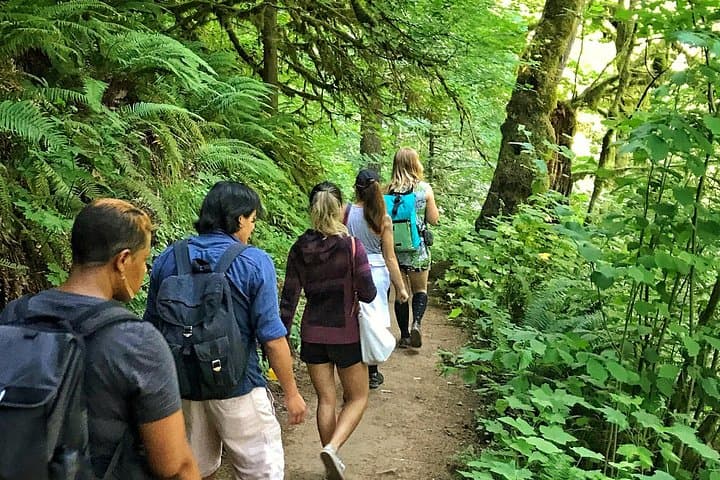
Lose the city for a few hours without leaving it: this 5-mile, 900-foot-gain Forest Park loop threads old-growth pockets, city viewpoints, and cultural landmarks for a compact taste of Portland’s wild side. Expect moss, roots, and stories.