
What the day feels like
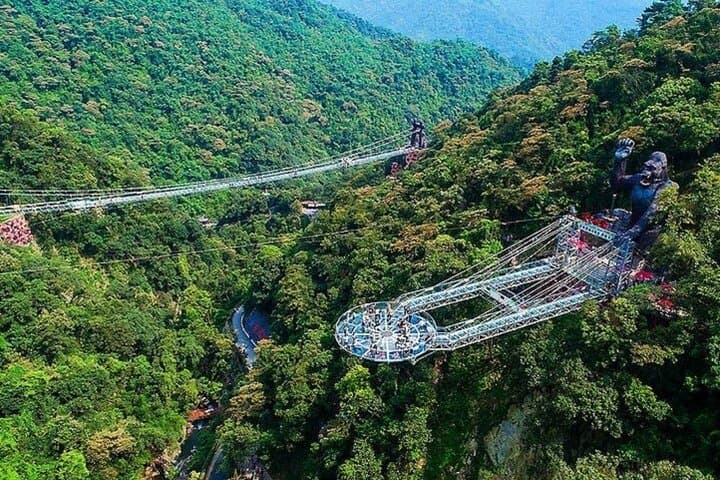
On a clear morning north of Guangzhou, the ridge line opens like a stage curtain and the gorge below exhales mist. You step from solid earth onto a strip of 99% transparent glass and, for a beat, the world drops away—only the cold, clear sky beneath your soles and the canyon’s ribbed green walls rising up around you. That is the peculiar vertigo of Gulong Gorge: the landscape both dares you and teaches you to pay attention.
This private day tour is practical in its promise and theatrical in its delivery. Beginning in Guangzhou and unfolding over a long day (expect roughly 6–10 hours depending on traffic and how long you linger), the excursion threads together two of Qingyuan’s signature attractions: the world-class glass skywalk that spans the canyon and Jinlong (Golden Dragon) Cave, a limestone cave threaded by an underground river. The itinerary balances adrenaline and atmosphere—there’s the thin hum of height on the bridge, then the hush of the cave where dripping stalactites keep time.
Geologically, Gulong Gorge is a lesson in limestone and water. Over millennia, the river that carved the canyon sliced the bedrock into sheer walls and airy chambers; the cave systems beneath are the slow, patient work of groundwater dissolving calcium-rich stone. The result is a landscape that feels designed for dramatic optics: vertiginous viewpoints, waterfalls spilling into green bowls, and cavern rooms lit like cathedrals when flashlights and installed lighting skewer the darkness.
Culturally, this corner of Guangdong sits on the edge of the Pearl River Delta’s bustle. Qingyuan’s communities have long worked with the land—farming terraced slopes, fishing rivers, and passing stories about the caves and peaks. Today the gorge is an engineered encounter: a human-made glass path pinned to ancient stone, a contemporary way to access an old landscape. The private-tour model here emphasizes local knowledge—your guide unpacks geology, points out micro-habitats, and decodes regional legends while steering around crowds and timing visits to the bridge’s quietest windows.
Why go? The draw is threefold: scale, contrast, and accessibility. The bridge delivers a pure scenic thrill: it’s long, transparent, and engineered to feel at once fragile and utterly safe. The cave introduces a second tempo—cool, tactile, and humid—where you swap sky-facing vertigo for the intimate drama of dripping rock and boat-ripples on an underground river. Taken together, they make for a compact day of sensation without multi-day logistics.
Practicalities matter here. The whole experience runs long enough that you should treat it like a hike-plus-site visit: wear supportive shoes, bring water, and pack a light rain shell in summer. The bridge enforces rules—no running, no jumping, and sometimes protective shoe covers—so plan to move deliberately. Inside Jinlong Cave, the paths are often slick and uneven, and lighting is variable; a compact headlamp or a sturdy phone light will help when your eyes are adjusting.
Timing matters more than you might think. The bridge draws its largest crowds late morning and during Golden Week-style holidays; early departures from Guangzhou (or a late-afternoon return) make for clearer sightlines and better photos. Weather plays two roles: rain softens the canyon’s colors but reduces visibility and makes glass surfaces slippery, while a crisp winter day strips humidity and often creates the clearest views. The private nature of this tour is its biggest asset—your guide will pace the day, avoid bottlenecks, and tailor the visit to your group’s comfort.
Safety and sustainability are not afterthoughts. The bridge is engineered to rigorous standards, and cave operators manage access to protect fragile formations and subterranean ecosystems. That said, stay on marked trails, keep voices low inside the cave to preserve the experience and wildlife, and carry out what you brought in. The limestone environment is porous and slow to recover; small choices—no flash photography in delicate sections, no touching formations—make a measurable difference.
For photographers and curious travelers, the aesthetic variety is rich: the high, glass-backed scenes are about scale and negative space (use a wide angle and back off for layers of canyon and sky); in the cave, switch to a higher ISO, stabilize your camera, and look for reflected light on wet stone and river ripples. Human figures work as scale-makers on the bridge; in the cave, a flashlight beam can become a compositional element.
This tour is not an extreme expedition, but it rewards basic preparation and respect for the elements. Expect a lot of good photo moments, a fair number of steps, and a kind of dual-day rhythm that takes you from lightning-open air to deep, cool subterranean hush. It’s an efficient way to experience the geological drama of Qingyuan without the need for camping or technical climbing—ideal for travelers who want a single, memorable day with a private guide to smooth the edges.
If you leave with anything, let it be a sense of scale—how fast water reshapes rock and how carefully modern infrastructure can invite us to witness that work. The glass bridge won’t make the canyon less ancient; it will simply give you a moment to stand in time, suspended between sky and river, and look at a landscape that keeps on working long after we go back to the city.
Trail wisdom
Small choices, better day.
Wear supportive shoes
Sturdy, grippy shoes reduce slip risk on the glass walkway and the cave’s wet, uneven paths.
Time your visit
Arrive early or late to avoid peak crowds on the bridge and to get clearer photos.
Bring a light source
A small headlamp or high-output phone flashlight helps in dim cave passages where installed lighting is limited.
Follow site rules
Expect to wear shoe covers on the bridge and to refrain from touching cave formations—rules protect both you and the environment.
Local knowledge
Read the place, not just the route.
Watch for native species including Black kites and other raptors over the canyon, River fish and freshwater crabs near stream edges.
Keep an eye out for wildlife during the transition between areas and habitats. Respect distance guidelines.
Operators manage visitor flow to protect cave formations and riparian zones; visitors should stay on trails and pack out waste to reduce impact.
Follow the guide's instructions on size limits, ethical handling, and leave-no-trace practices.
A secondary viewpoint off the main deck with fewer people and framed canyon shots. A small riverside tea stall near the park entrance—good for local snacks and a rest
Locally recommended viewpoints and quiet spots known best to local operators.
Qingyuan’s karst landscapes were formed over millions of years by water dissolving limestone; local villages historically relied on river-based fishing and terraced agriculture.
Maritime roots and regional tradition shape the waterways and working coasts.
Seasonal guide
Four versions of the same landscape.
Spring
Best forWaterfall flow · Wildflowers on the rims
ChallengesOccasional spring rains · Mud on trails
Spring brings fuller waterfalls and fresh greens but occasional rains that can make glass and stone slippery—pack a light rain shell.
Summer
Best forLush canyon greenery · Warm cave refuge
ChallengesHigh humidity · Afternoon storms · Crowds during holidays
Summer’s heat makes the cave feel especially cool and pleasant, though humidity and storm risk rise—start early and hydrate.
Fall
Best forCrisp air and clear views · Lower humidity
ChallengesCooler mornings · Variable visibility
Fall offers some of the clearest visibility and comfortable hiking temperatures—ideal for photography and long vantage views.
Winter
Best forClear skies · Crisp valley light
ChallengesCooler temperatures in the shade · Less foliage color
Winter often has the clearest air and reduced humidity; pack layers for cool canyon breezes and cave dampness.
Operator details
What the booking data adds.
Included
- ✓Hotel pick up and drop off
- ✓Local English-speaking tour guide with full escort
- ✓Private transport by air-conditioned vehicle
- ✓Main gate admission tickets for Gulong Gorge and Cave Fairyland
- ✓Professional private driver
Not included
- —Personal expense(drink, souvenir, etc)
- —Gratuities
- —Optional recreational rides(zipline, cliff swing, mountain slide car, etc)
- —Lunch(for you and the guide)
Good to know
- ✓Specialized infant seats are available
- ✓Infants and small children can ride in a pram or stroller
- ✓Suitable for all physical fitness levels
Pack with intention
What to bring.
Good to know
Common questions.
Yes—children can join, but guardians should assess comfort with heights; the bridge enforces strict safety rules and some sections have stairs.
Plan the edges
The details that make the day easier.
The glass skywalk over Gulong Gorge is reported to be among the world’s longest and widest transparent skywalks and features a 99% transparent glass path, offering dramatic canyon views beneath your feet.
After the day’s adventure, head back toward Guangzhou or stop in Qingyuan for river-fresh fish and simple Cantonese dishes; look for locally brewed teas at small shops near the park entrance to unwind.
- Closest airport
- Guangzhou Baiyun International Airport (CAN). Typical drive from Guangzhou: 90–120 minutes depending on traffic. Cell service: Good on approach and the bridge; limited inside cave. Permits: Entrance fees usually covered by this tour—confirm during booking.
This karst and cave system is sensitive—stay on marked paths, avoid touching formations, and pack out all trash to preserve the ecosystem for future visitors.
Explore by topic
Follow the threads.
Keep exploring
Make the story part of the trip.
Set out from Bass Harbor for a private, customizable day on Blue Hill Bay — lighthouses, puffins, seals, and the chance to feel Acadia from the water. Small groups, local captains, unforgettable views.
In four hours you can move from shaded canyon ferns to wind-scoured coastal ridgelines, guided by someone who knows where the light—and the hidden views—live. This private half-day hike on the Monterey Peninsula or Big Sur is compact, curated, and perfect for travelers who want depth without a multiday commitment.
 Related story
Beneath a sky of shifting light, Skaftafell’s ice reads like a map of time. This three-hour guided glacier hike mixes technical instruction with geology and culture: compact, safe, and unforgettable.