
What the day feels like
You step out of Circular Quay station with your phone in your palm, headphones snug, and the harbour air already working its magic. Ferries bristle like hurried storytellers, seagulls argue overhead, and the water tugs at the edge of the city as if daring you to come closer. The Let’s Roam audio hunt is not a passive listen; it is a guided game that turns Sydney’s most recognizable quarter into an interactive puzzle board. Over roughly 90 minutes you weave from the prow of the Opera House across sandstone promenades, through the stone-laced alleys of The Rocks, and into pockets of park where jacarandas and gum trees exhale a scent of spring. The cadence of the tour rises and falls the way this harbour rolls — quick trivia bursts that make you look closer, longer narrative stretches that let you breathe and absorb history.
This is a modern urban walk with old bones. The land beneath your feet is Sydney sandstone, sculpted over millennia and quarried to build the city’s nineteenth-century facades. Long before the bridge and the sails were imagined, the Gadigal people of the Eora Nation managed this shoreline, fishing and gathering in places you now cross on a whim. In 1788 European arrival transformed the geography and the social landscape, and vestiges of both histories live side by side here: colonial warehouses reimagined into cafes, and Indigenous place names reasserting their past. The audio tour threads these stories into bite-sized moments, urging you to pause where you might otherwise hurry past.
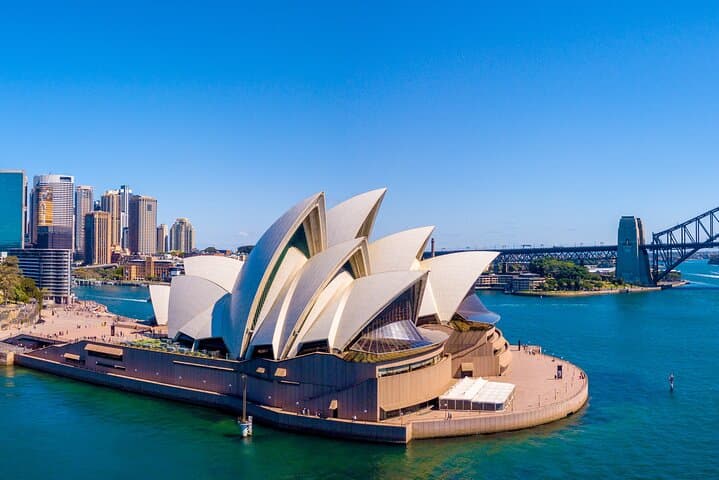
Geology and architecture act as the tour’s props. You’ll notice the honey-colored grain of sandstone in the older buildings, the engineered sweep of the Harbour Bridge arching like a held breath, and the Opera House’s tiled shells flashing in slivers of sunlight. The city’s edges — the foreshore, the museum steps, the botanical perimeters — are all playable terrain for trivia prompts, photo challenges, and directional puzzles. You’ll be asked to find details that are both obvious and obscure: a plaque tucked under a stair, a carving on a lintel, a figurehead reflected in a chrome cafe table. That process of observation is the tour’s slow work: making a city that can feel familiar feel new again.
Culturally, the experience is convivial. It’s built for groups — friends competing in silly categories, couples comparing answers, families who like incentives to keep younger feet moving. There’s a social logic to the app: it gives roles, assigns points, and rewards curiosity. It’s also private-tour ready, meaning you can run it for a birthday, a team-building morning, or a spontaneous rainy-day rescue. The pace is friendly to most fitness levels: mostly flat, paved, and stroller-accessible in spots, with the occasional flight of steps. It is not a wilderness trek; it is a city sprint that trains your eyes and engages your sense of place.
Why would a traveler choose this over a standard walking tour? For one, agency. You set the pace. The audio guides are succinct and playful rather than didactic, and the puzzle format keeps even repeat visitors tuned in. You get local context without feeling lectured: a quick aside about maritime trade, a one-liner about colonial architecture, a reminder that names on maps sometimes mask longer stories. It’s also affordable and instant — book, download, and go — which makes it an ideal pick for travelers with limited time but a hunger for local texture.
Practical notes are straightforward. The route covers roughly 2.5–3.5 kilometers depending on optional detours, and elevation gain is minimal. Footwear should be comfortable but nothing technical is required. The city provides excellent public transport, and most of the walk is under steady cell coverage; still, bring a power bank and set your phone to avoid surprises. Water fountains are available but infrequent; carry a refillable bottle. If you’re visiting in summer, start early to avoid heat and midday crowds; in spring the jacarandas can make this walk especially photogenic.
The best part is how the tour choreographs discovery. One moment you’re guessing the sculptor of a naval relief, the next you’re standing in a narrow lane where the wind funnels like a small director, pushing you toward a viewpoint. This is an urban adventure that rewards curiosity and good shoes, offering both the city’s big moments and its marginalia — the little things that become the memory anchors of a trip. For travelers who want to feel like explorers without leaving the comfort of cobblestones and cafes, this audio hunt is an efficient, social, and satisfying way to meet Sydney on foot.
Trail wisdom
Small choices, better day.
Charge before you go
The tour runs from your phone and can drain battery quickly; bring a small power bank to keep the audio and maps alive.
Comfortable footwear
Expect 2.5–3.5 km on mostly paved surfaces with a few steps; supportive walking shoes matter more than technical boots.
Hydrate and time it
Start in the morning during summer to avoid heat and peak crowds; carry a refillable water bottle.
Protect from sun and wind
Harbour breezes offer relief but also sun exposure; wear sunscreen and a hat even on cool days.
Local knowledge
Read the place, not just the route.
Watch for native species including Silver gulls, Rock parrots and urban lorikeets.
Keep an eye out for wildlife during the transition between areas and habitats. Respect distance guidelines.
Respect historical sites and modern restoration work by staying on designated paths, disposing of trash, and supporting local Indigenous-led cultural initiatives where possible.
Follow the guide's instructions on size limits, ethical handling, and leave-no-trace practices.
The narrow laneway off Argyle Street with surprising public art. A small viewpoint behind the MCA offering a quieter harbour angle
Locally recommended viewpoints and quiet spots known best to local operators.
This harbourfront sits on land of the Gadigal people of the Eora Nation and later became the colonial heart of Sydney after 1788; many stone buildings date to the 19th century.
Maritime roots and regional tradition shape the waterways and working coasts.
Seasonal guide
Four versions of the same landscape.
Spring
Best forJacaranda blooms · Mild weather · Outdoor cafes
ChallengesUnpredictable showers · Weekend crowds
Spring is lively and floral, ideal for a relaxed late-morning start and lingering coffee stops between audio prompts.
Summer
Best forLong daylight hours · Festivals and events · Evening walks
ChallengesHigh temperatures · Busy tourist season
Summer offers long evenings but expect heat and heavier crowds; early starts or twilight tours are recommended.
Fall
Best forCrisp light for photos · Fewer tourists · Comfortable walking
ChallengesShorter days · Occasional cool winds
Autumn balances pleasant walking weather with clearer skies — a great window for photography and slower pacing.
Winter
Best forQuieter streets · Dramatic skies · Cosy cafes
ChallengesCool damp weather · Short daylight
Winter is quieter and moody; layer up and plan warm stops to break the route if needed.
Operator details
What the booking data adds.
Included
- ✓Digital Copies of your scavenger hunt photos
- ✓Let's Roam App Access
- ✓Customer support
Good to know
- ✓Wheelchair accessible
- ✓Infants and small children can ride in a pram or stroller
- ✓Service animals allowed
- ✓Public transportation options are available nearby
- ✓Not recommended for travelers with spinal injuries
- ✓Not recommended for pregnant travelers
- ✓Not recommended for travelers with poor cardiovascular health
- ✓Travelers should have at least a moderate level of physical fitness
Pack with intention
What to bring.
Good to know
Common questions.
The tour is approximately 90 minutes long and covers about 2.5–3.5 kilometers on mostly flat, paved surfaces with occasional steps.
Plan the edges
The details that make the day easier.
Sydney Opera House roof tiles were manufactured in Sweden and more than one million glossy, cream-and-ochre ceramic tiles cover the shells.
After the tour, head to The Rocks for historic pubs and craft breweries, grab a seafood plate at a Circular Quay kiosk, or wander into Surry Hills for espresso and small-batch bakeries — the area’s cafe culture complements the route’s relaxed pace.
- Closest airport
- Sydney Kingsford Smith (SYD) ~20 km and 20–30 minutes by taxi to Circular Quay
- trailhead; Driving distance from downtown
- walkable if staying in CBD; Cell service: generally excellent across the route; Permits: none required for the self-led tour
This is an urban walk on public land — stick to paths, avoid littering, and consider supporting Indigenous cultural tours or local conservation groups to ensure heritage sites are respected.
Explore by topic
Follow the threads.
Keep exploring
Make the story part of the trip.
Set out from Bass Harbor for a private, customizable day on Blue Hill Bay — lighthouses, puffins, seals, and the chance to feel Acadia from the water. Small groups, local captains, unforgettable views.
In four hours you can move from shaded canyon ferns to wind-scoured coastal ridgelines, guided by someone who knows where the light—and the hidden views—live. This private half-day hike on the Monterey Peninsula or Big Sur is compact, curated, and perfect for travelers who want depth without a multiday commitment.
 Related story
Beneath a sky of shifting light, Skaftafell’s ice reads like a map of time. This three-hour guided glacier hike mixes technical instruction with geology and culture: compact, safe, and unforgettable.