
What the day feels like
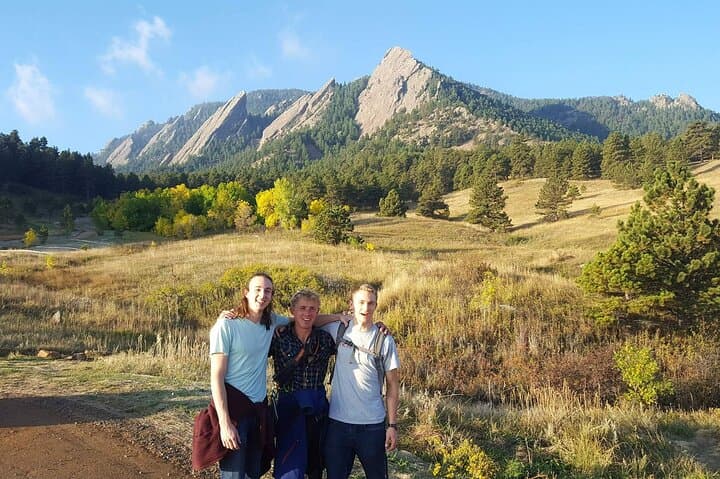
The morning light turns the Flatirons into a stacked deck of rust-colored cards, each slab throwing a long shadow across the grass. You shoulder your pack at the Chautauqua trailhead, the guide doing a quick gear check—harness snug, helmet set, ropes coiled like patient rivers waiting to be let loose. A brisk, four-hour loop is the promise: approach, anchored pitches, a summit that looks north over Boulder and the Sea of the Rockies, then the walk back. It is compact, immediate, and exactly the kind of mountain day that hooks people.
Climbing the Flatirons is less about alpine suffering and more about intimate contact with rock and skyline. These slabs of Fountain Formation sandstone tilt skyward in sheets, edges sharpened by millions of years of uplift and erosion. The stone is grippy in places, smooth in others; its personality changes with every footfall. The route a guide chooses for you—often on First, Second, or Third Flatiron depending on ability and conditions—will mix short technical moves with scramble and exposed traverses. For beginners the emphasis is on movement, instruction, and quiet, steady progress; for more experienced climbers it’s about reading the line and trusting your feet.
There’s a history folded into those slabs. The Flatirons were part of sediment deposited in the Pennsylvanian and Permian periods, later tilted upright by the Laramide orogeny that birthed the Rockies. For the city of Boulder, the stones are a civic crest: a weekend refuge, a training ground, a subject for countless photographs. The climbing culture here is earnest and communal. Guides often double as local historians; you’ll hear the names of old routes and the stories of early climbers who bolted and cleaned lines while generations of students from the nearby university walked beneath.
Approach the day with a few practical truths. From Chautauqua it’s typically a 0.8–1.5 mile approach with roughly 800–1,200 feet of elevation gain to the more popular crags; expect some short sections of loose scree and exposed ledges. The guided experience built into this outing focuses on single-pitch top-ropes and short multi-pitch moves—good techniques, rope work, and crowd-managed etiquette. The guide’s job is both teacher and translator: they’ll show you how to trust small holds, move across slab, and manage rope systems while keeping the group moving. In four hours you’ll get an approach, two or three protected climbs, and a clear summit view back toward Boulder and beyond.
Logistics are refreshingly simple. This is a half-day product designed for people with limited time who want the vertical experience without an overnight or complex planning. No previous lead-climbing experience is required; the guide supplies instruction and can outfit you if you don’t have gear. Cost is in the ballpark of $250 for a private guided experience—reasonable for a guided technical day that includes instruction and often rental gear. Free cancellation and private-tour flags mean flexibility for weather or last-minute plans.
Why climb the Flatirons? Because it’s an achievable summit day that rewards confidence more than raw endurance. You’ll feel the rock push back, smell pine warmed by the morning sun, and then find yourself on a ledge with Boulder stitched out below. It’s an efficient, soulful exposure—less about conquest, more about learning how to move on stone with intention.
Practical guidance for success: start early to avoid crowds and afternoon wind; use a guide for your first roped experience; wear sticky-soled rock shoes if you have them (many guides provide rentals); and bring a small daypack with water, sunscreen, and an extra layer—weather in the foothills can change fast. Hydrate before you go; the elevation (Boulder sits around 5,400 feet) makes exertion feel harder than at sea level. Treat the rock with respect: the sandstone can be fragile when wet, and erosion-prone edges are best left alone.
The experience pairs well with a few hours on Pearl Street afterward: coffee, a burger, or a post-climb beer at a local brewpub are perfect ways to close the day. For photographers the angle back toward the city in late afternoon splashes color across the stone; for new climbers the day is a calibration—what you can do, what you want to learn next, which techniques to drill.
This guided Flatiron Summit Climb is not an epic. It’s a concentrated, teacher-led immersion in climbing’s small rituals: knot checks, quiet breath before a move, the satisfying thunk of gear placed well. It’s also pragmatic. The route choices, the pace, and the gear are designed so that someone with curiosity and reasonable fitness can walk away stronger, smarter, and more eager for the next climb.
If you build your trip around this half-day, you come away with a clear line of progression: learn top-rope technique, practice slab movement, and then book a longer multi-pitch objective. The Flatirons are generous that way—demanding attention in the moment, but always ready to teach.
Trail wisdom
Small choices, better day.
Start Early
Arrive at Chautauqua before 8 a.m. to beat parking crowding and afternoon winds.
Wear Sticky Shoes
Bring rock shoes or rent them—sticky soles make slab moves significantly easier and safer.
Hydrate for Altitude
Carry at least 1–2 liters of water and sip steadily; the thin air raises exertion.
Respect Fragile Rock
Avoid climbing on wet sandstone and follow guide instructions to protect routes; leave no trace.
Local knowledge
Read the place, not just the route.
Watch for native species including Mule Deer, Red-tailed Hawk.
Keep an eye out for wildlife during the transition between areas and habitats. Respect distance guidelines.
Stick to established trails and belay ledges to limit erosion; avoid climbing on wet sandstone and respect seasonal nesting closures for birds of prey.
Follow the guide's instructions on size limits, ethical handling, and leave-no-trace practices.
Royal Arch for a longer scramble and sweeping views. South Mesa Trail for quieter approaches and fewer crowds
Locally recommended viewpoints and quiet spots known best to local operators.
The Flatirons are part of the Fountain Formation—sandstone and conglomerate uplifted during the mountain-building events that formed the Rockies; climbing became popular here in the early 20th century.
Maritime roots and regional tradition shape the waterways and working coasts.
Seasonal guide
Four versions of the same landscape.
Spring
Best forCooler climbing temperatures · Wildflower displays on the approaches
ChallengesPossible snowy/icy patches early season · Variable spring storms
Spring offers comfortable temps for technical climbing, but be prepared for late snow or mud on the approach—check conditions.
Summer
Best forLong daylight hours · Stable weather windows in early morning
ChallengesAfternoon thunderstorms · Hot sun on exposed slabs
Summer mornings are prime; start early to avoid storms and bring sun protection—afternoons can be stormy and hot.
Fall
Best forCrisp, stable weather · Spectacular foliage and light
ChallengesCooler mornings · Shortening daylight hours
Fall is often the most pleasant season for climbing—clear days and cool air make for confident stone-scented moves.
Winter
Best forQuiet trails · Snow-dusted photographic scenes
ChallengesIcy slabs and hard snow · Limited guided options and cold temps
Winter climbs require experience with cold, potentially icy rock and are best left to seasoned climbers or specialized guided trips.
Operator details
What the booking data adds.
Included
- ✓Climbing equipment
Not included
- —Lunch
- —parking
Good to know
- ✓Public transportation options are available nearby
- ✓Not recommended for travelers with spinal injuries
- ✓Not recommended for travelers with poor cardiovascular health
- ✓Travelers should have at least a moderate level of physical fitness
Pack with intention
What to bring.
Good to know
Common questions.
No—this is a guided introductory-to-intermediate climb. Guides provide instruction on rope systems, movement, and safety; a willingness to learn and reasonable fitness are sufficient.
Plan the edges
The details that make the day easier.
The Flatirons are made of Fountain Formation sandstone and conglomerate deposited during the Pennsylvanian–Permian periods roughly 290–300 million years ago—later uplifted into their current tilted slabs.
After the climb, head to Pearl Street for laid-back eats and local brews—Mountain Sun Pub & Brewery or Rayback Collective are great for post-climb beers; for a relaxed meal try The Sink or the Chautauqua Dining Hall if it's open.
- Closest airport
- Denver International Airport (DEN) ~40–50 min drive; Trailhead: Chautauqua Park (short drive from downtown Boulder); Driving distance from Boulder center: 2–5 miles depending on route; Cell service: Mostly good in town, intermittent on some approaches and ledges; Permits
- passes
- No climbing permit required, but Chautauqua parking fees and seasonal access rules apply.
Anchors and fixed gear can alter fragile rock—use established anchors, avoid climbing wet sandstone, pack out waste, and follow local seasonal closures to protect nesting raptors and plant communities.
Explore by topic
Follow the threads.
Keep exploring
Make the story part of the trip.
Set out from Bass Harbor for a private, customizable day on Blue Hill Bay — lighthouses, puffins, seals, and the chance to feel Acadia from the water. Small groups, local captains, unforgettable views.
In four hours you can move from shaded canyon ferns to wind-scoured coastal ridgelines, guided by someone who knows where the light—and the hidden views—live. This private half-day hike on the Monterey Peninsula or Big Sur is compact, curated, and perfect for travelers who want depth without a multiday commitment.
 Related story
Beneath a sky of shifting light, Skaftafell’s ice reads like a map of time. This three-hour guided glacier hike mixes technical instruction with geology and culture: compact, safe, and unforgettable.