
What the day feels like
The air tastes of peat and sea salt, and somewhere high in the canopy a kererū wings lazily between trunks of rimu and kamahi. You begin the day on a steel platform 20 metres above the forest floor, the walkway humming faintly beneath your feet as the forest breathes around you. The Mahinapua Springboard — a gently swaying section of boardwalk — rocks with the footsteps of small groups who, for a moment, share life at bird height. Ahead, the Hokitika Tower pierces the sky at 40 metres. From its top you can see a strip of Tasman Sea, the glassy sweep of Lake Mahinapua, and, on clear days, the snow-dusted teeth of the Southern Alps. It’s a compact kind of drama: close enough to touch the trees, wide enough to make your day feel like a small, essential pilgrimage inland from the wild West Coast.
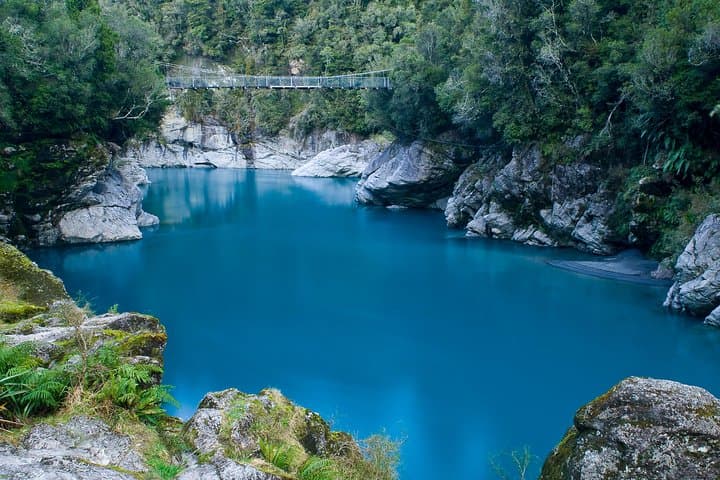
This Viator outing bundles two of the West Coast’s most Instagrammed but still genuine experiences into a five-hour loop worth planning for. The Tree Top Walkway threads you into an old-growth pocket of forest where the architecture is botanical: buttressed trunks, layers of epiphytes, and a canopy that bends light into shafts. Then you drive inland to Hokitika Gorge, where a slow, glacier-fed river has polished the world into something startling—water the colour of crushed turquoise glass. A short walk and a suspension bridge deliver you squarely into a postcard; the gorge’s vivid hue comes from fine glacial silt suspended in meltwater, refracting light and making even a gray day look deliberate.
The geology here is a lesson in motion. Rivers born in the Southern Alps carry ground rock — glacial flour — down steep, rain-soaked catchments and into narrow riverbeds carved over millennia. The result is water that arrests you: almost unreal, never static. Culturally, this stretch of the West Coast sits within the rohe of Ngāi Tahu; Hokitika town is a long-standing center for pounamu (greenstone) carving. The land, the water, and the craft are braided—locals read stones and rivers the way sailors read stars.
Bring curiosity as well as a waterproof jacket. The walkways are accessible but not the same as a city park. The Tree Top platform is a comfortable steel structure with minimal climb to access points, but the exhilaration of height is real. The gorge walk is a short, well-formed trail with a suspension bridge: you’ll cross river mist and hear water pushing past boulders. The loops are suitable for families and mixed-ability groups, which is part of their charm. You can take photos until your phone warns you to stop, but a small investment in a dry bag or weatherproof case is a good idea on this coast.
Timing matters. Summer days feel endless and make the colors sing; shoulder seasons offer crowd relief and dramatic weather windows. If you’re chasing the best light for photos, aim for early morning at the walkway and late afternoon at the gorge when low sun slants through the trees and the river seems to glow. Practicalities are straightforward: the tour is a half-day (about five hours), often offered from Greymouth or Hokitika, with instant confirmation on booking and free cancellation options. If you’re self-driving, the scenic route invites a slower pace — allow time to pull over for river lookouts and pākē (native bird) sightings.
Gear and fitness requirements are modest. Good footwear with grip is more meaningful than a pack heavy with technical kit: boardwalks can be wet, and river approaches are uneven. Hydration and sun protection are essential even on cooler days—the West Coast’s weather changes fast, and the canopy doesn’t always shelter you from wind-driven rain or bright sun. For photographers, a polarizer intensifies the turquoise and cuts glare; for families, a small first-aid kit and waterproof layers keep the day moving.
The appeal of this combined experience is partly logistical economy (two iconic stops in one outing) and partly contrast: canopy calm vs. river dynamism. It’s accessible enough for novice explorers while offering enough sensory punch to satisfy seasoned hikers who appreciate geology, ecology, and the West Coast’s muted, weathered colors. You leave with the kind of photos that make friends ask where you went, but also with something quieter — the knowledge that the coast’s drama is not just landscape but the slow work of water over stone.
If you go: travel light, time your light, and respect the land. Stay on designated platforms and paths, don’t remove pounamu from rivers without local guidance, and keep noise low so the forest’s birdlife can keep the rhythm. When you descend from the tower you’ll carry a new sense of scale: the gorge’s turquoise is loud, but the trees teach you to listen.
Trail wisdom
Small choices, better day.
Timing for light
Visit the Tree Top Walkway in the morning and Hokitika Gorge in late afternoon for the best light and fewer crowds.
Grip up
Wear grippy, waterproof shoes—the boardwalks and river trails can be wet and slippery.
Protect your gear
Use a small dry bag or waterproof phone case; spray and mist near the gorge are common.
Respect the site
Stay on platforms and marked trails to protect delicate understory and riverbanks.
Local knowledge
Read the place, not just the route.
Watch for native species including Kererū (New Zealand wood pigeon), Fantail (pīwakawaka).
Keep an eye out for wildlife during the transition between areas and habitats. Respect distance guidelines.
Stick to designated paths to protect fragile riverbanks and forest understory; local operators emphasize Leave No Trace practices to reduce visitor impact.
Follow the guide's instructions on size limits, ethical handling, and leave-no-trace practices.
Lake Mahinapua viewpoints (less visited). Short side tracks to native birdwatching spots near the walkway
Locally recommended viewpoints and quiet spots known best to local operators.
This coastline and inland valleys are part of Ngāi Tahu territory; Hokitika developed as a 19th-century gold rush hub and remains a center for pounamu carving.
Maritime roots and regional tradition shape the waterways and working coasts.
Seasonal guide
Four versions of the same landscape.
Spring
Best forBlooming undergrowth · Fewer tourists · Accessible trails
ChallengesChangeable weather · High runoff in rivers
Spring brings fresh foliage and fewer visitors, but expect variable weather and stronger river flows from snowmelt.
Summer
Best forStable weather · Vivid water color · Long daylight hours
ChallengesBusier trails · Stronger sun
Summer is peak season with long days and bright turquoise water—arrive early to avoid crowds.
Fall
Best forCrisp light for photos · Cooler temperatures · Fall colors in understory
ChallengesShorter days · Possible rain fronts
Autumn delivers crisp air and great photo light but bring layers for quickly changing conditions.
Winter
Best forQuieter experience · Dramatic cloudscapes · Snow-on-alps vistas
ChallengesCold, wet conditions · Short daylight · Possible track closures
Winter is quiet and moody; if you go, dress warmly and plan for shorter excursions and limited services.
Operator details
What the booking data adds.
Included
- ✓Tour guide
- ✓Transport
Not included
- —Gratuities
Good to know
- ✓Suitable for all physical fitness levels
Pack with intention
What to bring.
Good to know
Common questions.
The Viator tour runs about five hours total, including transfers between the tree walkway and the gorge.
Plan the edges
The details that make the day easier.
Hokitika Gorge’s vivid turquoise color is caused by finely ground rock particles (glacial flour) suspended in meltwater—a common feature of glacial rivers and lakes.
After the walk, head into Hokitika town for pounamu (greenstone) galleries and seaside cafés serving West Coast specialties—try a whitebait fritter if available—and finish with a local craft beer at a beachfront pub if time allows.
- Closest airport
- Hokitika Airport (HKK), with connections from Christchurch; Driving distance from Hokitika town to Hokitika Gorge: ~35 minutes; Cell service: patchy on trails; Permits: none required for day visits
This area is ecologically sensitive—stay on boardwalks and paths, pack out all rubbish, and support local guide operators who follow regenerative tourism practices.
Explore by topic
Follow the threads.
Keep exploring
Make the story part of the trip.
In four hours you can move from shaded canyon ferns to wind-scoured coastal ridgelines, guided by someone who knows where the light—and the hidden views—live. This private half-day hike on the Monterey Peninsula or Big Sur is compact, curated, and perfect for travelers who want depth without a multiday commitment.
 Related story
Beneath a sky of shifting light, Skaftafell’s ice reads like a map of time. This three-hour guided glacier hike mixes technical instruction with geology and culture: compact, safe, and unforgettable.
 Related story
Lose the city for a few hours without leaving it: this 5-mile, 900-foot-gain Forest Park loop threads old-growth pockets, city viewpoints, and cultural landmarks for a compact taste of Portland’s wild side. Expect moss, roots, and stories.