
What the day feels like
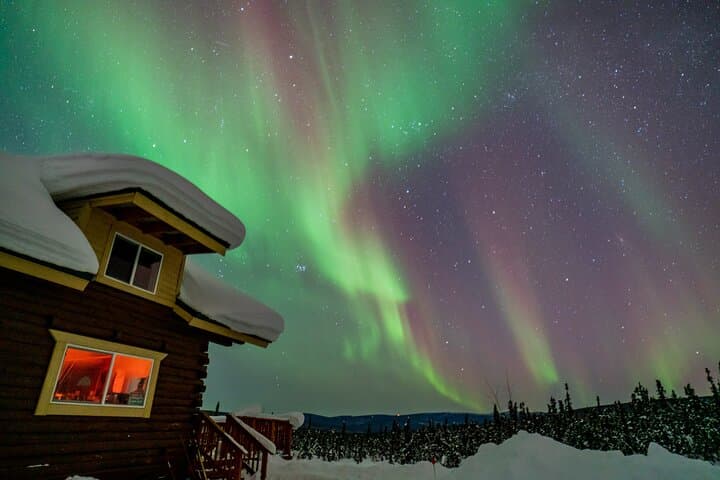
The van pulls off the lit highway and the town hum fades to a brittle hush. Above, the sky is a black bowl; then, like a curtain lifting, a green ribbon uncoils and begins to move. You feel the room of the world tilt—an ancient motion, slow and incomprehensible. The guide kills the engine, hands you a steaming cup from the cabin’s wood stove, and for a few cold minutes the only bright things are the lights in the sky and the warm breath fogging your face.
This is what the Fairbanks Northern Lights Tour delivers: a patient, guided chase of the aurora borealis with the comforts of a luxury tour vehicle and an authentic Alaskan cabin as a base camp. The trip folds practical logistics—transport, a warm refuge, and photo instruction—into the wonder of watching charged particles paint the night. Photographers and curious travelers alike come away with images and memories, but just as important, with a sense of how very alive the northern sky can be.
Geologically and astronomically, Fairbanks sits under the Auroral Oval, the ring-shaped region around the geomagnetic pole where auroral activity is concentrated. Locally, skies are often clearer in the Interior because the region's continental climate produces crisp, cold nights that coax the aurora into sharp relief. It's part science—solar wind meets magnetic field and lights chase lines of force—and part culture. The area around Fairbanks has been a place of sky stories for millennia, a landscape where Athabascan people interpreted the same phenomena modern visitors today chase with tripods and apps.
The tour is designed for accessibility rather than endurance. Expect an 8-hour night excursion with several stops in and around Fairbanks where guides scan the overhead conditions, set up cameras, and share framing and exposure tips. Walks to viewable perches are short—most viewpoints require only a few minutes of careful walking on snow-packed ground with minimal elevation gain. The cabin itself becomes a lesson in hospitality: a wood stove, hot drinks, and a warming shelter where your camera battery gets a chance to stabilize between shots.
Practical value is baked into the experience. Guides know local micro-climates—where clouds collect and where they thin—and they know where light pollution will be minimal. For photographers, the tour is more than luck; it’s instruction: how to expose for the aurora, how to find focus in the dark, and how to compose a wide-angle landscape with a glowing sky. If this is your first time shooting the northern lights, having a teacher at your shoulder while the aurora dances is the difference between a blurred attempt and a frame you’ll print.
You should come prepared for cold and patience. Plan your visit in the heart of the aurora season—late fall through early spring—aiming for hours between roughly 10 p.m. and 2 a.m., when geomagnetic activity and darkness align best. The tour runs about eight hours, costs from about USD 354.25 per person, and includes instant confirmation and free cancellation windows, providing flexibility in a season of unpredictable weather.
Culturally, Fairbanks is more than an aurora stop; it’s a place with mining and frontier history, small-town breweries, and a tight-knit community of guides and photographers who have turned night-sky guiding into an exacting craft. After the campfire photos and hot cocoa, many visitors head back to town to compare shots and swap stories—the storytelling is as much a part of the night as the lights.
If you’re thinking about booking, pick a night when the forecasted KP index and cloud cover look favorable, and lean on local expertise: tours like the <a href="https://app.advcollective.com/local-experts/fairbanks-northern-lights-photography-tour-chase-the-aurora-from-a-cozy-cabin">Fairbanks Northern Lights Photography Tour</a> curate times and places that maximize your chances. Bring spare batteries and a tripod, dress in insulated layers, and give the sky time; auroras can be fickle, arriving in slow undulations or rushing overhead with sudden intensity.
Why go? Because the aurora is one of those rare natural spectacles that feels both global and intimate at once. It’s a planetary conversation you get to witness from a wooden cabin and a heated van. And because people who chase auroras in Fairbanks usually leave with more than photographs: they carry a sharper sense of scale, a clearer image of how weather, magnetism, and human curiosity intersect under the long northern night.
For practical booking and a tour that blends comfort and instruction—plus pickup and guiding through the best local viewing corridors—see the <a href="https://app.advcollective.com/local-experts/fairbanks-northern-lights-photography-tour-chase-the-aurora-from-a-cozy-cabin">Fairbanks Northern Lights Photography Tour</a>. If you want a gentle, guided introduction to aurora photography with a warm cabin to return to between shots, this is how to do it right.
Whether you want one great photograph or a night that reorients your sense of the sky, the Fairbanks experience is efficient, rooted in local knowledge, and quietly spectacular.
Trail wisdom
Small choices, better day.
Layer for the Night
Temperatures can plummet—wear a down jacket, insulated boots, and avoid cotton; bring a face mask for wind chill.
Bring Extra Batteries
Cold drains camera batteries quickly—carry spares inside an inner pocket to keep them warm.
Use a Sturdy Tripod
Aurora exposures require steady framing—choose a solid tripod and a remote shutter release.
Watch the Clock
Prime aurora hours are often between 10 p.m. and 2 a.m.; plan sleep and logistics accordingly.
Local knowledge
Read the place, not just the route.
Watch for native species including Moose, Arctic fox.
Keep an eye out for wildlife during the transition between areas and habitats. Respect distance guidelines.
Minimize light pollution by using red lights and avoiding flash photography near other viewers; pack out all trash and respect private land.
Follow the guide's instructions on size limits, ethical handling, and leave-no-trace practices.
Ester Dome overlook for a quieter local view. Cleary Summit pullouts where light pollution is lower
Locally recommended viewpoints and quiet spots known best to local operators.
Fairbanks grew from gold‑rush roots and sits on traditional Athabascan lands; the aurora has been part of local oral histories for centuries.
Maritime roots and regional tradition shape the waterways and working coasts.
Seasonal guide
Four versions of the same landscape.
Spring
Best forLonger dark windows · Crisp clear nights
ChallengesMelting snow can create muddy roads · Variable temperatures
Late winter to early spring (March–April) offers long, dark nights with improving weather—ideal for clear aurora views.
Summer
Best forMidnight sun experiences · Hiking and daylight activities
ChallengesVery short nights limit aurora viewing · Most aurora tours do not operate
Fairbanks’ summer brings nearly continuous daylight; aurora viewing is generally not feasible.
Fall
Best forEarly-season aurora · Fewer tourists
ChallengesUnpredictable weather · Shorter nights than deep winter
Autumn provides early dark skies and fewer crowds—good for those combining fall travel with aurora hopes.
Winter
Best forPeak aurora visibility · Snowy landscapes for contrast
ChallengesExtreme cold and icy roads · Limited daylight for daytime activities
Winter is the prime season for aurora hunting: long nights and frequent activity make it the optimal time to visit.
Operator details
What the booking data adds.
Included
- ✓Hot drinks
- ✓Hotel pickup and drop-off
- ✓Web quality photographs and portraits
- ✓Snacks
- ✓Coffee and/or Tea
Not included
- —Gratuities
Good to know
- ✓Not recommended for travelers with spinal injuries
- ✓Not recommended for travelers with poor cardiovascular health
- ✓Suitable for all physical fitness levels
- ✓Minimum age 11. For groups with younger children, please inquire about our private northern lights tour.
Pack with intention
What to bring.
Good to know
Common questions.
The tour runs approximately 8 hours (evening into late night). Guides set pickup and return times during booking.
Plan the edges
The details that make the day easier.
Fairbanks sits beneath the Auroral Oval and, according to the Geophysical Institute at the University of Alaska Fairbanks, can experience auroras on roughly 200 nights a year—one reason it’s world-renowned for viewing.
After the tour, head to downtown Fairbanks for a warming meal—local favorites include riverfront comfort food and craft beer at Silver Gulch or The Pump House; for a longer soak, Chena Hot Springs combines aurora viewing with thermal pools.
- Closest airport
- Fairbanks International Airport (FAI)
- Typical driving from downtown
- 20–60 minutes to viewing sites
- Cell service
- Reliable in town, limited in remote pullouts
- Permits
- None required for public viewing; respect private-property signs.
Minimize light pollution by using red lights and keeping headlamps dim; stay on established roads and avoid trampling tundra vegetation—pack out all waste.
Explore by topic
Follow the threads.
Keep exploring
Make the story part of the trip.
Set out from Bass Harbor for a private, customizable day on Blue Hill Bay — lighthouses, puffins, seals, and the chance to feel Acadia from the water. Small groups, local captains, unforgettable views.
In four hours you can move from shaded canyon ferns to wind-scoured coastal ridgelines, guided by someone who knows where the light—and the hidden views—live. This private half-day hike on the Monterey Peninsula or Big Sur is compact, curated, and perfect for travelers who want depth without a multiday commitment.
 Related story
Beneath a sky of shifting light, Skaftafell’s ice reads like a map of time. This three-hour guided glacier hike mixes technical instruction with geology and culture: compact, safe, and unforgettable.