
What the day feels like
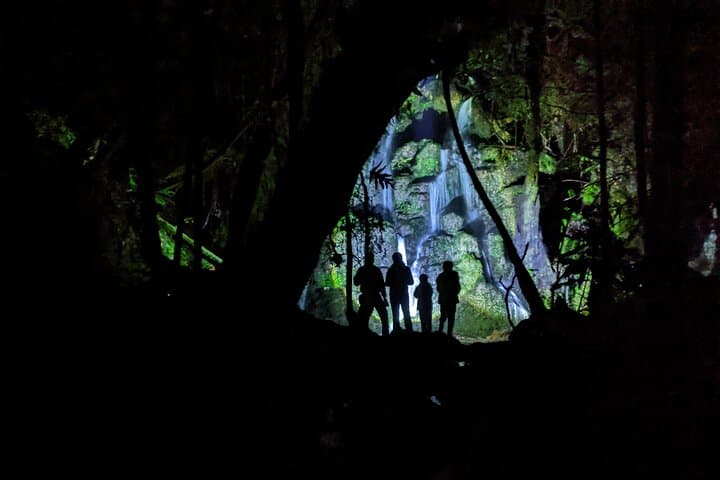
You leave Rotorua’s glow of streetlamps behind and slip into a different kind of dark—one that hums softly with insect life and breathes the green, damp scent of native rata and rimu. The guide dims the headlamp; for a moment there is only the near-silence of bush and the distant thrum of water. Then, like a mapped constellation brought low, tiny blue-green pinpricks begin to appear along the mossy bank: glow-worms, each a patient lantern hung on a silken thread. The effect is not a movie trick but a living, breathing ceiling of slow-fire—delicate, intimate, strange.
This three-hour nocturnal walk out of Rotorua is deceptively simple. It asks little of your knees and more of your attention. Trails are short—roughly 2–3 kilometers round-trip, along soft forest paths and boardwalk, with a few stairs—and the real work is slowing down, letting your eyes adjust until the glow-worms emerge from the black. Guides keep groups small, whispering biological details and asking for practical silence; they point out waterfalls that glint silver at the edge of vision and the shapes of tree ferns that look like prehistoric umbrellas under moonlight.
Glow-worms in New Zealand are Arachnocampa luminosa, an endemic insect whose life cycle is as fascinating as its light. The female larva spins sticky silk snares from a sheltered cave or bank and dangles them into the darkness; at the end of each thread is a bioluminescent lure that attracts prey. Rotorua’s geothermal and humid microclimates—combined with dense native forest and trickling waterways—create the ideal habitat. The phenomenon is ancient in ecological terms and a small, fragile wonder in human ones: once you’ve stood beneath that delicate curtain you understand why locals treat it with reverence.
The experience here is cultural as well as natural. Rotorua sits in the central North Island, a region defined by Maori history, geothermal power, and a long-standing relationship between people and land. Some tours are run or supported by local iwi (tribes), and the storytelling shared before and after the walk often draws on traditional ecological knowledge: why particular streams are healthy, or why certain trees are revered. That sense of place—forest, river, and story—sharpens the walk. You are not just watching an insect; you are moving through a landscape that has been read and shaped by humans for generations.
Practically, the walk is designed to be accessible. It’s a short, low-elevation route suitable for families and most fitness levels, but conditions matter: the forest floor gets muddy, boardwalk can be slick, and the weather in Rotorua can pivot quickly. Guides supply the context—what the glow-worm is doing tonight, where the colony is densest, how to minimize human impact—and they enforce the simple rules that protect the animals: no torches, no flash photography, stay on the trail.
If you’re a traveler who likes specifics, here are the logistics brought down to earth. The walk lasts about three hours from meet to finish, usually beginning after dusk (timing depends on season). Footwear should be solid—trail shoes or hiking boots—and a waterproof mid-layer is wise even on mild nights. Bring a headlamp with a red filter for use on approach, but be prepared to switch it off; the glow-worms are easily stressed by bright light. Most tours operate year-round, with summer offering milder temperatures and winter giving clearer, crisper nights—each season shapes the scene differently.
Beyond the glow-worms, the evening often closes with skyward views. Rotorua’s light pollution is modest in many parts, and guides often encourage a pause to look up at the Milky Way or to spot southern constellations framed by tree silhouettes. It’s an easy, complete nature experience—forest, water, insect life, and stars—compressed into a single, manageable outing.
Why go? Because this is one of those rare outings that feels both effortless and profound. It’s low on sweat and high on wonder. It’s family-friendly yet romantic, scientifically interesting yet immediately beautiful. It’s also a reminder that even small things—tiny, bioluminescent larvae—can create experiences that reframe how you think about a place.
Plan to arrive in Rotorua with a couple of hours to spare so you can eat and relax; the city’s Eat Streat precinct and a handful of local cultural centers offer a good mix of food and context. Remember that responsible tourism matters here: leave no trace, keep voices low, and follow your guide’s rules so the glow-worms continue to light these banks for years to come.
If you’re building an itinerary around this tour, pair it with a daytime geothermal walk, a soak at the Polynesian Spa, or a cultural evening at a local marae or village. Come curious, come steady, and don’t rush the dark—some of the best travel moments are the ones that make you stop and simply look.
Trail wisdom
Small choices, better day.
Go Slow and Be Silent
Glow-worms respond to light and noise—quiet, steady movement improves viewing for everyone and reduces stress on the animals.
Bring a Red-Filter Headlamp
Use a headlamp with a red filter for approach and for reading; avoid white light near colonies.
Wear Grippy Footwear
Trails can be muddy and boardwalks slick—trail shoes or boots with good tread are recommended.
No Flash Photography
Flash and bright screens will ruin viewing and can harm glow-worms—trust the guide and enjoy the moment.
Local knowledge
Read the place, not just the route.
Watch for native species including New Zealand long-tailed bat (occasionally heard), Forest geckos and native night insects.
Keep an eye out for wildlife during the transition between areas and habitats. Respect distance guidelines.
Tours follow strict guidelines—stay on paths, minimize light and noise, and respect breeding sites to protect the glow-worm population.
Follow the guide's instructions on size limits, ethical handling, and leave-no-trace practices.
Small waterfalls and grottoes along the trail where glow-worms concentrate. Nearby Maori cultural centers offering combined storytelling and night-walk experiences
Locally recommended viewpoints and quiet spots known best to local operators.
Rotorua is a geothermal and cultural hub for local iwi; night walks often include stories about human relationships with the forest.
Maritime roots and regional tradition shape the waterways and working coasts.
Seasonal guide
Four versions of the same landscape.
Spring
Best forActive insect life · Mild evenings · Lush forest
ChallengesUnpredictable rain · Higher humidity
Spring brings greening understorey and increasing insect activity; nights can be damp—pack a light rain layer.
Summer
Best forWarmer nights · Longer tourism hours · Easier travel logistics
ChallengesOccasional storms · More visitors
Summer offers comfortable evening temperatures and reliable access, though popular dates fill fast.
Fall
Best forClear nights · Fewer crowds · Crisp air
ChallengesCooler temperatures after dusk
Autumn’s crisp nights often yield excellent visibility; bring a warm mid-layer for post-walk stargazing.
Winter
Best forClear starry skies · Intimate small groups
ChallengesColder conditions · Shorter window of darkness if cloudy
Winter nights can be crystal-clear but cold—dress in insulated layers and keep moving between stops.
Operator details
What the booking data adds.
Included
- ✓Light refreshments
- ✓Driver/guide
- ✓Air-conditioned vehicle
Good to know
- ✓Not recommended for travelers with poor cardiovascular health
- ✓Travelers should have at least a moderate level of physical fitness
- ✓A maximum of 8 people per booking
- ✓Operates in most weather conditions, please dress appropriately
- ✓Minimum age is 6 years old
- ✓Supportive footwear such as trainers or hiking boots is recommended
- ✓This tour includes a 2 kilometer walk, a good level of fitness is require for all participants
- ✓Risk Disclosure: We operate a strict safety management system that is audited to New Zealand standards. It is important for you to be aware of the risk and hazards of this tour which are: Uneven grounds, tree roots, rocks and slippery surfaces that could result in slips, trips and falls causing injury / strains /sprains / or broken bones. Low light conditions, use torches / flashlights accordingly
Pack with intention
What to bring.
Good to know
Common questions.
The tour lasts approximately 3 hours from meet-up to finish, including walk time and interpretive stops.
Plan the edges
The details that make the day easier.
New Zealand's glow-worm (Arachnocampa luminosa) is endemic and produces light via bioluminescence to lure prey—its larvae hang sticky silk threads studded with droplets to catch insects.
After the walk, head to Rotorua’s Eat Streat for dinner and local craft beer, or warm up at the Polynesian Spa; look for Maori cultural experiences that pair storytelling and cuisine with the region’s natural history.
- Closest airport
- Rotorua Regional Airport (ROT); Meeting point: central Rotorua (varies by operator); Driving time from Rotorua CBD: typically 10–30 minutes; Cell service: limited in dense bush; Permits: none for guided tours, but follow guide rules; Bring: layers and waterproofs.
Tours enforce no-flash policies and restricted access to sensitive banks—stay on trails, pack out trash, and avoid touching glow-worm habitats to ensure colonies persist.
Explore by topic
Follow the threads.
Keep exploring
Make the story part of the trip.
Set out from Bass Harbor for a private, customizable day on Blue Hill Bay — lighthouses, puffins, seals, and the chance to feel Acadia from the water. Small groups, local captains, unforgettable views.
In four hours you can move from shaded canyon ferns to wind-scoured coastal ridgelines, guided by someone who knows where the light—and the hidden views—live. This private half-day hike on the Monterey Peninsula or Big Sur is compact, curated, and perfect for travelers who want depth without a multiday commitment.
 Related story
Beneath a sky of shifting light, Skaftafell’s ice reads like a map of time. This three-hour guided glacier hike mixes technical instruction with geology and culture: compact, safe, and unforgettable.