
What the day feels like
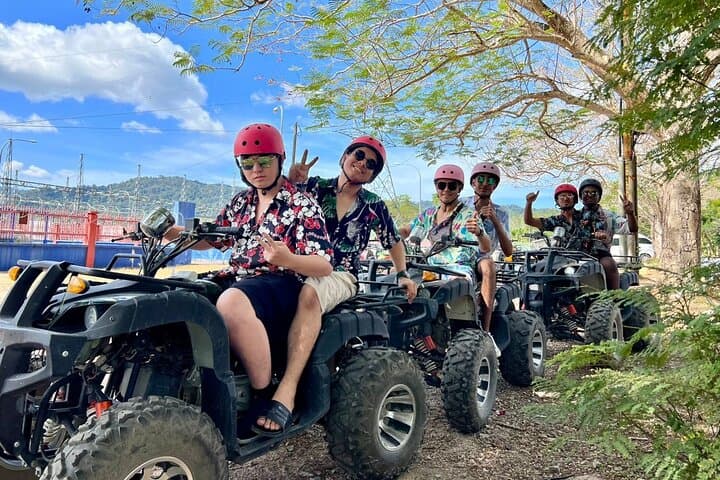
You arrive on the island with salt in your hair and a plan to do more than sunbathe. A private minivan takes you off the main road and past rubber plantations toward a patchwork of paddy fields and braided streams. The day opens like a two-act show: first the ground moves under you—ATV tires sluicing through red earth and shallow water—then the canopy claims you, a network of cables and platforms daring you to fly, swing and glide above a rainforest that smells of wet leaves and citrus blossoms.
Langkawi's adventure loop is compact and muscular. In roughly four hours you’ll trade the island’s duty-free shopping for dirt tracks and treetops: an ATV route that tracks through villages and wetlands, and SKYTREX’s aerial course—ropes, ziplines and suspended obstacles—anchored in a rainforest that grows out of weathered limestone. The contrast is part of the appeal. The ATVs put you at the pace of the island’s working landscape; the aerial park flips the perspective, literally, so that the jagged limestone spines and emerald canopies rearrange themselves into a playground.
Geologically, Langkawi is older than its resorts. The island’s karst limestone—eroded into cliffs, caves and flooded gullies—dates back hundreds of millions of years. That stony skeleton shows in the way the forest clings to cliffs and the way streams channel toward the sea. In 2007 Langkawi was recognized as a UNESCO Global Geopark; the certificate is not just a badge, it’s a reason the island’s guides are focused on stewardship as much as thrills. Culturally, the route skirts small Malay kampungs (villages) where men tie up rattan bundles and women tend vegetable plots. You might stop to learn how locals coax a living from pandan leaves, or watch a shrimp boat skim a nearby inlet. The island’s modern tourist economy sits beside age-old rhythms of fishing, rice cultivation and craft.
On the ground, the ATV segment is an equal-opportunity test of concentration and fun. Tracks cut across fields and skirt streams; there are sections of slick clay, patches of gravel and short climbs that reward a steady throttle with a view of the sea between palms. Guides calibrate the route to rider experience, coaxing novices through technical sections and offering optional, more aggressive lines for riders who want to push. Safety briefings are brisk but thorough—helmet, gloves, and a short handling lesson—so the first minutes often feel like learning the language of the machine. After a few corners you stop noticing the engine and start noticing the place: villagers waving from porches, water buffalo turning slow-eyed in the mud, a child pointing at the foreign sounds.
Then you hand the throttle back and prepare to hand your weight to the ropes. SKYTREX is a contrast of concentration and breath—cord and knot engineering, harnesses that move weight from shoulders to hips, and platforms that are improbable landings above a living, breathing forest. The course alternates ziplines that let you traverse ravines in seconds with obstacle sequences that force you to plan every reach and foot placement. The forest feels like an accomplice: it rustles when you step, it snaps a twig when you misjudge a footing, and it leans its branches toward you as if to offer challenge.
What makes the day especially rewarding is the scale: a four-hour package that offers a full sensory arc. You get the tactile grit of the island under your boots, the mechanical hum of the vehicle beneath you, the rush of air on longer ziplines, and the quiet after the climbs when the canopy settles and you can hear nothing but birds. The tour’s private pickup simplifies logistics—no taxi negotiations after the morning’s adrenaline—and the guides provide context as well as commands: pointers to indigenous flora, the story of local farming and, sometimes, a stop at a small roadside stall for fresh fruit.
Practicalities matter here. The tour runs about four hours and demands steady footwork, basic balance and no fear of heights. Expect humidity, sun and river spray. Wear closed-toe shoes with grip, a long-sleeve baselayer to protect against straps and branches, and bring insect repellent, sunscreen and a small hydration pack. If you plan to film, a chest mount or a camera with a secure strap will keep footage (and devices) safe. The best time of day is morning: the air is cooler and the light through the trees is cleaner; afternoons can bring sudden tropical downpours that turn clay into slick challenge.
The value-proposition is straightforward: for roughly a half-day and one price you experience two ways of moving through the island and some cultural touchpoints—village stops and conversations that make the place feel lived-in rather than staged. Guides are typically local and practical: they’ll show you a faster line on the ATV, coach you through a tricky bridge on the aerial course and point out a medicinal plant that looks like nothing special until you learn its use.
If you’re building a Langkawi itinerary, fold this tour into a sequence that includes a mangrove boat trip or a cable car ride—both will add complementary perspectives. After the adrenaline, grab a late lunch in Pantai Cenang where seafood grills over charcoal and the coconut shakes are thick. You’ll leave with a new spatial sense of the island: that it’s not only a place to lounge, but a living landscape that invites navigation, curiosity and a bit of courage.
In the end, this is an island experience that rewards motion. The ATVs tempt you to go faster; the aerial ropes ask you to slow down and measure your step. Together, they form a tidy lesson in how to balance impulse and preparation—a good metaphor for travel itself. Whether you come for the rush or the views, you’ll leave with more than a memory of speed; you’ll understand, in the grain of crushed limestone and the stitch of a harness, a deeper shape of Langkawi.
Trail wisdom
Small choices, better day.
Morning Start
Book a morning slot to avoid midday heat and afternoon tropical showers; visibility and traction are best earlier in the day.
Protect Your Tech
Use secure mounts and waterproof cases—ATV mud and canopy dust will ruin loose phones or cameras.
Shoes Matter
Wear sturdy closed-toe shoes with good tread for both riding and the aerial obstacles.
Hydrate & Pace
Bring a small hydration pack and sip steadily; humidity and exertion add up quickly.
Local knowledge
Read the place, not just the route.
Watch for native species including White-bellied sea eagles, Long-tailed macaques.
Keep an eye out for wildlife during the transition between areas and habitats. Respect distance guidelines.
The Geopark status promotes low-impact tourism—stay on marked trails, don’t remove geological samples, and consider booking local guides to support community stewardship.
Follow the guide's instructions on size limits, ethical handling, and leave-no-trace practices.
Telaga Harbour small seafood stalls for fresh grilled fish. A quiet viewpoint near the rice paddies off Jalan Ayer Hangat
Locally recommended viewpoints and quiet spots known best to local operators.
Langkawi’s karst landscape is part of the UNESCO Global Geopark; the islands have long been a crossroads of Malay, Acehnese and trading cultures.
Maritime roots and regional tradition shape the waterways and working coasts.
Seasonal guide
Four versions of the same landscape.
Spring
Best forFewer crowds · Cooler mornings
ChallengesIntermittent rain · Sticky humidity
Spring (March–May) brings warm mornings and fewer tourists; expect a mix of sun and short rain showers that can make some tracks slick.
Summer
Best forLong daylight hours · Vibrant foliage
ChallengesHigh heat and humidity · Potential midday storms
Summer is hot and humid—start early to beat heat; afternoon thunder showers are common and may temporarily pause aerial activities.
Fall
Best forLower prices · Lush post-monsoon greenery
ChallengesUnpredictable rains · softer trail conditions
Fall sees lush vegetation after seasonal rains; trails can be muddy but the landscape is at its greenest.
Winter
Best forDry season conditions · Cleaner views
ChallengesPeak travel season · Higher prices
Winter (December–March) is driest and brightest—prime time for stable trails, clear canopy views and comfortable rides.
Pack with intention
What to bring.
Good to know
Common questions.
The experience runs about four hours from private pickup to drop-off, combining an ATV route and SKYTREX aerial course.
Plan the edges
The details that make the day easier.
Langkawi is designated as a UNESCO Global Geopark, noted for its ancient limestone formations and mangrove ecosystems.
After the tour, head to Pantai Cenang for fresh grilled seafood and coconut shakes; look for local nasi campur stalls and small roadside kopitiams for kopi tarik and a taste of everyday island life.
- Closest airport
- Langkawi International Airport (LGK); Typical driving time from major hotel zones: 20–40 minutes; Cell service: Good in town, patchy in remote forest sections; Permits: None typically required but park fees
This tour runs inside areas recognized by the Langkawi Geopark—stay on trails, avoid feeding wildlife and support local guides who practice low-impact tourism.
Explore by topic
Follow the threads.
Keep exploring
Make the story part of the trip.
Set out from Bass Harbor for a private, customizable day on Blue Hill Bay — lighthouses, puffins, seals, and the chance to feel Acadia from the water. Small groups, local captains, unforgettable views.
In four hours you can move from shaded canyon ferns to wind-scoured coastal ridgelines, guided by someone who knows where the light—and the hidden views—live. This private half-day hike on the Monterey Peninsula or Big Sur is compact, curated, and perfect for travelers who want depth without a multiday commitment.
 Related story
Beneath a sky of shifting light, Skaftafell’s ice reads like a map of time. This three-hour guided glacier hike mixes technical instruction with geology and culture: compact, safe, and unforgettable.