
What the day feels like
The morning in central Bali opens with a humidity that hangs like a curtain—warm, thick, and fragrant with frangipani. You leave the rice paddies of Ubud behind and slip into the island’s green underbelly: a mosaic of coconut palms, terraced rice fields, and a forested spine that funnels the Ayung River down toward the sea. The day begins with a helmet and a briefing, but the real orientation comes when the river speaks: the Ayung dares you with a steady current, murmuring through narrow gorges and then rising into a churn of whitewater that insists you pay attention.
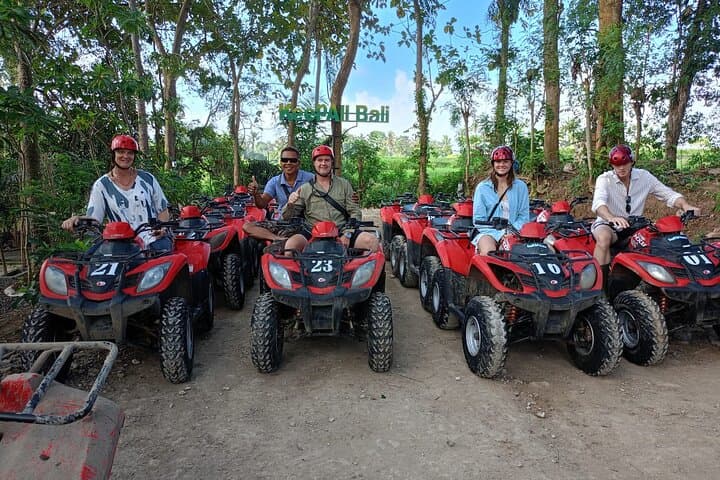
This is a one-day, two-activity pairing that works because the elements balance—motorized grit and watery flow. The ATV segment threads through steep, jungle-cut tracks and along farm tracks that edge into village life. You’ll feel the terrain under you in a way that walking rarely affords: sudden dips, a gravel-laced switchback, a dust plume that settles like film on your sunglasses. It’s immediate and tactile. Then, after a local lunch and a safety check, the river claims the next act. Rafting on the Ayung is largely class II to III rapids—fun, sometimes punchy, not a full-throttle dropfest. It’s a river that teases you with sculpted limestone walls, carved stone reliefs, and the occasional Balinese temple Lotus rising from the banks.
Geologically, Bali is volcanic and the Ayung has spent millennia cutting soft volcanic ash and harder bedrock into the valleys you slide through. The gorge’s contours guide the raft; the current translates the island’s vertical history into movement. Culturally, this stretch of Bali is intimate—private compounds and family temples sit just above the riverline, and villagers still tend small plots of rice and vegetable gardens. Expect to see carved stone reliefs and offerings tucked into crevices, tiny cultural gestures that speak to daily devotion as much as they do to tourism’s interest in authenticity.
Why take a combined ATV/rafting tour? It’s efficient, and it gives a fuller portrait of the island in eight hours: the land’s roughness under the ATV and the water’s cool correction in the raft. For travelers who have a single day in Ubud or Gianyar, it’s a concentrated sample of Bali’s topographies and social rhythms. For families, it’s well-paced—alternating high-energy driving with collaborative paddling and breaks for pictures and food. For seasoned adventurers, the terrain is a friendly playground with chances to push skills and—importantly—work on timing and reading water.
Practicalities matter. The full experience runs roughly eight hours including hotel pickup and drop-off (the operator provides transfers), a safety orientation for both activities, and a riverside lunch. The ATV portion typically lasts 1–2 hours depending on the route and group, traversing steep forest tracks with short climbs and technical sections; bring a willingness to shift your weight and trust your guide. The rafting leg covers several river kilometers with rapids that require teamwork—paddle commands, leaning into eddies, and the occasional sprint to power through a boil. Guides accompany each raft and offer instruction for first-timers.
Timing is everything. The dry season (roughly April–October) is ideal for clearer skies and more predictable river levels; wet-season runs can be fuller and more demanding. Morning pickups dodge the day’s hottest hours and leave flexibility should Bali traffic—or a sudden shower—push your schedule.
Safety is straightforward but not trivial. All participants get helmets, life jackets, and orientation. Keep your footwear secure—sandals with straps or lightweight shoes—and lock valuables away in waterproof bags provided by operators. Hydrate before and after: the combination of tropical heat and adrenaline is deceptively dehydrating. Expect to get wet on the river; expect dust on the trails. A small towel and a quick-change layer at the end of the day make the return trip more comfortable.
There’s also an environmental and social sensitivity to respect. Many guides are local and operate in family-run businesses that support nearby villages. Stay on marked trails during the ATV ride, avoid disturbing vegetation, and keep an eye out for local rituals—Balinese daily offerings and temple ceremonies are part of the landscape and should be treated with quiet courtesy. Choose operators that emphasize lower-impact practices: smaller groups, catch-and-release or minimal waste policies, and contributions to community projects.
What you leave with is a day’s worth of contrasts: the smell of river moss on your clothes, the satisfying ache of a long grip on a throttle, a handful of photos where sunlight slices through canopy and catches on whitewater. You’ll know the village names you passed, and the rhythm of Balinese hospitality: a simple packed lunch served with a smile, a guide’s steady hand when the raft rocks, a local mechanic tuning an ATV between runs.
It’s a pragmatic day of adventure—no frills, just terrain, water, and the soft cultural contour of Gianyar. For visitors with limited time, the combo tour is the most direct route to an authentic slice of island motion: the geology that makes the river sing, the cultural markers stitched into the gorge, and a practical, tactile way to spend a day that feels both generous and earned.
Trail wisdom
Small choices, better day.
Hydrate Before You Start
Drink plenty of water before the ATV leg; heat + exertion can sneak up on you in Bali’s humid climate.
Secure Footwear
Use closed-toe sandals with straps or lightweight trail shoes for the ATV; bring river shoes or old sneakers for rafting.
Protect Your Tech
Use a small dry bag for your phone and camera; most operators provide storage but waterproof protection is your backup.
Follow Your Guide’s Commands
On the raft, quick, unified responses to paddle calls make the difference between a smooth run and a soaking.
Local knowledge
Read the place, not just the route.
Watch for native species including Kingfishers and small egrets along river edges, Long-tailed macaques in nearby forested patches (watch belongings).
Keep an eye out for wildlife during the transition between areas and habitats. Respect distance guidelines.
Operators who limit group sizes and use established trails reduce erosion; bring out any trash and avoid disturbing riverbank vegetation to protect the gorge’s fragile ecology.
Follow the guide's instructions on size limits, ethical handling, and leave-no-trace practices.
A quiet roadside warung serving freshly pressed sugarcane juice near the ATV trailhead. Small village temples and carved stone reliefs along the Ayung gorge—ask your guide for stops
Locally recommended viewpoints and quiet spots known best to local operators.
The Ayung River valley has long been part of Balinese ceremonial geography—temples and carved reliefs along the gorge reflect centuries of religious practice tied to water.
Maritime roots and regional tradition shape the waterways and working coasts.
Seasonal guide
Four versions of the same landscape.
Spring
Best forLower crowds · Lush early-green scenery
ChallengesOccasional brief rains · Variable river levels
Spring (March–May) transitions into Bali’s dry season—rivers calm while the landscape is still vivid from prior rains, making visually rich but occasionally wet mornings.
Summer
Best forStable river conditions · Sunlit photography
ChallengesHeat and humidity · Peak tourist crowds
Summer (June–August) is dry and predictable—ideal for consistent rapids and clear ATV trails, though expect more visitors and hotter afternoons.
Fall
Best forFewer crowds · Good river flow early in season
ChallengesIntermittent showers in late months · Shorter daylight
Fall (September–November) keeps much of the dry season’s benefits early on; later months may see rain returning, which can raise river levels.
Winter
Best forCooler mornings · Lush vegetation after rains
ChallengesHeavier rains can swell the river · Mud on trails
Winter (December–February) is Bali’s wet season—expect fuller rivers and muddier ATV routes; choose this time only if you’re comfortable with wetter conditions.
Operator details
What the booking data adds.
Included
- ✓Private transportation
- ✓Lunch
- ✓All Fees and Taxes
Good to know
- ✓Public transportation options are available nearby
- ✓Not recommended for travelers with spinal injuries
- ✓Not recommended for pregnant travelers
- ✓Not recommended for travelers with poor cardiovascular health
- ✓Travelers should have at least a moderate level of physical fitness
Pack with intention
What to bring.
Good to know
Common questions.
The full experience is about 8 hours including transfers; the ATV section typically lasts 1–2 hours, and the rafting leg about 1–3 hours on the water depending on river conditions and route.
Plan the edges
The details that make the day easier.
The Ayung River is the longest river in Bali and its banks feature carved stone reliefs and several family temples—symbols of the deep relationship between water and Balinese ritual.
After the day, head to Ubud’s small warungs for crispy Bebek Bengil (crispy duck) or a plate of Nasi Campur; grab a local kopi tubruk from a roadside stall and look for a traditional dance performance at a nearby temple in the evening.
- Closest airport
- Ngurah Rai (Denpasar) ~1–1.5 hours drive to Ubud; Typical meeting point: Ubud
- Gianyar hotels (operator pickup included); Driving distance from Ubud center
- 15–45 minutes depending on route; Cell service: generally good in Ubud, intermittent in the gorge; Permits: none typically required—operator handles local permissions; Confirmation: Instant; Cancellation: Free cancellation available.
Support operators who limit group sizes, use established tracks to prevent erosion, and provide trash removal; avoid single-use plastics and respect village spaces and temple protocols.
Explore by topic
Follow the threads.
Keep exploring
Make the story part of the trip.
Set out from Bass Harbor for a private, customizable day on Blue Hill Bay — lighthouses, puffins, seals, and the chance to feel Acadia from the water. Small groups, local captains, unforgettable views.
In four hours you can move from shaded canyon ferns to wind-scoured coastal ridgelines, guided by someone who knows where the light—and the hidden views—live. This private half-day hike on the Monterey Peninsula or Big Sur is compact, curated, and perfect for travelers who want depth without a multiday commitment.
 Related story
Beneath a sky of shifting light, Skaftafell’s ice reads like a map of time. This three-hour guided glacier hike mixes technical instruction with geology and culture: compact, safe, and unforgettable.