
What the day feels like
The boat slips from Angra do Heroísmo’s marina like a pen scratching a fresh line across the Atlantic. Salt spray punctuates the air, and the island recedes into a patchwork of cliffs and green slopes, the kind of volcanic landscape that looks purposeful—recent enough to still be telling stories. You feel the boat’s wake push you forward and somewhere below, black basalt pinnacles rise from the deep, sharp as the ribs of the earth. This is Terceira: an island of old eruptions and still-young seas, and for certified divers it’s a short, electric tunnel into an Atlantic that keeps surprising you.
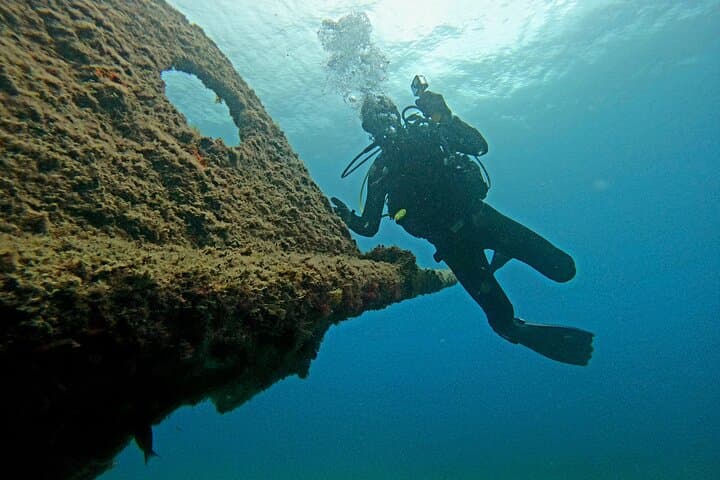
On a typical afternoon with a local operator you’ll be on the water for roughly four hours—two dives, surface interval, and time to swap stories with the crew. The itinerary is compact and efficient: a quick safety briefing, an easy kit-up on the quayside, then a 10–30 minute run to the dive sites. Expect varied topography: submerged cliffs that fall away into cobalt, bommies that host groupers and octopus, and occasional wrecks—hull skeletons that still hold cargo of history. Visibility usually runs between 10 and 30 meters depending on season; depths for the two dives typically fall between 18 and 40 meters, manageable for experienced recreational divers.
Terceira’s geology explains its underwater character. The island is a product of fissural and central-volcanic activity; lava flows, tuff cones and submarine calderas shape the seafloor. Those structures create dramatic vertical walls and caverns that are prime real estate for kelp, sponges and encrusting corals, and they funnel nutrients that attract pelagics. Diving here feels like following a subterranean ridge line of the island’s memory—every ledge, every crack a record of the last eruption’s mood.
There is a human layer too. Angra do Heroísmo, the nearest town and usual staging point, is a UNESCO World Heritage site for its role as an Atlantic port during the Age of Sail. That history persists in the harbor’s layout and the old fortifications that watch the water. Modern dive boats thread past that same shoreline, connecting centuries of ocean traffic: sailors, merchants, and now, divers in wetsuits looking for turtles and tuna where once caravels anchored.
Marine life in these waters is a steady surprise. Loggerhead turtles and Atlantic spotted dolphins turn up with enough frequency to become a highlight of surface intervals, and in summer you may see schools of tuna, garfish and rays patrolling open water. Closer to the reef, dusky groupers and colorful nudibranchs make for good macro subjects; big animals like blue sharks are occasional visitors in deeper water. The sea feels generous but also capricious—currents will flirt with you, nudging and then letting you pass. That’s part of the rhythm here: read the tide, move with the water, and you’ll see more.
Practicalities are straightforward: this specific trip is for certified divers only—operators will verify certification and recent dive experience. The duration is 240 minutes (about four hours) and the advertised price starts from USD 131.89. Most departures happen from Angra’s marina, with short boat runs keeping the total day compact enough for a half-day excursion. Operators supply tanks and weights; check in advance about rental BCDs, regulators, and whether you need a dive computer (it’s recommended).
Preparation makes the difference between a good day and a great one. Hydrate before boarding, be realistic about seasickness, and double-check your certification and insurance. On the boat, pay attention to briefings—current lines, exit points, and your buddy’s plan are non-negotiables. Underwater, steady buoyancy is your ticket to moving slowly through a busy, fragile ecosystem without disturbing it.
Logistics-wise, Lajes Airport (TER) is the island’s gateway; Angra do Heroísmo is a 15–25 minute drive from there. Cell coverage is reliable on land but thins offshore; expect no signal once you’re out at the dive sites. There are no special permits for recreational diving beyond your certification and a standard operator waiver, but respect local rules: many areas are monitored for conservation, and operators will brief you if a site is protected.
For the traveler who wants more than a checklist, Terceira rewards curiosity. Pair a dive day with an evening in Angra’s old town—eat alcatra (a slow-cooked beef stew unique to the island), find a harbor-side beer, and walk the cobbled streets under the watchful silhouette of fortified walls. On the water you’ll be focused on currents and cameras, but on land you’ll sense how the island’s history and geology fold into each other.
This trip is not for new divers; it’s an offering to those with enough training to read their gauges and comfort in offshore conditions. But for certified divers, Terceira is a concise Atlantic immersion: two dives, a half-day’s worth of ocean that punches well above its weight in variety and spectacle. When the second dive ends and the boat turns for the quay, you’ll have a pocket of Atlantic memories—vertical walls, a surprise turtle, the roar of unseen depths—compact, vivid, and worth the trip.
Trail wisdom
Small choices, better day.
Bring Your Certification Card
Operators require proof of certification and recent dive experience; a digital copy may not be accepted—bring the card.
Set a Conservative Depth Limit
Plan with your buddy and the guide—sites can reach 40 m; keeping dives shallower preserves air and increases margin.
Check Sea Conditions
Short boat runs still expose you to Atlantic swell—ask the operator about current and surge for the day.
Protect the Reef
Use a surface marker buoy and maintain neutral buoyancy to avoid contact with fragile benthic life.
Local knowledge
Read the place, not just the route.
Watch for native species including Loggerhead Turtle, Atlantic Spotted Dolphin.
Keep an eye out for wildlife during the transition between areas and habitats. Respect distance guidelines.
Local operators follow codes of conduct for marine protection—avoid touching benthic life, use reef-safe sunscreen, and follow guide instructions to minimize impact.
Follow the guide's instructions on size limits, ethical handling, and leave-no-trace practices.
Ilhéus das Cabras (offshore islets) for clear-water drift dives. Porto Martins and local coves for calm shore dives and snorkeling
Locally recommended viewpoints and quiet spots known best to local operators.
Angra do Heroísmo was a key Atlantic stopover during the Age of Sail; its harbor still bears traces of that maritime history.
Maritime roots and regional tradition shape the waterways and working coasts.
Seasonal guide
Four versions of the same landscape.
Spring
Best forMacro life · Cool water dive training
ChallengesUnpredictable swells · Cooler water temps 15–18°C
Spring offers vivid nudibranchs and training-friendly conditions, but water remains cool and weather can shift quickly.
Summer
Best forPelagic sightings · Warmest water and best visibility
ChallengesMore boat traffic · Higher demand for bookings
Summer is peak diving: clearer water (15–22°C), chances for tuna and rays, and longer surface intervals.
Fall
Best forCalmer seas · Extended daylight
ChallengesOccasional storms rolling in · Variable visibility
Autumn often brings stable sea states and good visibility, though storms can appear with little notice.
Winter
Best forDramatic seascapes · Fewer tourists
ChallengesColder water requiring thicker exposure suits · Rougher sea conditions
Winter dives are quieter and dramatic, but expect colder temps and potentially choppier boat runs.
Operator details
What the booking data adds.
Included
- ✓Guide
- ✓Insurance
Not included
- —Lunch
- —Snacks
- —towel ,swimwear
Good to know
- ✓Wheelchair accessible
- ✓Service animals allowed
- ✓Infants are required to sit on an adult’s lap
- ✓Not recommended for pregnant travelers
- ✓Suitable for all physical fitness levels
Pack with intention
What to bring.
Good to know
Common questions.
Yes. This trip is for certified divers only—operators will verify certification and recent dive logs.
Plan the edges
The details that make the day easier.
Angra do Heroísmo’s historic center is a UNESCO World Heritage Site for its strategic role and preserved urban fabric from the Age of Discovery.
After diving, head to Angra’s waterfront to try alcatra (a local slow-cooked stew), pick up bolo lêvedo bread at a bakery, and sip a cold beer near Praça Velha while watching boats return to port.
- Closest airport
- Lajes Airport (TER). Typical meeting point: Angra do Heroísmo marina. Driving from TER to Angra: ~15–25 minutes. Cell service: reliable on land, limited offshore. Permits: none beyond standard operator waivers.
Terceira’s marine habitats are sensitive—use reef-safe sunscreen, avoid contact with seabed life, and follow your guide’s instructions to reduce impact.
Explore by topic
Follow the threads.
Keep exploring
Make the story part of the trip.
Set out from Bass Harbor for a private, customizable day on Blue Hill Bay — lighthouses, puffins, seals, and the chance to feel Acadia from the water. Small groups, local captains, unforgettable views.
In four hours you can move from shaded canyon ferns to wind-scoured coastal ridgelines, guided by someone who knows where the light—and the hidden views—live. This private half-day hike on the Monterey Peninsula or Big Sur is compact, curated, and perfect for travelers who want depth without a multiday commitment.
 Related story
Beneath a sky of shifting light, Skaftafell’s ice reads like a map of time. This three-hour guided glacier hike mixes technical instruction with geology and culture: compact, safe, and unforgettable.