
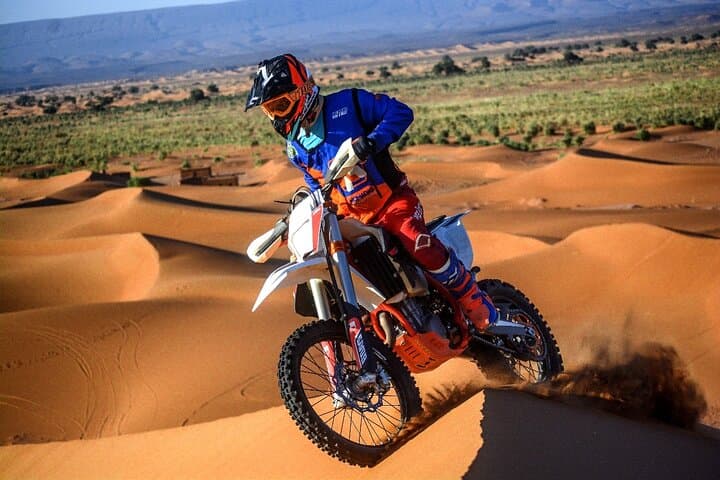
What the day feels like
The morning starts with a flat, cold light over the sea of sand. Engines idle like nervous beasts on the edge of sleep; then a few throttles open and the desert answers. The first crest swallows the sound and the dune exhales—soft, shifting sand spilling in long streams like brown smoke. You learn quickly here that the desert has its own motion, a slow, indifferent choreography that dares you to keep up. On a KTM, that dare becomes something you can meet, throttle wide open, suspension eating the chop and sand pushing back where it wills. Two days is just enough time to feel the rhythm of Erg Chebbi and the people who live at its margins: Berber families who have moved with these lands for generations, palm groves that tuck into wadis like secret gardens, and nights under a sky so full of stars it feels like another country.
This is not a sightseeing stroll. The 2 Day KTM Adventure Tour Around Merzouga Dunes is a focused, motorized crossing of the dunes and surrounding hamada. Expect long sandy runs, occasional rocky tracks, salt flats, and the kind of washboard that rearranges your teeth. Riders cover desert tracks that require throttle control, tire management, and steady line choices. Non-riders are not left behind—support vehicles ferry passengers who prefer the view to the handlebars—so the tour manages to be inclusive without diluting the ride.
Geologically, Erg Chebbi is an edge of the Sahara that answers the wind. These dunes were born as the Atlas Mountains shed material and the northwesterly winds sorted it into broad ripples, and then into ridges that can push up more than a hundred meters. Sand is never static here; it moves in waves, smoothing paths one season and reclaiming them the next. That volatility is part of the appeal and part of the challenge—your route is dictated as much by nature as by navigation.
Culturally, Merzouga sits at a crossroads of nomadic tradition and modern tourism. The Berber families you meet have histories linked to caravan routes and date-palming oases; their lives are shaped around seasonal water and grazing patterns. Over the two days you’ll likely share mint tea under a low tent, hear stories of this land’s pragmatism, and see how hospitality is a practiced art. Respect is simple currency here: ask before photographing, and accept tea if it’s offered.
The tour is straightforward in its promise: two days bashing across dunes on KTM motocross bikes with options to ride as a passenger in support vehicles. It’s an all-in experience—local guides, mechanics, and support staff ensure riders have a running clinic to lean on. The nights typically include a desert camp or basic local lodging; expect communal meals—tagine, flatbreads, strong coffee—and the kind of silence in which the stars appear louder.
Practicalities matter: the trip is physically demanding and technically specific. Riders should be comfortable handling off-road bikes in sand—standing on the pegs, shifting weight, and smoothly modulating the throttle. Tires, suspension setup, and a willingness to learn fast separate an exhausting day from a great one. Non-riders should be aware that desert roads are dusty, bumpy, and remote; support vehicles mitigate the tough parts, but the trip still feels rugged. Hydration, layered clothing for hot days and cool nights, and a small first-aid kit are essential.
Safety systems are practical: guides are experienced with local terrain, and support crews carry spare parts and tools. But this is remote travel—cell service can be intermittent, and evacuations require coordination—so travel insurance and sensible expectations are not optional extras. For photographers, plan for sand everywhere: sealed camera bags, lens cloths, and a plan to change batteries quickly in cold mornings are small details that keep memories intact.
Who should book this? Riders who want to test sand technique and experience sustained desert travel will find the KTM tour deeply satisfying. Casual adventurers and non-riders who want the spectacle without the throttle can ride in support vehicles and still experience the camp life, local hospitality, and sweeping scenery. Families with young children or those with limited mobility may find the conditions too rough.
There are also ethical choices embedded in a trip like this. Choose operators who work with local communities, pay fair wages, and minimize environmental impact. Stick to tracks the guides recommend; the dunes and associated flora are fragile and recover slowly when disturbed. Leave no trace and consider carbon offsets for motorized travel if that aligns with your values.
At the end of the second day, the last dunes slide away and the machines cool; there’s a small, surprising grief that the sand stops testing you. You’ll keep the sound of a KTM in your head for weeks—the short, impatient roar that becomes oddly musical when memory does the editing. But the strongest impression is of a place that refuses to be tamed: a landscape that demands attention, invites risk, and, in the hands of skilled guides, offers a two-day conversation with wind, sand, and a living culture that still arranges its days by the rise of dunes and the shade of palms. If you’re looking for a short, intense desert stint that balances technical riding and cultural moments, this is a compact, well-organized way to answer the desert’s dare.
Trail wisdom
Small choices, better day.
Manage tyre pressure
Lower tire pressure for sand sections to increase traction, but re-inflate on rocky tracks—your guide will advise exact settings.
Hydrate before you ride
Start each day with at least 1–1.5 liters of water and carry a hydration pack—desert heat and exertion dehydrate quickly.
Protect against sand
Use a full-face helmet with goggles and pack lens cloths and sealed camera bags to protect gear from pervasive sand.
Respect local customs
Ask before photographing people, accept mint tea as a sign of hospitality, and follow guides’ instructions in villages.
Local knowledge
Read the place, not just the route.
Watch for native species including Fennec fox, Dromedary camel herds.
Keep an eye out for wildlife during the transition between areas and habitats. Respect distance guidelines.
The dunes and oasis habitats are fragile—stick to routes, avoid creating new tracks, and support operators who practice low-impact tourism.
Follow the guide's instructions on size limits, ethical handling, and leave-no-trace practices.
Climb a less-traveled dune at sunrise for a private panorama of Erg Chebbi. Visit Rissani market early morning for local dates, spices, and a window onto regional trade history
Locally recommended viewpoints and quiet spots known best to local operators.
Merzouga and the surrounding oases were traditional stops on Saharan trade routes; many local Berber families retain nomadic and agricultural practices shaped by those routes.
Maritime roots and regional tradition shape the waterways and working coasts.
Seasonal guide
Four versions of the same landscape.
Spring
Best forComfortable temperatures · Wildflower flashes at wadis · Stable sands for riding
ChallengesOccasional high winds · Cool nights
Spring offers mild days and manageable sand conditions, though wind can whip up afternoon gusts—layers for mornings and evenings are recommended.
Summer
Best forLong daylight hours · Clear skies for star photography
ChallengesExtreme heat · Risk of heat exhaustion
Summer brings intense heat that makes midday riding uncomfortable—plan early starts and ensure ample water and sun protection.
Fall
Best forCooler riding temperatures · Stable weather · Ideal overnight comfort
ChallengesBusy tourist periods in October · Variable mornings
Fall (especially October) is the sweet spot: cooler days, calm winds, and comfortable nights—prime time for dune riding and camping.
Winter
Best forClear crisp mornings · Cold, starry nights
ChallengesCold nights · Potential for chilly morning starts
Winters are cool and dry; riding is excellent during the day but pack warm layers for frigid desert nights.
Operator details
What the booking data adds.
Included
- ✓Hotel pickup and drop-off
- ✓Water
- ✓Safety equipment like helmet, boots, clothes, safety kit
- ✓Assistance/Guide & Mechanic
- ✓Lunch
- ✓Initial lesson for beginners
- ✓Only for the Motorbike, not (personal insurance or liability insurance)
- ✓Bike Rental KTM 450
- ✓Fuel surcharge
- ✓Insurance for the Motorbike during the Tour
Not included
- —Gratuities
- —Personal Insurance/Liability insurance
- —Riding Gear
- —Fines
Good to know
- ✓Not recommended for travelers with spinal injuries
- ✓Not recommended for pregnant travelers
- ✓Not recommended for travelers with poor cardiovascular health
- ✓Suitable for all physical fitness levels
- ✓Passport name, number, expiry and country is required at time of booking for all participants
- ✓Clients may be refused access to equipment if evidence of such insurance cover is not shown at the start of the tour.
Pack with intention
What to bring.
Good to know
Common questions.
Yes for riders. This tour crosses challenging sand and mixed terrain—prior off-road experience and comfort standing on the pegs are strongly recommended.
Plan the edges
The details that make the day easier.
Erg Chebbi’s dunes can reach heights of around 150 meters, making them some of the tallest and most dramatic dune formations in eastern Morocco.
After a day of riding, sit down to a communal tagine with local Berber hosts, sip mint tea as the campfire cools, and if you have time visit Rissani’s souk to sample local dates and lamb skewers—simple, hearty, and tied to desert rhythms.
- Closest airport
- Errachidia (ERH) or Ouarzazate (OZZ) with transfers to Merzouga; Driving time from Rissani
- Erfoud to Merzouga ~45–60 minutes; Cell service
- intermittent outside town; Permits: none typically required but follow operator guidance and local rules.
This tour operates in a sensitive desert ecosystem—pack out all waste, avoid off-route riding that damages vegetation, and support operators who hire locally and minimize fuel use where possible.
Explore by topic
Follow the threads.
Keep exploring
Make the story part of the trip.
In four hours you can move from shaded canyon ferns to wind-scoured coastal ridgelines, guided by someone who knows where the light—and the hidden views—live. This private half-day hike on the Monterey Peninsula or Big Sur is compact, curated, and perfect for travelers who want depth without a multiday commitment.
 Related story
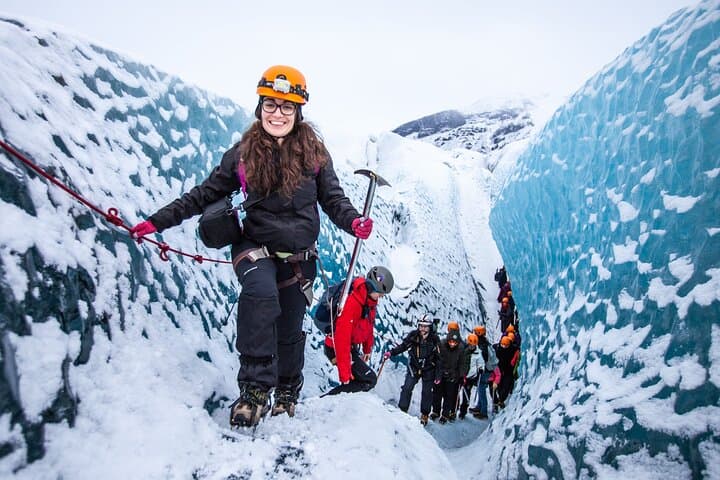
Beneath a sky of shifting light, Skaftafell’s ice reads like a map of time. This three-hour guided glacier hike mixes technical instruction with geology and culture: compact, safe, and unforgettable.
 Related story
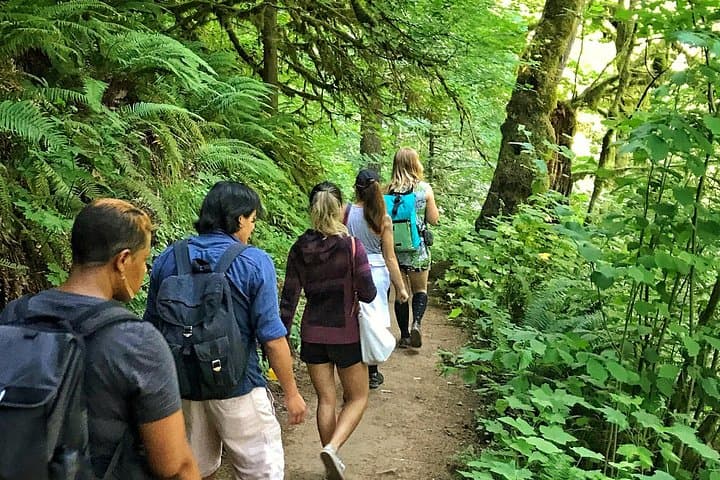
Lose the city for a few hours without leaving it: this 5-mile, 900-foot-gain Forest Park loop threads old-growth pockets, city viewpoints, and cultural landmarks for a compact taste of Portland’s wild side. Expect moss, roots, and stories.