
What the day feels like
The first time the river spoke I remember it that way—an insistent, low roar that threaded the palms and ferns and pulled everyone a little straighter into their shells. We set off from a small gravel launch beneath a clouded ridgeline, the guide’s paddle tapping a final cadence against the raft, and then the river took over: curving, galloping, and throwing brief, honest rapids at us as if testing resolve. At times the current felt like a living thing, daring you to read it wrong. At others it was a mirror, letting the humid forest stare back at us—a green, dripping wall that hid waterfalls and the slow, bright movement of birds.
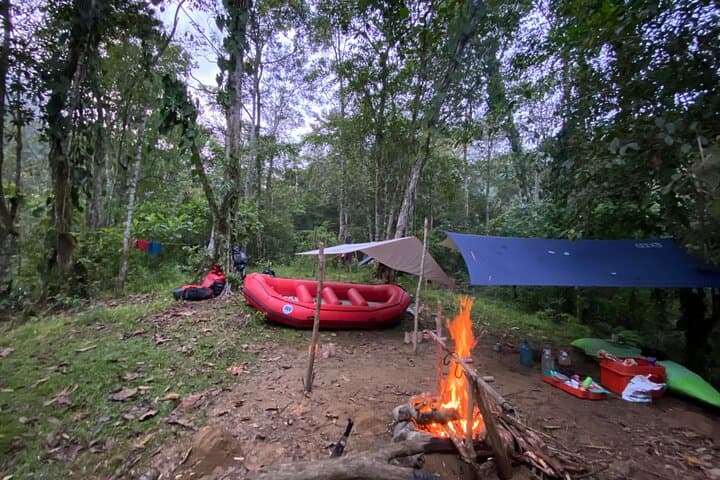
This two-day private tour out of Medellín compresses that intimate river grammar into 48 hours: whitewater runs on tributaries of the Magdalena, nights under canvas beside the Calderas and Cocorná rivers, and guided conversations about the humid forest that cradles each channel. It is not an adrenaline-only trip. It is a place-based experience where paddling, camping, and conservation thread together; you leave with scraped knuckles, a sunburned nose, and a clearer idea of why local communities are protective and proud.
Geology and history are present in the way the river has cut its teeth through the eastern flank of the Central Andes. The mountains here are younger, wetter, and more fractured than the western cordillera, and the narrow canyons funnel water with surprising velocity. Those plunging channels feed tributaries like the Melcocho, Santo Domingo, and Cocorná, each offering a different character—rocky, braided, steep-walled. Human history is layered into these valleys too: small coffee and trout farms bookend ancient footpaths used by campesinos, and modern conservation efforts try to balance tourism income with habitat protection.
Culturally the region wears its Paisa identity lightly but proudly. Expect warm, straightforward hospitality: hearty meals built around rice, beans, plantain, and river fish, and evening conversations that move from practical local news to long-standing concerns about water security and forest cover. Guides are often local and their knowledge—how to read a rapid, where to spot a kingfisher, which pools hold trout—is practical, handed down as much by doing as by telling.
Practically speaking, the two-day itinerary is compact but varied. You can expect 1–2 long river runs totaling roughly 15–25 kilometers of paddling, punctuated by beach landings and short hikes of 1–3 kilometers to lookouts or between river sections. Elevation ranges are modest compared with high-Andean treks—typically 500–1,300 meters above sea level—but the terrain is steep and humid, so expect slippery rocks and muddy approach trails to camp. Nights are simple but comfortable: riverside camp spots with local-style cooking and sleeping on cots or mats in tents. The tour balances technical river sections with calmer pools for swimming and photography.
Preparation matters. Hydrate the day before you float, wear sturdy river shoes (not open sandals), and bring quick-dry layers; mornings can be cool in the camps and hot on the river by noon. Guides provide safety briefings and lifejackets, but basic paddling skills—following commands, leaning into current, staying low in rapids—make the trip both safer and more fun. Weather windows matter: Colombia’s interior has wet and dry trends, and river volume can swing quickly after storms.
Why go now? Beyond the immediate thrill of running rainforest rapids, this trip is an entry point to a quieter, more grounded kind of adventure tourism: low-impact, locally run, and educational. You come for the rapids and the night sky but you leave with a clearer sense of the fragile hydrology and the people who steward it. For a traveler based in Medellín who wants a fast, immersive taste of Antioquia’s wild rivers, two days is exactly the right pressure cooker—enough immersion to reset expectations, not so much that logistics overwhelm the joy.
If you are a casual hiker who wants to try whitewater, this experience is curated to build confidence. If you are a seasoned paddler, the rivers here are honest and technically engaging but seldom show-off territory; instead the reward is in reading complex currents in close quarters and enjoying long, leafy river corridors. Either way, pack patience—this landscape moves at its own pace, measured in the melody of frogs, the sudden lift of a flock of birds, and the long, steady work of water carving rock.
On a practical note, book with a company that emphasizes local employment and environmental education. Ask what the camp setup looks like, whether meals accommodate dietary needs, and how they handle waste. Bring insect repellent, a headlamp for nighttime logistics, and a small dry bag for cameras and phones. And when the campfire dwindles, look up: away from Medellín’s lights the Milky Way reads like a map, and the river sounds remind you why these valleys still matter.
In two days you will taste river, mud, and coffee; you will learn a little of what keeps these forests and streams whole; and you will return to the city with wet shoes and a clearer respect for the eastern Andes’ complicated, beautiful appetite for water and life.
Trail wisdom
Small choices, better day.
Hydrate Before You Go
Start hydrating the day before departure—humid conditions and river exertion dehydrate quickly.
Wear Closed River Shoes
Use sturdy, quick-dry footwear with good tread to protect feet on rocks and muddy banks.
Pack a Small Dry Bag
Keep electronics and documents dry during paddling and unexpected splashes.
Respect Night Quiet
Camps are simple and close to wildlife—avoid bright lights and keep noise down to preserve the environment.
Local knowledge
Read the place, not just the route.
Watch for native species including Grey-necked Wood-Rail (common near waterways), Andean motmot and various kingfishers.
Keep an eye out for wildlife during the transition between areas and habitats. Respect distance guidelines.
Local guides emphasize environmental education; choose operators that practice strict waste management and support reforestation or community projects.
Follow the guide's instructions on size limits, ethical handling, and leave-no-trace practices.
Early-morning birdwatching along smaller tributary pools. A riverbend viewpoint reachable by a short hike that offers panoramic valley views
Locally recommended viewpoints and quiet spots known best to local operators.
These river valleys were historically used as transit and subsistence corridors by campesino communities and are now part of growing ecotourism and conservation efforts in eastern Antioquia.
Maritime roots and regional tradition shape the waterways and working coasts.
Seasonal guide
Four versions of the same landscape.
Spring
Best forLower crowds · Green river corridors
ChallengesIntermittent rain · Higher humidity
Spring brings lush vegetation and active wildlife; expect occasional showers that can swell river levels.
Summer
Best forWarmer water swims · Stable river conditions
ChallengesHigher temperatures in low camps · Increased insect activity
Summer months often offer dryer windows and warmer days—good for swimming and photography.
Fall
Best forRich bird activity · Fewer tourists
ChallengesUnpredictable storms · Muddy approach trails
Autumn can provide dynamic skies and strong avian sightings but brings variable weather.
Winter
Best forPowerful river runs · Dramatic cloudscapes
ChallengesHeavier rains can raise river difficulty · Some access roads may be affected
Winter often means higher water and more challenging rapids; check river conditions and guide recommendations.
Operator details
What the booking data adds.
Included
- ✓Private transportation
- ✓Lunch
- ✓Dinner
- ✓Breakfast
- ✓Raft, vest, helmet, paddle, hammock, ropes
- ✓Snacks
Good to know
- ✓Not recommended for travelers with spinal injuries
- ✓Not recommended for pregnant travelers
- ✓Not recommended for travelers with poor cardiovascular health
- ✓Travelers should have at least a moderate level of physical fitness
Pack with intention
What to bring.
Good to know
Common questions.
No; the tour accommodates beginners with professional guides and safety briefings, though prior paddling helps.
Plan the edges
The details that make the day easier.
Colombia has the world’s highest number of recorded bird species, and Antioquia’s eastern Andean slopes are a critical region for that diversity.
After the trip, head back toward Medellín for a warm bandeja paisa or a trout dish in towns like Cocorná; local coffee farms and small eateries serve homemade soups and fresh coffee—support small businesses and try regional sweets like bocadillo.
- Closest airport
- José María Córdova (MDE) in Rionegro; Typical drive from Medellín: 1.5–2.5 hours to launch area; Cell service: intermittent to none in river valleys; Permits: usually none but respect private lands and follow guide instructions.
Operators should follow Leave No Trace principles—pack out all waste, avoid disturbing shoreline habitats, and opt for companies that employ and pay local guides and contribute to conservation education.
Explore by topic
Follow the threads.
Keep exploring
Make the story part of the trip.
 Related story
Less than two hours from Nairobi, Kereita Forest pairs hands-on canopy adventure with quiet montane trails and a sobering colonial history—perfect for families, teams, and curious travelers seeking a full-day pulse of nature.
Set out from Bass Harbor for a private, customizable day on Blue Hill Bay — lighthouses, puffins, seals, and the chance to feel Acadia from the water. Small groups, local captains, unforgettable views.
In four hours you can move from shaded canyon ferns to wind-scoured coastal ridgelines, guided by someone who knows where the light—and the hidden views—live. This private half-day hike on the Monterey Peninsula or Big Sur is compact, curated, and perfect for travelers who want depth without a multiday commitment.