
What the day feels like
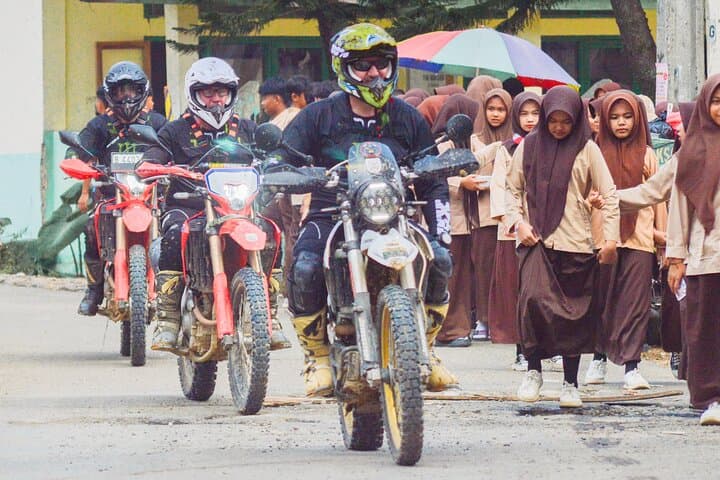
You feel the bike breathe before dawn. The engine settles into a low, steady hum that matches the village’s slow wakening — roosters call, steam rises from kettles and the first light threads through palm fronds. On day one of this two-day motorcycle loop, the road is still cool under your tires; mist drifts through rice terraces like smoke from a distant campfire. By noon you’ll be climbing into a green that’s almost theatrical in its depth: moss, fern, and the hard, dark sheen of old-growth rainforest as you push toward the flanks of Gunung Halimun Salak.
This is not a grand prix route. It’s a journey that moves between cultivated human landscapes and rugged, often wet mountain tracks. The tour covers roughly 220 km over two days, a manageable distance that keeps the rhythm tactile — long swoops of asphalt, single-lane concrete threaded with local traffic, and off-road trails that thread rivers and jungle. The guides are deliberate about pace: whether you’ve ridden dirt before or are on your first off-road adventure, routes are chosen to match skill level, and the off-bike moments are as carefully curated as the road choices. You’ll eat in village homes, learn to steam rice and fish in bamboo, and sleep in a local house — the kind of overnight that replaces the anonymity of a hotel room with stories and sticky rice.
Halimun Salak National Park is one of Java’s larger swaths of remaining rainforest, a patchwork of volcanic ridgelines and river valleys that has sheltered both species and local communities for centuries. The geology tells a straightforward story: volcanoes, erosion, and rainfall carving steep drainage lines that feed larger rivers flowing toward Java’s southern coast. Those same systems have defined human settlement here — terrace rice cultivation hugging contour lines, tiny towns nested where rivers flatten.
Culturally, you’re on Sundanese land. Villages along the route are often small, traditional, and quietly proud of their local craft. Hospitality is an unspoken contract: a warm meal and a place to dry your gear in exchange for listening to a story or two about the rice planting season, an ancestral ritual, or local folklore about the mountains. The bamboo-steamed rice you’ll be served is more than a novelty; it’s a lesson in how local foodways are adapted to a terrain where resources are used with a deliberate eye toward minimizing waste.
Practical realities matter here. The tour includes bike rental, a guide, meals, and one night in a village house. The schedule is paced for two full riding days with varied terrain — paved stretches, gravel tracks, and forest trails that are fun when dry and technical when wet. Fuel stops are planned but not abundant; tell your guide about your bike’s range and sip fuel conservatively if you’re on a smaller tank. Start early both mornings to avoid mid-afternoon showers, and plan for intermittent cell coverage: you’ll have signal through towns and lower valleys, but the rainforest ridgelines often drop you off the grid.
For riders, the technical takeaways are straightforward. Expect frequent direction changes, short sections of loose gravel, and wet roots in shaded canyons. If you’re new to off-road, choose a bike with upright ergonomics and a reliable low-end torque curve — the kind of machine that forgives stall and helps you stand when the trail gets rough. The guides are experienced in both trail safety and basic mechanical troubleshooting; they’ll show you how to siphon water from a flooded carburetor or jury-rig a loose chain with what’s in the support van. More than once, the best part of a tour stops being the scenery and becomes the slow, human fix of a group problem: an impromptu lesson in tire pressure, a shared laugh while someone rewraps a leaky boot, the quiet satisfaction of a group that’s moved through a day together.
Timing your visit matters. Indonesia’s dry season (roughly May through September) brings cleaner lines on the trails and cooler mornings — rain is less likely but not impossible. Wet-season rides are richer in green and waterfalls but demand more skill and a willingness to get muddy. If the goal is exposure to village life and a comfortable first-time off-road experience, pick the dry season and plan for early starts.
Sustainability is stitched through the itinerary. The tour emphasizes local homestays over commercial hotels, and meals highlight seasonal produce. Guides brief groups on leave-no-trace principles, both for the comfort of local communities and to protect the park’s biodiversity. That biodiversity includes species that are small in number and large in significance — finding an ivory-bellied bird in the canopy is a reminder this isn’t a disposable playground.
Two days is short enough to leave you wanting, and that’s the point. You arrive with salt on your lips and the smell of bamboo smoke on your jacket, feeling like you’ve earned a knowledge of place: how the road changes when the slope tips toward the river, which tea stalls serve the best sweet milky coffee, where the rice terraces mirror the sky. You leave with a handful of simple instructions — slow down on blind corners, ask before photographing someone’s home, and always carry a little more water than you think you’ll need — and with the urge to return, to explore another ridge and another village road.
If you go: come with patience and curiosity. The ride is the core of the experience, but the people, the cooking, and the quiet moments beside river water are the parts that linger. Ride steady, respect the land and the locals, and prepare to swap the immediacy of a finished checklist for the generous ambiguity of a place that prefers lived-in time over hurried itineraries.
Trail wisdom
Small choices, better day.
Start Early
Begin rides at first light to avoid afternoon showers and traffic on narrow village roads.
Manage Fuel
Refuel at every town stop — fuel stations are infrequent on remote stretches.
Tire Pressure
Lower tire pressure slightly for off-road sections to improve traction on gravel and roots.
Respect Homestays
Ask before photographing people or houses and follow local customs when dining or staying overnight.
Local knowledge
Read the place, not just the route.
Watch for native species including Javan gibbon (rare, heard more often than seen), Various rainforest birds including wrens and sunbirds.
Keep an eye out for wildlife during the transition between areas and habitats. Respect distance guidelines.
The park is important for Java’s remaining rainforest; tours emphasize low-impact travel, support of local homestays, and leaving no trace to help protect habitat and local livelihoods.
Follow the guide's instructions on size limits, ethical handling, and leave-no-trace practices.
A small tea plantation viewpoint above a minor ridge road (ask your guide for the stop). A community-built bamboo bridge that frames river rapids — best early morning for soft light
Locally recommended viewpoints and quiet spots known best to local operators.
Halimun Salak’s forests have long supported Sundanese communities whose agricultural practices, like contour rice terraces, shaped the mountain landscape.
Maritime roots and regional tradition shape the waterways and working coasts.
Seasonal guide
Four versions of the same landscape.
Spring
Best forLush greenery · Milder daytime temperatures
ChallengesUnpredictable showers · Sticky mud on trails
Spring brings vivid green growth and comfortable days, but sudden showers can make off-road tracks slick.
Summer
Best forDrier trails · More predictable weather
ChallengesWarmer lowland heat · Crowded weekends near popular trailheads
The dry season keeps trails cleaner and easier to ride; mornings are cool and afternoons warm—plan early starts.
Fall
Best forFewer tourists · Rich harvest-time village activities
ChallengesIncreased chance of localized rain · Variable trail conditions
Fall balances lower visitor numbers with the tail end of the rainy season—good for cultural encounters and quieter roads.
Winter
Best forDramatic cloudscapes · Smaller groups
ChallengesHeavy rains possible · Slippery trail sections
Short, intense rain events can make routes technical; if you ride in winter, be ready for mud and slower progress.
Operator details
What the booking data adds.
Included
- ✓Petrol
- ✓2 Ltr Of Drinking Water
- ✓Motorcycle 230/250 cc
- ✓Lunch
- ✓Video / Photo
- ✓Dinner
- ✓Helmet
- ✓Breakfast
- ✓Tour Guide
- ✓Luggage storage at Jakarta
- ✓Off Road Riding Tips
- ✓Riding Boots
- ✓One Night Home Stay
Not included
- —Security Deposit / Refundable After Tour /
- —Personal Expenses
- —Coffee Brakes
Good to know
- ✓Public transportation options are available nearby
- ✓Not recommended for travelers with spinal injuries
- ✓Not recommended for pregnant travelers
- ✓Not recommended for travelers with poor cardiovascular health
- ✓Travelers should have at least a moderate level of physical fitness
Pack with intention
What to bring.
Good to know
Common questions.
No — the tour offers beginner to advanced route options, but basic motorcycle control and a willingness to learn are required.
Plan the edges
The details that make the day easier.
Gunung Halimun Salak National Park is one of Java’s largest remaining rainforests and is a stronghold for threatened species like the Javan gibbon (Hylobates moloch).
Sundanese cuisine is the region’s hallmark — try nasi timbel (steamed rice wrapped in banana leaf), ikan bakar (grilled fish), and local herbal teas at a village warung; after the ride, head to Sukabumi for simple cafes and fresh tempeh dishes.
- Closest airport
- Soekarno-Hatta International (Jakarta, ~2–3 hours by car to Sukabumi); Driving distance from Sukabumi to park trailheads: 30–90 minutes; Cell service: intermittent in higher ridges; Permits
- passes
- park fees commonly handled by operator.
Support local homestays, avoid single-use plastics, and follow guides’ advice to minimize disturbance to wildlife and village life.
Explore by topic
Follow the threads.
Keep exploring
Make the story part of the trip.
Set out from Bass Harbor for a private, customizable day on Blue Hill Bay — lighthouses, puffins, seals, and the chance to feel Acadia from the water. Small groups, local captains, unforgettable views.
In four hours you can move from shaded canyon ferns to wind-scoured coastal ridgelines, guided by someone who knows where the light—and the hidden views—live. This private half-day hike on the Monterey Peninsula or Big Sur is compact, curated, and perfect for travelers who want depth without a multiday commitment.
 Related story
Beneath a sky of shifting light, Skaftafell’s ice reads like a map of time. This three-hour guided glacier hike mixes technical instruction with geology and culture: compact, safe, and unforgettable.