
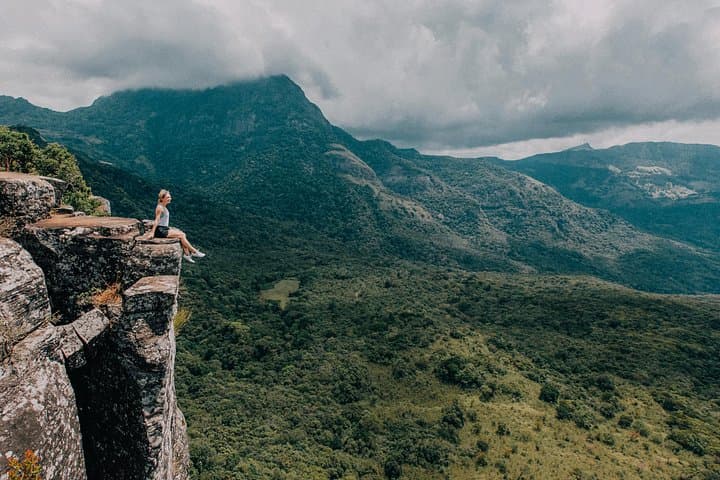
What the day feels like
Dawn arrives slow and deliberate in the Knuckles Range, spilling cool light through a stitched lattice of cloud and steep ridgeline. You step out of a simple village hut and the valley inhales—mists lift like breath and the far slopes reveal terraces, forest and a scattering of thatch. The air smells of wet earth and wood smoke; a pair of children run ahead, barefoot and laughing, guiding you toward the narrow path that threads the village into the wild.
This is Meemure: a remote hamlet carved into the folds of Sri Lanka’s Knuckles Wilderness. The Private Overnight Adventure Tour to Knuckles and Meemure Village with Camping trades immediate comfort for a closer, quieter commerce—between people who have long lived by the land and travelers who want to know what that life feels like. Over roughly 48 hours you’ll hike forest tracks, cross little rivers that dare you to stay, sleep in a tent under a canopy of stars, and wake to one of the island’s most generous vistas.
Geology and ecology shape everything here. The Knuckles Range is a compact, folded collection of peaks and ridges—its name comes from the five-finger silhouette that fans across the skyline. Ancient gneiss and charred-looking basalt form steep ridgelines, splitting into moss-draped ravines where cloud and rain ground down the rock into rich soil. The result is a patchwork of montane forest, grassland, and terraced agriculture that supports an unusually high number of endemic plants and birds. You’ll notice orchids tucked into crevices and hear high-pitched calls of birds that belong nowhere else.
The human story is equally elemental. Meemure has been isolated for generations; its residents keep traditional farming practices and a patient relationship with the forest. Staying here is less about voyeurism and more about exchange: you’ll be hosted by locals, help prepare a simple meal, and learn how the land continues to feed a community. Guides—usually local and intimately familiar with the terrain—lead the hikes, and their knowledge is the real route map: where to find a hidden spring, which ridge catches the safest winds, and which trails to avoid when rain starts.
Practically, this is a two-day, overnight camping experience. Expect day-hikes of roughly 6–10 km with uneven terrain: steep pitches, rock steps, and muddy stretches after rain. Elevation changes are real—trails will climb and drop several hundred meters in a day—so good knees and steady boots matter. The weather can flip quickly: mornings are often clear and cool, afternoons bring convective showers, and nights can be chilly near the ridges.
Why go? Because this trip compresses the essential Sri Lankan highlands—wild, human, and edible—into a short visit. The route is intimate rather than theatrical: no sweeping, crowded overlooks, but repeated reveals—small waterfalls, a yakka grove dense with orchids, a patch of wild chillies drying on a doorstep. It’s ideal for travelers who want more than a photo: they want a conversation about place.
Plan for basics: bring waterproof layers and a reliable pair of boots; pack a headlamp, and a daypack with snacks and a water system. Respect village life—ask before photographing people, follow your guide’s lead about where to walk, and bring small gifts for children if you want to. The camping is simple: tents and sleeping mats are provided in most packages, but check the details if you prefer your own kit.
Beyond the logistics, there’s a tactile payoff. Walk a ridge at sunset and the mountains feel deliberate, as if they’ve been holding this weather for centuries. Sit with your host over rice and curry and the conversation will teach you more about the land than any guidebook. In two days, you’ll leave with more questions: How did the village keep its traditions? What wild species are easiest to spot? Which ridge to return to?
This tour isn’t for people who want a comfort hotel on a timer. It’s for those who prioritize proximity over polish, sensory detail over spectacle. In return, you get a rare kind of travel: one that presses on the small rhythms—steam rising from a clay pot, a dog trotting ahead, the way a river seems to push you forward with its current—until you, briefly, belong to the place.
If you go, come prepared and curious. The Knuckles will reward both.
Trail wisdom
Small choices, better day.
Bring waterproof footwear
Trails are often muddy and rocky after rain—sturdy, grippy boots will keep you safe and comfortable.
Hydrate and purify
Carry at least 2 liters and a small purifier or tablets—springs are common but treat water if unsure.
Respect local customs
Ask before photographing villagers and accept guidance about where to walk and camp.
Be ready for temperature swings
Pack a warm mid-layer and a light waterproof—nights are cool and afternoons can bring sudden showers.
Local knowledge
Read the place, not just the route.
Watch for native species including Purple-faced langur (endemic primate), Sri Lankan junglefowl.
Keep an eye out for wildlife during the transition between areas and habitats. Respect distance guidelines.
The Knuckles area is an important biodiversity zone—support local guides, minimize single-use plastics, and camp only in designated spots.
Follow the guide's instructions on size limits, ethical handling, and leave-no-trace practices.
A small, unnamed spring-fed pool below Meemure where villagers bathe (ask your guide for the respectful spot). A short ridge walk above the village that catches sunrise and overlooks terraced fields
Locally recommended viewpoints and quiet spots known best to local operators.
Meemure has been a remote, largely self-sufficient village for generations; its isolation helped preserve traditional agricultural practices and cultural customs.
Maritime roots and regional tradition shape the waterways and working coasts.
Seasonal guide
Four versions of the same landscape.
Spring
Best forflowering orchids · birdwatching
Challengesinter-monsoon showers · humid afternoons
Spring (Mar–May) brings fresh growth and lots of bird activity, but expect occasional, unpredictable rain.
Summer
Best forlush green landscapes · river crossings
Challengessouthwest monsoon can bring heavy rain to western slopes · muddy trails
Summer (Jun–Aug) makes the ridges lush; pick dry windows and rely on local guidance about trail conditions.
Fall
Best forclear views after rains · fewer tourists
Challengessecond inter-monsoon can bring storms · trail slipperiness
Fall (Sep–Nov) balances green landscapes with clearing skies—good for fewer crowds if you watch the weather.
Winter
Best fordry hiking · stargazing
Challengescool nights · early mornings chilly
Winter (Dec–Feb) is the driest and most reliable season for trekking and camping; layers are essential at night.
Operator details
What the booking data adds.
Included
- ✓Hotel Pickup & Drop Off
- ✓Overnight Accomodation in Campsite
- ✓First Aid Officer with stretcher
- ✓Lunch
- ✓Dinner
- ✓Breakfast
- ✓Coffee / Tea
- ✓Professional Guide
- ✓Private Air Conditioned Vehicle
Not included
- —Gratuities
Good to know
- ✓Infants are required to sit on an adult’s lap
- ✓Not recommended for pregnant travelers
- ✓Suitable for all physical fitness levels
Pack with intention
What to bring.
Good to know
Common questions.
No—guides handle camp setup and sleeping gear is typically provided; basic comfort with sleeping outdoors helps.
Plan the edges
The details that make the day easier.
The Knuckles Range is recognized for its high level of endemism—several plant and bird species found here occur nowhere else on Earth.
After your hike, sit down with a host family for rice, dhal and fresh vegetable curry; try king coconut water from a roadside seller and finish the evening with a small cup of Ceylon tea. For a town meal, Kandy offers restaurants and craft shops—combine a night there with this trip.
- Closest airport
- Bandaranaike International (CMB) — 3.5–5 hours drive; Typical base: Kandy (~2–3 hours to trailhead); Driving: the last road to Meemure is narrow and sometimes rough; Cell service: intermittent in the village; Permits: usually handled by the tour operator.
This tour passes through a sensitive conservation area—use local guides, pack out all trash, avoid single-use plastics, and support village-run services to keep tourism beneficial to the community.
Explore by topic
Follow the threads.
Keep exploring
Make the story part of the trip.
 Related story
Less than two hours from Nairobi, Kereita Forest pairs hands-on canopy adventure with quiet montane trails and a sobering colonial history—perfect for families, teams, and curious travelers seeking a full-day pulse of nature.
Set out from Bass Harbor for a private, customizable day on Blue Hill Bay — lighthouses, puffins, seals, and the chance to feel Acadia from the water. Small groups, local captains, unforgettable views.
In four hours you can move from shaded canyon ferns to wind-scoured coastal ridgelines, guided by someone who knows where the light—and the hidden views—live. This private half-day hike on the Monterey Peninsula or Big Sur is compact, curated, and perfect for travelers who want depth without a multiday commitment.