
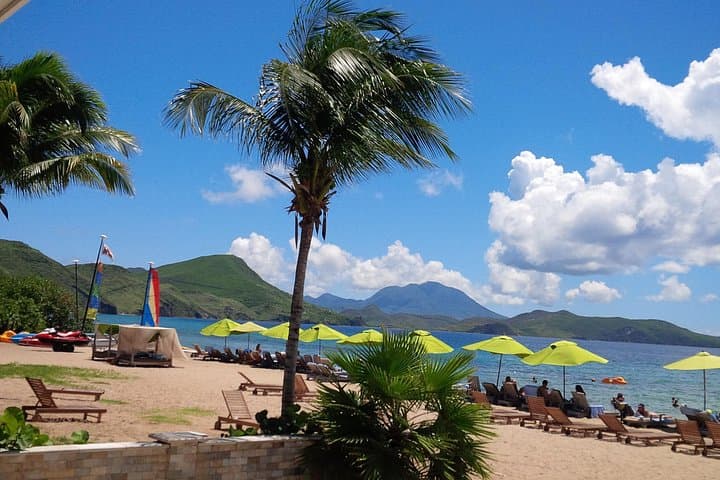
What the day feels like
The safari truck hums to life and the island unfolds like a quickly flipped map—green hills, a ribbon of shoreline, the Atlantic glinting against reef. Wind threads through the open cab; salt and cut grass ride the breeze. On St Kitts, a beach day begins not with a parking lot but with motion: a handful of miles of coastal road, windows down, local rhythms on the stereo, and the promise of sand underfoot.
This is no languid sunbathing opera. The St Kitts Beach Adventure Tour is kinetic in the best sense: part scenic drive, part cultural snapshot, and all about getting you onto a beach where the Caribbean does what it does best—clear water, coconut palms, and a small, efficient service economy focused on shade, rum, and quick local bites. The open safari truck is intentionally unvarnished; it keeps you outdoors and in the elements, so the ocean breathes across the group and the shoreline is visible long before you step off.
Geology and history sit right behind that first palm fringe. St Kitts is a volcanic backbone—Mount Liamuiga’s extinct lava and ash shaped coves and reefs along the island’s east and south shores. Those reefs create calm swimming lagoons and punctuate snorkel spots with coral gardens. The island’s human story is stitched to sugarcane terraces, colonial forts, and the resilience of Afro-Caribbean culture; Brimstone Hill Fortress, a UNESCO World Heritage Site atop a volcanic outcrop, is an easy reminder that the beaches you rest on were once part of a very different, much harder economy.
Locals greet visitors at the beach with a pragmatic warmth. Staff at the beach bar can set you up with chairs and umbrellas (usually for an extra charge), and the menu tends to favor seafood, fried snacks, and the ubiquitous rum punch. The vibe is low-key: families, cruise groups seeking a few hours off the ship, and islanders mixing business with leisure in an afternoon of sun and sea.
Why this short, almost improvised tour matters: it compresses good reasons to be on St Kitts into a practical packet. You can get a hit of coastline, an introduction to island rhythms, and a window into local food and drink without planning a whole day. For cruisers with a narrow window in port or travelers with a tight itinerary, the truck-to-beach model is a smart use of limited time.
Practical bits that matter on arrival. Expect sand that warms quickly in midday sun and reef-strewn shallows in places, so reef shoes are a useful call. Shade is finite—if the group doesn’t secure umbrellas, you may need to rotate in and out of sun. Drinks are often complimentary on the truck ride, but beach bar services, chairs and umbrellas generally cost extra; bring some local bills if you want to avoid card limitations. Speaking of money: tipping is customary for good service, and small denominations go a long way.
Timing is everything. Mornings bring softer light, calmer seas, and fewer people; noontime brings heat and a livelier bar scene. If you want pockets of solitude near the waterline, plan for the early run. The vehicle ride itself is a bonus: roadside views of small farm plots, palms, and coastal scrub give you a sense of an island that’s both lived-in and laid-back.
Safety and etiquette are straightforward. Respect beach staff and local rules—some areas protect the reef and request no stepping on coral. Drink plenty of water and reapply reef-safe sunscreen. If snorkeling feels appealing, ask local staff where currents are mild and where boat access would be needed for deeper sites.
For planners: the tour’s short format and door-to-beach convenience make it a low-logistics option—no long hikes, no complicated permits. It’s a good first-day acclimation activity or a filler on a cruise stop when you want sun and culture without commitment.
In the end, what lingers is sensory: the rasp of sand when you walk back to the truck, the faint guitar hum from a beach bar, and the gentle way the island folds its history into a day of sun. This is a beach tour for travelers who want an efficient, enjoyable taste of St Kitts—part scenic run, part coconut-and-rum interlude, and altogether a practical way to connect with the coast.
If you leave sunburned, you’ve misread the shade options. If you leave hungry, the island’s food is waiting in town. If you leave curious, there are volcano trails and colonial forts a short drive away. That’s the point: this is a starter, not the whole story, and a very satisfying one at that.
Trail wisdom
Small choices, better day.
Bring Small Bills
Beach chairs, umbrellas, and some food vendors are cash-friendly and may charge extra—carry small denominations.
Sun Protection Is Non-Negotiable
Closed-cell sunscreen, a wide-brim hat, and a light cover-up will keep you comfortable during midday heat.
Reef Shoes for Shallow Snorkel
Rocky or coral-strewn entry points are common—low-profile reef shoes protect feet and improve traction.
Hydrate Before and After
Rum and sun go well together—counter with water before and after beach time to avoid dehydration.
Local knowledge
Read the place, not just the route.
Watch for native species including Brown pelicans, Reef fish such as parrotfish and sergeant majors.
Keep an eye out for wildlife during the transition between areas and habitats. Respect distance guidelines.
Respect reef habitats—avoid standing on coral, use reef-safe sunscreen, and support local businesses that follow sustainable practices.
Follow the guide's instructions on size limits, ethical handling, and leave-no-trace practices.
Short coastal viewpoints en route from Basseterre with panoramic island vistas. Quiet sand pockets east of main beaches that are good for a peaceful swim
Locally recommended viewpoints and quiet spots known best to local operators.
St Kitts’ landscape is shaped by its sugarcane past and colonial-era forts; Brimstone Hill Fortress, a short drive away, is a UNESCO World Heritage Site.
Maritime roots and regional tradition shape the waterways and working coasts.
Seasonal guide
Four versions of the same landscape.
Spring
Best forCalmer seas · Fewer crowds
ChallengesOccasional showers · Variable surf
Late spring is pleasant, with warm water and manageable crowds; brief showers can appear but usually pass quickly.
Summer
Best forWarmer sea temperatures · Lush landscapes
ChallengesHigher humidity · Afternoon thunderstorms
Summer brings heat and dramatic afternoon storms—plan for early beach windows and bring waterproof gear for short downpours.
Fall
Best forOff-peak rates · Vibrant local life
ChallengesHurricane season risk · Higher humidity
Fall has the lowest tourist traffic but carries increased storm risk—monitor weather and travel insurance options.
Winter
Best forDry weather · Peak visibility for snorkeling
ChallengesPeak-season crowds · Higher prices
Winter (December–April) is the island’s high season with stable weather and clearer water, but expect more people and premium pricing.
Pack with intention
What to bring.
Good to know
Common questions.
Typical bookings are half-day (roughly 3–5 hours) including transportation, beach time, and return—exact timings vary by operator and port schedule.
Plan the edges
The details that make the day easier.
Brimstone Hill Fortress on St Kitts is a UNESCO World Heritage Site—an impressive 18th-century fortress built by enslaved Africans and convict labor that offers panoramic island views.
After the beach, head into Basseterre for hearty local dishes—try 'goat water' (a traditional stew), fresh grilled fish, and a rum punch at a waterfront stall. Support family-run eateries along Bay Road to taste authentic flavors and meet locals.
- Closest airport
- Robert L. Bradshaw International Airport (SKB); Driving from Basseterre to beaches: 10–25 minutes depending on beach; Cell service: generally available near towns but patchy on remote beaches; Permits: none required for casual beach visits
St Kitts’ reefs and beaches are sensitive—use reef-safe sunscreen, avoid touching coral, pack out any trash, and patronize operators who follow sustainable and community-friendly practices.
Explore by topic
Follow the threads.
Keep exploring
Make the story part of the trip.
 Related story
Less than two hours from Nairobi, Kereita Forest pairs hands-on canopy adventure with quiet montane trails and a sobering colonial history—perfect for families, teams, and curious travelers seeking a full-day pulse of nature.
Set out from Bass Harbor for a private, customizable day on Blue Hill Bay — lighthouses, puffins, seals, and the chance to feel Acadia from the water. Small groups, local captains, unforgettable views.
In four hours you can move from shaded canyon ferns to wind-scoured coastal ridgelines, guided by someone who knows where the light—and the hidden views—live. This private half-day hike on the Monterey Peninsula or Big Sur is compact, curated, and perfect for travelers who want depth without a multiday commitment.