
What the day feels like
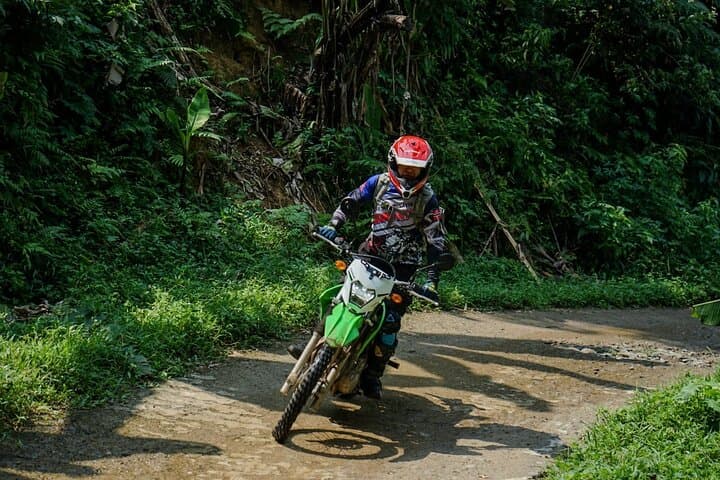
The engine hums like a steady heartbeat as you pull out of Jakarta before dawn, headlights painting thin gold across a city shrugging off its sleep. Within an hour the skyscraper silhouette fades, replaced by a widening patchwork of rice paddies, low hills, and roadside warungs steaming kopi tubruk. By mid-morning you’re carving through the Haurbentes forest—shade pressing close, sunlight stitching through the canopy—and the road becomes less a ribbon and more a conversation with the landscape: a series of bends that require attention, a descent that smells of wet earth, and a sudden clearing that reveals Rumpin Mountain as a dark, folded shoulder on the horizon.
This is not a race. It's a measured, intimate day on two wheels over roughly 110 kilometers of West Java’s countryside: a ride that stitches together villages, rivers that dare you to stop for a dip, terraced fields, and a thin ribbon of rainforest that hints at deeper wilderness beyond. The trip finishes back in Jakarta nine hours later; in between there are cold mountain river stops, a carefully chosen lunch that tastes of home, and a few roadside conversations in Sundanese that ground the day in place.
West Java’s geography is blunt and generous—volcanic shoulders and eroded slopes feed the valleys that hold the rice fields. The geology explains the fertility: old lava flows and volcanic ash that have been worked by generations. The culture is equally layered. You’ll cross through Sundanese villages where the pace slows and the focus shifts to agriculture and family. Many of the roads were once colonial links between plantations; today they’re the veins of local life, lined with warungs selling fried tempeh and fresh coconut water and men who will wave as you roll by.
The Haurbentes forest you skirt on this route is a reminder that West Java still holds fragments of primary rainforest and is connected to larger protected areas like the Gunung Halimun-Salak National Park. Those forests are home to species that rarely show themselves to visitors but whose presence shapes the soundscape: early-morning bird calls, the rustle of civets, and, in deeper pockets, the shy traces of gibbons.
On a motorcycle you move at a cadence that invites curiosity. Turning a corner on a narrow lane can reveal an old mosque with carved wooden doors, a tea plantation where workers pick leaves in a steady rhythm, or a river pushed into a gorge that begs for a cooling stop. The ride is organized for intermediate riders—expect mixed surfaces, tight technical sections, and long stretches where steady concentration matters. Your guides carry knowledge of the best vantage points and the safe lines through the trickier stretches, and a premium motorbike rental gives you confidence on both paved roads and compacted dirt.
Practical detail: the advertised route covers about 110 km and runs about 9 hours (full day), including stops for photos, a river break, and a village lunch. The terrain ranges from asphalt highways to winding rural lanes and short stretches of gravel; elevation climbs are moderate but sustained at times as you approach foothills and the Rumpin area. Cell signal is typically reliable near towns and major junctions but can drop in forested or valley sections—your guide will coordinate regrouping points.
Timing matters here. The best riding window is the dry season (roughly May through September), when river access is safer and muddy sections are minimized. Start early to avoid Jakarta traffic and to ride the most scenic sections in softer light. Bring layered clothing: mornings can be cool in the foothills, and the combination of wind and sweat on a long day needs attention. Hydration is simple: sip frequently rather than waiting until you feel thirsty. For safety, choose footwear that protects without sacrificing the ability to dab a foot at a low-speed turn—sturdy boots or reinforced riding shoes are ideal.
A motorcycle day like this is as much about people as place. Your guides are local riders who understand the rhythms of the road and the local communities. Lunchtime is typically at a family-run warung or a small open-air restaurant where rice and fresh vegetables come with fish or chicken cooked on a wood-fired stove. Conversations with locals give the day texture: a farmer describing the season ahead, a child asking to touch the helmet, an elder pointing across a valley to the place where coffee was dried decades ago. These moments are the human currency of travel in West Java.
If you’re deciding whether to book: this is a day for riders who want to experience Java beyond the freeway—a moving portrait of landscapes, culture, and small-scale agriculture that’s accessible without a camping setup or multi-day logistics. It’s also a good practice ride for people who want to transition from paved touring to light off-road lines: expect some gravel and a few technical moments, but no sustained off-road commitment.
Leave the day with the sensation that you’ve moved not only across kilometers but also into a different tempo. You’ll return to Jakarta with dust in the helmet creases, a folder of photos, and the uncomplicated satisfaction of a day well ridden. If the road calls you back, West Java offers longer loops and deeper forest rides; for a single, distilled dose of why riding in Indonesia is addictive, this full-day escape is an honest and invigorating primer.
Trail wisdom
Small choices, better day.
Time your departure
Leave Jakarta before 7 a.m. to beat traffic and ride the most scenic country lanes in soft morning light.
Pace for concentration
Expect nearly 110 km of varied surfaces—stay steady through technical sections and regroup at designated stops.
Hydrate smart
Carry 1–1.5 liters of water and sip frequently; the guides will refill bottles at village stops.
Protect your feet
Wear reinforced riding shoes or boots—short, unpredictable gravel sections reward solid traction and ankle support.
Local knowledge
Read the place, not just the route.
Watch for native species including Javan gibbon (in nearby protected forest pockets), Various kingfishers and rainforest birds.
Keep an eye out for wildlife during the transition between areas and habitats. Respect distance guidelines.
Stick to paved roads and established pullouts, avoid washing gear in rivers, and pack out all trash—these low-impact choices help protect nearby forest fragments.
Follow the guide's instructions on size limits, ethical handling, and leave-no-trace practices.
A riverside warung near Rumpin where locals grill fresh fish. A quiet ridge viewpoint overlooking terraced rice fields at golden hour
Locally recommended viewpoints and quiet spots known best to local operators.
This corridor sits within Sundanese cultural territory and along old plantation-era routes that connected colonial-era settlements and farms.
Maritime roots and regional tradition shape the waterways and working coasts.
Seasonal guide
Four versions of the same landscape.
Spring
Best forFewer tourists · Green landscapes · Cooler mornings
ChallengesTransitional rains · Muddy side roads
Spring (March–May) brings fresh green fields and comfortable temperatures, though occasional rains can make village lanes soft—plan for slightly slower progress.
Summer
Best forDry roads · Reliable river access · Clear views
ChallengesMidday heat · Higher visitor numbers
The dry season (May–September) is the most reliable time for a full-day motorcycle ride—roads are firmer and rivers are cooler for a refreshing stop.
Fall
Best forGolden light · Harvest activity · Fewer crowds
ChallengesShorter daylight · Early-evening humidity
Late-season rides (October–November) offer harvest-time color and quieter roads, but expect earlier sunsets and occasional showers.
Winter
Best forLush scenery · Lower prices · Clear air on some days
ChallengesFrequent heavy rains · Slippery sections
The wet season (December–February) brings dramatic, saturated landscapes but increases the likelihood of muddy or impassable stretches—choose a guided day with local knowledge.
Operator details
What the booking data adds.
Included
- ✓Transport Back To Jakarta
- ✓Petrol
- ✓Motorcycle 230/250cc
- ✓Riding Pants
- ✓Snacks
- ✓Lunch
- ✓Jersey
- ✓Boots
- ✓Helmet
- ✓Tour Guide
- ✓River Crossing Boat
- ✓Body Protector
Not included
- —Personal Expenses
- —Motorcycle Damage
Good to know
- ✓Public transportation options are available nearby
- ✓Not recommended for travelers with spinal injuries
- ✓Not recommended for pregnant travelers
- ✓Not recommended for travelers with poor cardiovascular health
- ✓Travelers should have at least a moderate level of physical fitness
Pack with intention
What to bring.
Good to know
Common questions.
Yes—participants should carry a valid motorcycle license and be comfortable handling a mid-size bike on mixed surfaces.
Plan the edges
The details that make the day easier.
The route passes near Gunung Halimun-Salak National Park, one of Java’s largest remaining rainforests and habitat for species such as the Javan gibbon.
After the ride, head to Bogor for grilled fish and sambal at a local warung, pick up fresh tropical fruits at the market, and try a cold Bintang or local palm sugar dessert to round out the day with flavors of West Java.
- Closest airport
- Soekarno-Hatta Intl (CGK)
- Typical driving distance from Jakarta to route start
- 60–90 km
- Cell service
- Good near towns, intermittent in valleys
- Permits
- None required for day rides
Respect local communities by not riding off established roads, avoid single-use plastics, and use guides that support local vendors to keep economic benefits in the region.
Explore by topic
Follow the threads.
Keep exploring
Make the story part of the trip.
Set out from Bass Harbor for a private, customizable day on Blue Hill Bay — lighthouses, puffins, seals, and the chance to feel Acadia from the water. Small groups, local captains, unforgettable views.
In four hours you can move from shaded canyon ferns to wind-scoured coastal ridgelines, guided by someone who knows where the light—and the hidden views—live. This private half-day hike on the Monterey Peninsula or Big Sur is compact, curated, and perfect for travelers who want depth without a multiday commitment.
 Related story
Beneath a sky of shifting light, Skaftafell’s ice reads like a map of time. This three-hour guided glacier hike mixes technical instruction with geology and culture: compact, safe, and unforgettable.