
What the day feels like
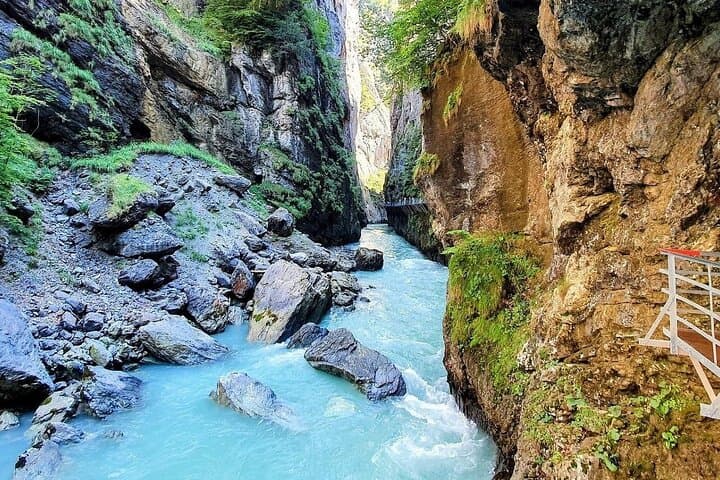
You step off the van at Meiringen with a crowd of day-trippers, the air carrying a mix of hot coffee and alpine cold; the Aare river roars somewhere ahead, unseen but insistently present. A narrow path threads along the canyon mouth, wooden walkways hugging pale limestone walls that rise like pages of a book frozen mid-fold. The light reflects off wet stone and the chatter of the group fades as the river dares you forward: in the Aare Gorge, nature has the first word.
The Aare Gorge (Aareschlucht) is a compact, theatrical piece of geology—a roughly 1.4-kilometer carved passage where the Aare river once punched through a glacial moraine and then cut deeper into Jurassic limestone. Walkways and tunnels make the gorge accessible without scrambling; at points the walls soar nearly 200 meters above you and the river squeezes into white ribbons below. The sensation is immediate and tactile: humidity on your skin, the vibration of falling water underfoot, and the palpable electricity of decades-old rock still being remade.
This private day trip from Zurich stitches that canyon visit into a larger, looser portrait of the Bernese Oberland. After the gorge, the drive unspools through green pastures and switchbacks into lake country—Giessbach Falls tumbles into Lake Brienz in a series of cataracts, framed by the historic Grandhotel Giessbach, a place where every window seems designed to stop you mid-sip and stare. Then there are the villages. Iseltwald sits on a small bay with red-roofed chalets clinging to the shoreline and featured in international filming; Lauterbrunnen sits in a valley of plunging waterfalls and postcard-perfect barns. Each stop is a vignette: a wooden bridge, a church bell, a café counter where local cheese and rösti anchor conversation.
This is a tour that balances spectacle and accessibility. The full experience runs 8–9 hours, with walking segments that range from flat village strolls to the steady, sometimes damp boards of the gorge. Overall elevation changes are modest (most walking is lakeside or valley-floor), but expect stairs in the gorge and a short climb up toward lookouts at Giessbach. Terrain: paved village streets, lakeshore paths, and fixed-boardwalk tunnels in the gorge—good footwear matters.
History and human scale thread through the landscape. The gorge was first opened to visitors in the late 19th century, when alpine tourism began to define this region. The Grandhotel Giessbach, from the same era, is emblematic of early mountain hospitality—railways and steamships connected cities to alpine retreats and the Bernese Oberland became a template for modern tourism. Local culture still favors small-scale agriculture, artisan cheese making, and a rhythm tied to seasons: summer hikes and winter snowsports that swell this valley with repeaters who know the region by scent and trail markers.
If you go, timing is a small superpower. Morning departures from Zurich make the gorge pleasantly uncrowded and give you softer light for photography; late afternoons add gold to the waterfall spray but thin the daylight you have in the villages. Pack layers: the gorge's microclimate is cool and damp even on hot days. Hydrate for a full day of varied walking, and leave room in your bag for a light rain shell—the mountains make their own weather.
Practical specifics: the tour lasts a full day with private pickup in Zurich, covers roughly 200–250 kilometers of scenic driving, and schedules 1–2 hours at Aare Gorge and variable time at each village and waterfall depending on group preference. Expect easy to moderate walking: total on-foot time usually sits at 2–4 hours across the day. The gorge walkway is well maintained but includes narrow sections and stairs; it is not suitable for large wheelchairs.
Why choose a private tour? Flexibility. You can linger at a lakeside café in Iseltwald, spend extra time photographing Giessbach Falls from the hotel terrace, or skip a stop to take a longer walk in Lauterbrunnen’s meadow. This is also a tidy option for families or travelers who'd rather avoid navigating trains and connections while trying to pack multiple iconic sites into one day.
For those who like to plan ahead: buy tickets for the gorge entrance at the visitor kiosk (or join the guide’s group purchase), bring cash or card for small village cafés, and leave room on your camera for wide-angle and telephoto shots—the gorge demands both intimate detail and big vistas. If you want a softer pace, ask to cut one village early and take a boat ride on Lake Brienz instead.
Travelers who crave both geological spectacle and Swiss village charm will find this route satisfying. It’s a study in contrasts—tight, thunderous canyon versus broad lake panoramas; historical hotels versus farmers’ fields—and a reminder that the Bernese Oberland can be seen in one day without losing the sense that every valley holds more to come. For a concentrated taste of alpine drama served with comfortable logistics, this private day trip from Zurich is practical, scenic, and paced for discovery.
Bookers should consider local expertise to tailor the day: whether you want sharper photography windows, lighter hiking options, or cuisine-centered stops, a private itinerary makes the region’s surprises accessible without the rush. And if the river is daring you forward when you arrive, take the path—the gorge rewards you with a geography that still feels dangerously alive.
Trail wisdom
Small choices, better day.
Wear grippy shoes
Boardwalks in the gorge are often wet and can be slippery; choose shoes with good traction.
Start early
Morning light reduces crowds at the gorge and gives you better photos of waterfalls and villages.
Bring local currency
Small cafés and kiosks accept cards, but some sellers prefer cash for small purchases.
Protect electronics
Use a dry bag or waterproof sleeve for cameras and phones—the spray from falls is persistent.
Local knowledge
Read the place, not just the route.
Watch for native species including Alpine marmot, Black grouse and various waterfowl on Lake Brienz.
Keep an eye out for wildlife during the transition between areas and habitats. Respect distance guidelines.
This region balances tourism with pastoral agriculture; stick to marked paths, respect private pastures, and avoid feeding wildlife to limit human impact.
Follow the guide's instructions on size limits, ethical handling, and leave-no-trace practices.
Take the short lakeside walk east of Iseltwald for quieter views and local birdlife. The Grandhotel Giessbach terrace offers a lesser-known vantage point for photographing all falls in one frame
Locally recommended viewpoints and quiet spots known best to local operators.
The Aare Gorge was opened to visitors in the late 19th century as tourism to the Bernese Alps expanded by rail and steamship, and many regional hotels date from that era.
Maritime roots and regional tradition shape the waterways and working coasts.
Seasonal guide
Four versions of the same landscape.
Spring
Best forWildflowers · Moderate crowds · Cascading falls
ChallengesVariable weather · Cold water spray · Shorter daylight
Spring opens the waterfalls with snowmelt and carpets meadows in flowers; bring layers and expect brisk, damp conditions in the gorge.
Summer
Best forLake swims · Full trail access · Long daylight
ChallengesBusiest season · High daytime temperatures · Parking or ferry demand
Summer is ideal for combining lake time with village strolls and provides steady access to all viewpoints, but plan for more crowds.
Fall
Best forCrisp light · Fewer crowds · Autumn colors
ChallengesShortening days · Cooler mornings · Occasional rain
Autumn delivers vivid foliage and quieter trails—a great time for photographers who prefer golden light and calm villages.
Winter
Best forSnowy landscapes · Seasonal charm · Off-season rates
ChallengesLimited access to some trails · Short daylight · Cold temperatures
Winter shrinks the accessible trail network but rewards visitors with dramatic snowy scenes; check local access for the gorge and roads.
Operator details
What the booking data adds.
Included
- ✓Private transportation
- ✓WiFi on board
- ✓Bottled water
- ✓We will send the direct entry ticket via WhatsApp/Email on the day before the tour.
Not included
- —Meals
Good to know
- ✓Specialized infant seats are available
- ✓Travelers should have at least a moderate level of physical fitness
Pack with intention
What to bring.
Good to know
Common questions.
The maintained walkway through the gorge is about 1.4 kilometers and typically takes 45–90 minutes depending on stops and photo breaks.
Plan the edges
The details that make the day easier.
Aare Gorge is approximately 1.4 kilometers long and its limestone cliffs reach heights of up to 200 meters, carved by the Aare river following glacial retreat after the last Ice Age.
After the hike, stop in Iseltwald for lakeside rösti and a beer at a wooden terrace, or head to Brienz for local woodcarving shops and a slice of farmhouse cheese—Grandhotel Giessbach offers classic Swiss cake with waterfall views.
- Closest airport
- Zurich (ZRH); Typical driving distance from Zurich to Meiringen
- Interlaken area
- ~120–150 km (1.5–2.5 hours); Cell service: generally good in villages, patchy inside gorge; Permits
- Passes
- paid entrance to Aare Gorge walkway, private tour includes pickup from Zurich.
This river and its surroundings are sensitive to erosion and heavy foot traffic—stay on designated paths, pack out all trash, and support local businesses to keep tourism sustainable.
Explore by topic
Follow the threads.
Keep exploring
Make the story part of the trip.
Set out from Bass Harbor for a private, customizable day on Blue Hill Bay — lighthouses, puffins, seals, and the chance to feel Acadia from the water. Small groups, local captains, unforgettable views.
In four hours you can move from shaded canyon ferns to wind-scoured coastal ridgelines, guided by someone who knows where the light—and the hidden views—live. This private half-day hike on the Monterey Peninsula or Big Sur is compact, curated, and perfect for travelers who want depth without a multiday commitment.
 Related story
Beneath a sky of shifting light, Skaftafell’s ice reads like a map of time. This three-hour guided glacier hike mixes technical instruction with geology and culture: compact, safe, and unforgettable.