
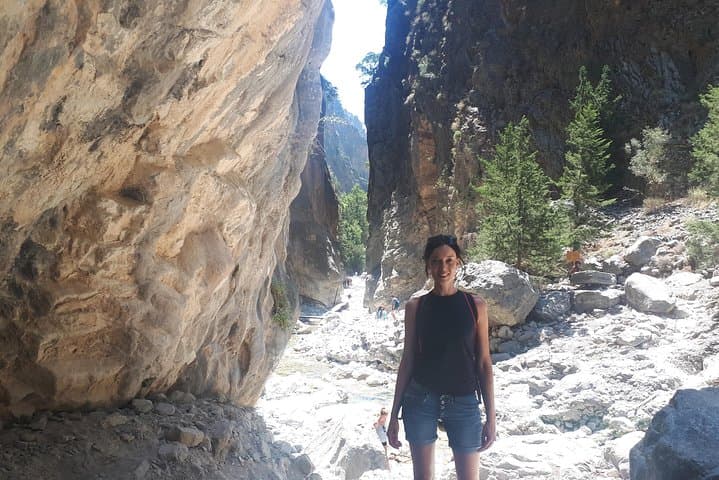
What the day feels like
You bend to pick your footing on a stone the color of old bread, and the gorge answers: wind whistles from between the cliffs like a low, curious voice. For hours the world narrows into a ribbon of earth and sky—sheer vertical walls crowding in, a breadcrumb trail of sun through pine boughs, the distant churn of the Libyan Sea promising a cool finish. This is Samaria, Crete’s long, unapologetic gorge: 16 kilometers of constant forward motion, history pressed into the rock, and an intimacy with landscape that only a few kilometers wide can deliver. A private, local guide with roots in Samaria—the kind whose family house still stands at the gorge’s mouth—changes everything. The route becomes less a lonely slog and more a layered conversation with place: its plants, its people, its stories.
Samaria’s bones are limestone and tectonic patience. The gorge cuts a deep swath from the Omalos Plateau down to Agia Roumeli on the southern coast, shedding roughly 1,200–1,250 meters of elevation. For most walkers the trail begins at Xyloskala (the ‘wooden steps’) on the plateau and descends the full 16 kilometers to the sea. Geologically, you’re moving from high karst plains through ancient river channels—water that over eons has gnawed into rock—into the narrowest section, the Skala or "Iron Gates," where the walls squeeze to a few meters apart and rise hundreds of meters above your head.
Culturally, Samaria is stitched into Cretan identity. It was a refuge during Ottoman rule and later a bulwark in wartime resistance. The gorge’s residents once lived in small villages inside the canyon; their stories survive in place names, local herbs, and the tough, long-suffering breed of the kri-kri—the wild Cretan goat—whose shy figures you might glimpse along the cliffs. A local guide who grew up at the gorge’s exit brings those human elements into focus: where people once cultivated tiny terraces, which herbs cure what, and where the best local cheese was smoked. It makes the trail less a checklist and more a living archive.
The practical side of Samaria is straightforward but uncompromising. The official walking season usually runs from late spring through early fall; winter rains and rockfall close portions of the park. The walk itself is steady and mostly downhill: expect 5–7 hours of hiking time depending on your pace, plus transfers and the ferry that takes you from Agia Roumeli to Sougia or Hora Sfakion. Terrain ranges from packed dirt and limestone slabs to long stretches of loose scree and riverbed boulders—good footwear and a sensible plan are non-negotiable.
Why book a private local guide? For groups of up to four people, the guide converts the gorge into a focused learning experience. With a guide who has lived in Agia Roumeli since childhood, you gain not just route-finding and safety but context: where the best shade falls midday, which rare orchids appear in spring, and when the current ferry will spit you out at the right port for your onward travel. A private guide also lets you move at a pace that suits your legs—stop for longer when you want to photograph the Iron Gates, or skip needless breaks when the weather is closing in.
Timing and logistics matter. Start as early as possible—heat and crowds both build by late morning. Bring 2–3 liters of water (there are no reliable potable sources once you’re on the trail), salty snacks, sun protection, and a small first-aid kit. You’ll want trekking shoes with a solid tread for uneven rock; poles help on the long descent, especially on scree. At the bottom, expect the sudden, almost cinematic relief of sea air and a handful of seaside tavernas where cold beer and grilled fish taste like victory.
Conservation is part of the experience. Samaria is a protected national park, and visitors are asked to stay on trail, avoid gathering flora, and pack out what they carried in. The gorge attracts thousands of walkers each season; the quieter the group, the gentler the footprint. A local guide knows the rhythms of the trail and helps minimize impact while still delivering the canyon’s stories.
This is not a ridge-to-ridge jaunt for the lightly prepared. It’s a full-day commitment that rewards steadiness more than speed. The best memories from Samaria aren’t selfies at the Iron Gates but the slow, accumulating impressions: the way sunlight angles through juniper, the scent of sage after a rain, a herd of kri-kri skirting a high ledge like punctuation. For travelers who want more than a postcard, who crave geology and history threaded into a physical challenge, Samaria—especially with a guide who knows its human geography—delivers.
If you’re planning it, take the logistics seriously: early start, sturdy shoes, ample water, and a ferry reservation for the end of the walk. Book a local guide if you want to turn the hike into a local education: the value is more than safety—it’s a deeper way to see one of Crete’s defining landscapes. Walk with care, and Samaria will answer—not with grandeur alone, but with intimacy, hard-won stories, and a sea-breeze that feels like an honest reward.
Trail wisdom
Small choices, better day.
Start Before Sunrise
Begin at Xyloskala as early as possible to avoid heat and crowds; the descent is long and the early hours are coolest.
Carry 2–3 Liters of Water
There are no reliable potable sources on the trail—hydration is essential, especially in summer.
Choose Treaded, Supportive Footwear
Sturdy hiking shoes with good grip and ankle support reduce fatigue and slips on limestone and scree sections.
Book Your Return Ferry in Advance
Ferries from Agia Roumeli to Sougia or Hora Sfakion fill quickly; confirm schedules and tickets before you start.
Local knowledge
Read the place, not just the route.
Watch for native species including Kri-kri (Cretan wild goat), Golden eagles or peregrine falcons overhead.
Keep an eye out for wildlife during the transition between areas and habitats. Respect distance guidelines.
Samaria is a protected national park—stay on marked trails, pack out waste, and avoid removing plants or stones to preserve the canyon's ecology.
Follow the guide's instructions on size limits, ethical handling, and leave-no-trace practices.
The abandoned church ruins midway through the gorge—quiet and photogenic. A small shaded spring area near the canyon floor (seasonal) where local guides pause for stories
Locally recommended viewpoints and quiet spots known best to local operators.
Samaria sheltered local communities for centuries and served as a refuge during Ottoman rule and World War II; traces of past habitation and small chapels remain along the route.
Maritime roots and regional tradition shape the waterways and working coasts.
Seasonal guide
Four versions of the same landscape.
Spring
Best forWildflowers and orchids · Cooler temperatures
ChallengesUnstable sections after winter thaw · Occasional rain
Spring is ideal for blossoms and moderate weather; trails may be damp early season—pack layered rain protection.
Summer
Best forStable trail conditions · Long daylight hours
ChallengesHigh heat and sun exposure · Crowds mid-day
Summer offers clear paths and sea finishes—start before dawn to beat heat and peak crowds.
Fall
Best forMilder temperatures · Fewer hikers
ChallengesShortening daylight · Occasional storms
Autumn is a quieter, comfortable time to hike; keep an eye on weather forecasts as storms can close the park.
Winter
Best forClosed or limited access · Viewing geological features from afar
ChallengesPark often closed due to snow and rockfall · Limited services
Samaria is typically closed in winter; plan alternatives or guided excursions to nearby trails.
Operator details
What the booking data adds.
Included
- ✓Private transportation
- ✓Hiking sticks(batton)
Good to know
- ✓Public transportation options are available nearby
- ✓Not recommended for travelers with spinal injuries
- ✓Not recommended for pregnant travelers
- ✓Not recommended for travelers with poor cardiovascular health
- ✓Travelers should have at least a moderate level of physical fitness
Pack with intention
What to bring.
Good to know
Common questions.
The trail is about 16 kilometers from Xyloskala on the Omalos Plateau down to Agia Roumeli; hiking time typically ranges from 5–7 hours depending on pace and stops.
Plan the edges
The details that make the day easier.
Samaria Gorge is one of Europe’s longest gorges at roughly 16 kilometers and has been a designated national park since the mid-20th century.
Finish in Agia Roumeli where seaside tavernas smoke fish and pour raki—ask for grilled fresh-caught fish and local graviera cheese; returning to Chania, wander the old harbor for a cold beer and dakos salad.
- Closest airport
- Chania (CHQ); Trailhead: Xyloskala (Omalos Plateau) ~1–1.5 hours drive from Chania; Cell service: spotty in the gorge; Permits
- passes
- park fees and ferry tickets typically required—confirm current season rules.
Samaria is a protected national park—pack out all trash, avoid disturbing wildlife or picking plants, and follow local guidance to reduce erosion and trail impact.
Explore by topic
Follow the threads.
Keep exploring
Make the story part of the trip.
Set out from Bass Harbor for a private, customizable day on Blue Hill Bay — lighthouses, puffins, seals, and the chance to feel Acadia from the water. Small groups, local captains, unforgettable views.
In four hours you can move from shaded canyon ferns to wind-scoured coastal ridgelines, guided by someone who knows where the light—and the hidden views—live. This private half-day hike on the Monterey Peninsula or Big Sur is compact, curated, and perfect for travelers who want depth without a multiday commitment.
 Related story
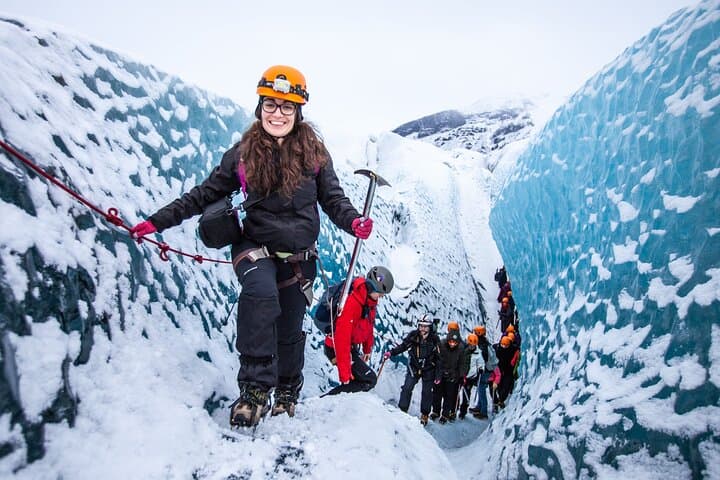
Beneath a sky of shifting light, Skaftafell’s ice reads like a map of time. This three-hour guided glacier hike mixes technical instruction with geology and culture: compact, safe, and unforgettable.