
What the day feels like
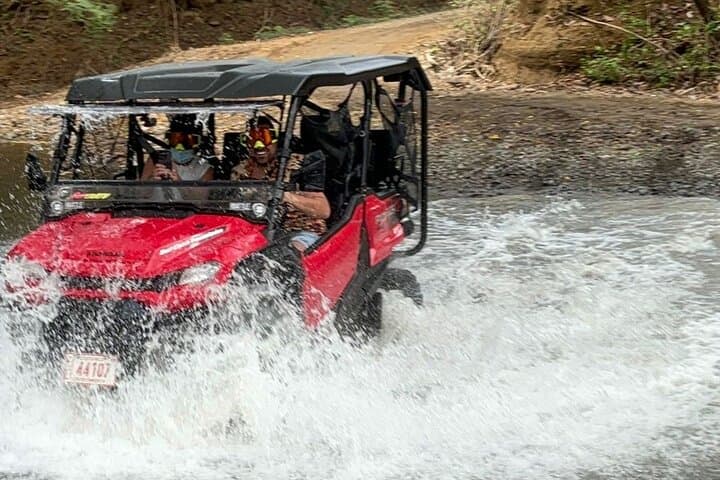
You kick the throttle and the Pacific wind slaps your helmet like a wake—hot, salty, and immediate. The side-by-side lurches across a braided riverbed, tires throwing wet pebbles like confetti, and the dry tropical forest on the edge of the trail seems to lean in and watch. Around you, a mosaic of landscapes—palm-lined beaches, cattle-pocked pampas, and scrubby hills—passes in a few focused minutes that feel full, like a film condensed from an entire trip.
This is the pulse of the Side-by-Side Adventure Tour Mules and Quads in Guanacaste: a 130-minute, private ride that threads rivers, beaches, and dry forest in and around Nuevo Colón, Sardinal, Carrillo. It’s not a manic blur of speed for its own sake; it’s an engineered short story of place—where the engine is the narrator and the land gets its say.
Guanacaste’s coastline is the product of fire and sea. Volcanic highlands shed soil toward the ocean, and seasonal rains sculpt river corridors that carve inland. The region’s dry tropical forest—one of the most endangered biomes globally—goes dormant during long dry seasons, then explodes into green in the rainy months. Historically, this terrain supported cowboys known locally as ‘sabaneros’; their practical mustard-colored hats and relaxed gait still set the cultural beat in rural communities you pass through on the tour.
Local villages along the route keep a long tether to mule culture: the “mule” in the tour’s title is a callback as much as a vehicle choice. Mules once moved goods between haciendas and the coast; today, you can choose a modern side-by-side vehicle or a quad to trace similar corridors—though far faster and with far more suspension. The trail moves through traditional Guanacasteca hamlets where dogs laze in the sun and whitewashed houses show off painted doors, and you’ll hear the occasional stub of bolero drifting from a radio as people continue life at its own quiet pace.
Wildlife doesn’t always pose for your camera, but it’s never far: white-faced capuchins and howler monkeys hang in the canopy; iguanas sun themselves on exposed rocks; and the dry forest’s birds—motmots, trogons—announce themselves in bright flashes and hollow calls. The Pacific beaches the tour skirts and crosses are working shorelines: fishermen launch small pangas in the morning and return with roosterfish and snapper that end up later at local sodas—small eateries where the day’s catch is the menu.
Why take a motorized route rather than hiking? The ride condenses a lot of ground and culture into a compact window. In under three hours, you get the tactile thrill of off-road driving, the social intimacy of a private tour, and snapshots of multiple ecosystems that would otherwise take hours or days to stitch together by foot and car. It’s a particularly good fit for small groups, families with older kids, or travelers who want high-impact exploration without an overnight commitment.
Practicalities deserve equal attention. This is a guided, instant-confirmation experience priced from about $375 (private tour), and tours depart from the operator in Nuevo Colón, Sardinal—about a 25–40 minute drive from Playas del Coco and roughly 45–60 minutes from Liberia’s Daniel Oduber Quirós International Airport (LIR). Expect a mix of dry hardpack, sandy beach stretches, and river crossings—wet shoes are a possibility. Bring closed-toe shoes with tread; leave loose items to a locker or a waterproof bag the operator supplies.
Safety is straightforward: instructors brief everyone on vehicle operation, and the routes are marked and monitored. Respect local speed guidelines—there are communities and livestock on the route—and give wildlife a wide berth. A good rule: if a herd or a group of animals looks unsettled, slow to a crawl and wait them out. You’ll arrive back with a mix of adrenal glow and a clearer sense of how Guanacaste’s landscapes and people fit together.
For photographers, the ride is generous: golden-hour light across the beach is cinematic; midday shadows in the dry forest reveal texture and detail. Keep a small tethered camera or a chest-mounted action cam; a larger DSLR may be awkward to handle on bumps.
If you want to layer the experience, time the tour to combine with a morning or afternoon at Playa Panamá or Playas del Coco—grab ceviche at a soda after the ride, or an artisanal cerveza as the sun slides into the Pacific. The private nature of the tour makes it easy to ask guides for local recommendations; they’ll often nod toward a little-known lookout or a family-run casado spot.
In short: the Side-by-Side Adventure Tour gives you concentrated access to Guanacaste’s coast and countryside with the sensory immediacy of a driving experience. It’s fast when it needs to be, culturally attentive, and efficient—ideal for travelers who want meaningful contact with place in a tight, exhilarating package.
Trail wisdom
Small choices, better day.
Protect your head and eyes
Wear a helmet with a visor or good sunglasses—the combination of sun, wind, and dust can ruin a ride if your eyes aren’t protected.
Secure loose items
Use a small dry bag or the vehicle’s storage compartments—phones and wallets can easily bounce free on rougher stretches.
Respect local livestock and people
Slow when passing villages or herds—drivers and animals share the same narrow lanes.
Hydrate before and after
Carry a 1–2 liter water bottle; the heat can sneak up on you during dusty, sunny stretches.
Local knowledge
Read the place, not just the route.
Watch for native species including White‑faced capuchin monkey, Green iguana.
Keep an eye out for wildlife during the transition between areas and habitats. Respect distance guidelines.
The dry tropical forests here are ecologically important and vulnerable—stick to trails, avoid disturbing wildlife, and minimize plastic waste.
Follow the guide's instructions on size limits, ethical handling, and leave-no-trace practices.
Sunrise lookout near Playa Panamá (short walk from the tour route). A family‑run soda in a nearby village serving fresh ceviche and casado
Locally recommended viewpoints and quiet spots known best to local operators.
Guanacaste’s ranching traditions and sabanero culture shaped local routes; mules were historically essential for moving goods between haciendas and the coast.
Maritime roots and regional tradition shape the waterways and working coasts.
Seasonal guide
Four versions of the same landscape.
Spring
Best forDry trails · Beach runs · Golden light photography
ChallengesDustier trails · Hot mid‑day temperatures
Spring (March–May) is the tail end of the dry season; trails are firm and beaches inviting, but expect higher daytime heat and occasional dust.
Summer
Best forLush late‑season foliage · Fewer crowds · Birdwatching
ChallengesOccasional afternoon showers · Slick stream crossings
Early summer brings the first rains; the forest begins to green, and wildlife activity increases, but some crossings can become muddy.
Fall
Best forDramatic storms at sea · Migratory birds · Freshly verdant forest
ChallengesHeavier rain events · Limited beach access on storm days
Fall (Sep–Nov) is rainier; when clear, colors are rich, but plan for wetter trails and altered beach stretches.
Winter
Best forReliable dry trails · Clear skies · Best beach days
ChallengesHigher tourist numbers · Sun intensity
Costa Rica’s ‘winter’ (Dec–Feb) is actually the prime dry season—stable, sunny conditions perfect for uncompromised beach and trail time.
Operator details
What the booking data adds.
Included
- ✓Bilingual guide, safety equipment(gogles) a bottle of water.
Not included
- —Meal times are not included
Good to know
- ✓Service animals allowed
- ✓Public transportation options are available nearby
- ✓Infants are required to sit on an adult’s lap
- ✓Not recommended for pregnant travelers
- ✓Not recommended for travelers with poor cardiovascular health
- ✓Suitable for all physical fitness levels
- ✓People with recent surgeries.
Pack with intention
What to bring.
Good to know
Common questions.
No—guides provide a safety briefing and basic driving instruction; beginners are welcome but must follow guide direction and speed limits.
Plan the edges
The details that make the day easier.
The Guanacaste Conservation Area is part of Costa Rica’s effort to protect tropical dry forest ecosystems; the region contains some of the country’s most biodiverse dry forests.
After the ride, head to a nearby soda for a casado (rice, beans, plantain, protein) and a cold Imperial beer; grab fresh ceviche near Playa Panamá or browse local markets for hand‑woven goods.
- Closest airport
- Liberia (LIR)
- Trailhead
- Nuevo Colón, Sardinal
- Driving from Playas del Coco
- ~25–40 minutes
- Cell service
- Good near towns, intermittent in rural forest
- Permits
- No public permits required — operator run, private tour.
Stick to designated trails to limit erosion, avoid feeding wildlife, and support local businesses—prefer reusable water bottles and refuse single‑use plastics.
Explore by topic
Follow the threads.
Keep exploring
Make the story part of the trip.
Set out from Bass Harbor for a private, customizable day on Blue Hill Bay — lighthouses, puffins, seals, and the chance to feel Acadia from the water. Small groups, local captains, unforgettable views.
In four hours you can move from shaded canyon ferns to wind-scoured coastal ridgelines, guided by someone who knows where the light—and the hidden views—live. This private half-day hike on the Monterey Peninsula or Big Sur is compact, curated, and perfect for travelers who want depth without a multiday commitment.
 Related story
Beneath a sky of shifting light, Skaftafell’s ice reads like a map of time. This three-hour guided glacier hike mixes technical instruction with geology and culture: compact, safe, and unforgettable.