
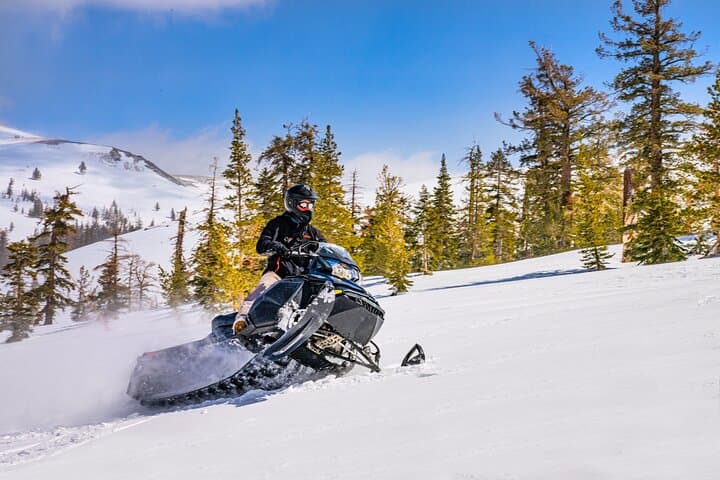
What the day feels like
The first time the sled broke free of the tree-line, the valley opened like a held breath. Snowfields unrolled in silver sheets, ridgelines sketched in sharp graphite against a blue so bright it felt new. Wind became a kind of punctuation — a brief, cold applause that nudged the machine forward and pushed your cheeks pink. At 7,200 feet, Hope Valley is a high-country room with big windows: scattered stands of lodgepole pine, granite outcrops dusted with hoarfrost, and distant peaks that seem to hold old weather like a story in their pockets.
Tahoe Summit Snowmobiling’s two-hour guided tour is less about speed and more about permission: permission to access those vistas, to feel the machine’s grunt under you and to lean into the rhythm between throttle taps. The route through Hope Valley is designed for beginners and intermediates, which means you’ll spend most of your time moving confidently across wide meadows and rolling ridgelines rather than negotiating narrow gullies. That accessibility is part of the appeal — you get the raw alpine theater of the High Sierra without needing advanced technical skills.
Geologically, you’re riding across a landscape carved by glaciers and fire. The bowl-shaped valleys, serrated ridgelines, and outcrops of pale granite are the fingerprints of the Sierra Nevada’s long, slow labor. Historically, Hope Valley sits along the Carson Route, a 19th-century emigrant corridor tied to the California Gold Rush; echoes of wagon ruts and the stories of early travelers still linger in the place names — Carson Pass, Markleeville, and the scattered homesteads along the valley floor. Indigenous Washoe people used these corridors seasonally long before that; the land was and is a conduit, not a barrier.
Culturally, the region has a dialect of its own: a mix of backcountry tolerance and small-town hospitality. Local operators run tours that prioritize safety and stewardship. A guided snowmobile excursion here is more than a thrill; it’s an organized way to minimize footprint while maximizing access. The guides will stop for photos, point out raptor thermals and deer tracks, and often slow for a quiet minute where the only sound is the wind shaping the snow.
For photographers, there is a geometry to the light: late-morning sun slants across the valley, making sastrugi and snowdrifts readable as sculptural forms. Wildlife often keeps its distance, but tracks tell stories — coyote paths that cut straight like confident lines, rabbit halts at the edge of the meadow. If you’re looking for alpine solitude with room to breathe, this route delivers.
Practicalities matter: tours are typically two hours, run from a trailhead in Hope Valley, and start at about 7,200 feet elevation, so acclimate accordingly. The trip price is in the neighborhood of $291.50 per rider; most operators include helmets and basic instruction, but you’ll want warm, waterproof layers and a sense of adventure. The operator provides the machines and ensures you ride permissible routes; independent riding in the area requires adherence to forest service rules and registration where applicable.
Safety isn’t an afterthought. Guides will brief you on throttle control, braking, and how to ride in formation. Snow conditions can vary rapidly — from crusted surfaces that demand delicate throttle work to soft, powdery meadows that make the sled feel buoyant and alive. Keep hydrated and snack often; high-elevation cold burns calories faster than you expect. If you’ve not ridden before, allow yourself a couple of practice minutes: mastering the balance between leaning and letting the machine do the work makes the ride exponentially more fun.
Sustainability is part of the package here, too. A responsible operator stays on groomed, permitted corridors and avoids sensitive wildlife areas. Respecting closures and following the guide’s lead keeps the experience repeatable for future guests and limits disturbance to wintering animals.
If you want to extend the day, you can head back down to Markleeville or make the 45-minute drive to South Lake Tahoe for dinner and a beer by the water. The contrast is part of the region’s charm: high-country quiet in the morning, lakeside activity in the evening. For travelers used to the noise of cities, the silence at elevation — broken only by the sled’s engine at intervals and the wind otherwise — has a line-leveling quality. It makes you notice how you’re breathing.
Booking is straightforward; the tours are typically instant-confirmation and run through the winter season, often with free cancellation windows. If you’re planning a visit, aim for consistent winter months when snowpack is deep and the trail corridors are fully formed. Early and late winter rides can be spectacular too, but snowpack variability requires flexible operators and updated avalanche and route checks.
Ultimately, what keeps people coming back to a snowmobile tour in Hope Valley isn’t just the speed. It’s the way the ride translates the scale of the High Sierra into something you can move through in two hours: valleys that expand your perspective, ridgelines that demand a small humility, and a plain, human exhilaration at being outdoors in winter that feels straightforward and immediate. For anyone who wants the Alps in miniature, with a few horsepower under their feet and a guide who knows the stories of the place, this is a very good way to spend a morning or afternoon.
Learn more about guided options and logistics at Tahoe Summit Snowmobiling’s local-expert listing: <a href="https://app.advcollective.com/local-experts/tahoe-summit-snowmobiling-exploring-hope-valleys-winter-backcountry">Tahoe Summit Snowmobiling — Hope Valley backcountry tours</a>.
Trail wisdom
Small choices, better day.
Layer for changing conditions
Temperatures can swing; use moisture-wicking base layers and a warm mid-layer with a waterproof outer shell.
Bring eye protection
Goggles are critical to block wind and glare; sunglasses alone won’t cut it on the open snowfields.
Hydrate and snack
Cold weather increases calorie burn — carry water and compact snacks to maintain energy at altitude.
Listen to your guide
Follow formation riding and route instructions to stay safe and protect sensitive terrain.
Local knowledge
Read the place, not just the route.
Watch for native species including Mule deer, Golden eagle.
Keep an eye out for wildlife during the transition between areas and habitats. Respect distance guidelines.
Guided tours typically use designated corridors to minimize impact; avoid widening trails and pack out all trash to protect wintering habitat.
Follow the guide's instructions on size limits, ethical handling, and leave-no-trace practices.
Carson Pass scenic pullouts for expansive views. Quiet meadows used for backcountry photo stops
Locally recommended viewpoints and quiet spots known best to local operators.
Hope Valley sits along the historic Carson Route used by 19th-century emigrants during the Gold Rush and earlier seasonally by Washoe people.
Maritime roots and regional tradition shape the waterways and working coasts.
Seasonal guide
Four versions of the same landscape.
Spring
Best forLong daylight hours · Consolidated base for scenic runs
ChallengesVariable melt cycles · Potential wet snow and breakable crust
Spring offers increasing daylight and warmer temps, but snowpack can be inconsistent; expect a mix of powder and sagging spring snow.
Summer
Best forTrailhead access for other activities · Wildflower viewing nearby
ChallengesNo snowpack for snowmobiling · Limited winter services
Summer is off-season for snowmobiling; operators do not typically run tours once the snow melts, but the area is excellent for hiking and mountain biking.
Fall
Best forClear skies · Crisp mornings
ChallengesEarly season snows can close access · Shortening daylight
Fall brings clear, cold conditions and early snowfall; tours may be sporadic until consistent snowpack arrives.
Winter
Best forDeep snowpack · Full trail networks
ChallengesCold temperatures · Occasional limited visibility during storms
Winter is prime season: stable snowpack, regular guided runs, and classic high-country conditions for snowmobiling.
Operator details
What the booking data adds.
Included
- ✓Snowmobile for the duration of the tour
- ✓Transportation to the Trailhead
- ✓Helmets
- ✓Licensed Tour Guide
Not included
- —Ski Bib, Jacket, Snow Boots, Gloves (available for rent)
Good to know
- ✓Not recommended for pregnant travelers
- ✓Travelers should have at least a moderate level of physical fitness
Pack with intention
What to bring.
Good to know
Common questions.
No — guided tours provide a safety briefing and basic instruction; routes are designed for beginners and intermediates.
Plan the edges
The details that make the day easier.
Hope Valley lies along the historic Carson Route of the California Trail, a corridor used by emigrants during the 19th-century Gold Rush.
After the ride, head into Markleeville for a cozy lodge meal or drive to South Lake Tahoe for lakeside dining and a brewery taproom; mountain bakeries and small-town inns in Markleeville offer hearty post-ride fare.
- Closest airport
- Reno-Tahoe International (RNO) ~1–1.5 hours; Trailhead: Hope Valley trailhead at ~7,200 ft; Driving distance from Markleeville: ~15–30 minutes depending on route; Cell: intermittent in the valley—expect limited service; Permits: guided tours typically include required access; independent riding may require OHV registration—check operator guidance.
Operators stick to permitted routes to reduce wildlife disturbance; pack out waste, avoid creating new tracks, and follow your guide to protect winter habitat.
Explore by topic
Follow the threads.
Keep exploring
Make the story part of the trip.
Set out from Bass Harbor for a private, customizable day on Blue Hill Bay — lighthouses, puffins, seals, and the chance to feel Acadia from the water. Small groups, local captains, unforgettable views.
In four hours you can move from shaded canyon ferns to wind-scoured coastal ridgelines, guided by someone who knows where the light—and the hidden views—live. This private half-day hike on the Monterey Peninsula or Big Sur is compact, curated, and perfect for travelers who want depth without a multiday commitment.
 Related story
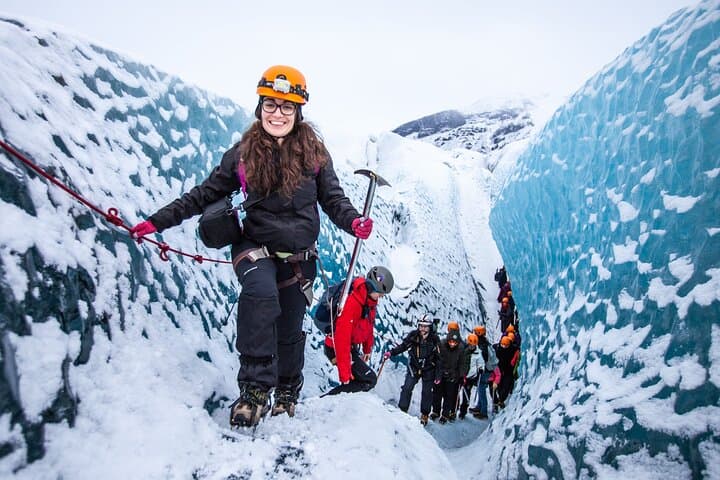
Beneath a sky of shifting light, Skaftafell’s ice reads like a map of time. This three-hour guided glacier hike mixes technical instruction with geology and culture: compact, safe, and unforgettable.