
What the day feels like
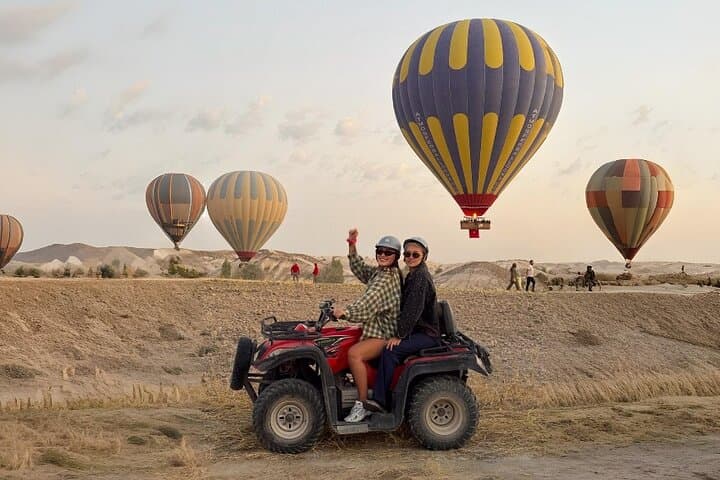
The first light arrives like a soft hand over the landscape, coaxing the stone to warm from gray to ochre. You push the throttle and the engine answers—an impatient heartbeat that blends with wind and the soft rattle of talus. Ahead, a corridor of fairy chimneys leans in as if to whisper directions: left, where the track narrows into a cleft; right, where the valley opens and a scattering of ancient cave windows punctuates the slope. On an ATV in Cappadocia, the valley isn't simply scenery; it moves around you, a shifting gallery of volcanic towers, carved churches, and secret hollows, all patient and enormous, all sculpted by long winters and a stubborn wind.
Cappadocia feels designed for motion. Millions of years ago, volcanic eruptions blanketed central Anatolia with ash that compacted into soft tuff. Over millennia, water and wind chewed away at the tuff, leaving the spires and cones—locally called 'peri bacalari' or fairy chimneys—that now punctuate the landscape. Humans followed suit: early Christians and local communities carved homes, monasteries, and whole underground cities into the easy stone. Today, those same forms create paths, berms, and sightlines ideal for short, punchy off-road runs.
ATV tours in the Göreme area lean on that geology for drama. Routes thread through valleys like Rose, Red, Love, and Sword, each with a different personality. Rose is warm and luminous in the late afternoon; Red flashes ruddy at sunset. Love Valley presents improbable pillars that seem stacked for a joke. Guides map the most rideable corridors, looping past pigeon houses and cave churches while keeping the machines where they belong—on established tracks rather than fragile slopes.
There’s a cultural echo beneath the throttle. Göreme's cave dwellings and stone terraces are still inhabited and farmed; you'll pass orchards, vineyards, and the odd grazing flock. In nearby Ürgüp, centuries of pottery and winemaking continue under modern roofs. Local tour operators commonly include a stop for photos and a brief explanation of human interaction with the landscape—how generations adapted to this soft rock and how tourism now supports conservation efforts.
Practical details are straightforward: tours run one or two hours, with the one-hour option suitable for a sunrise or sunset sprint and the two-hour for a fuller valley circuit. Safety kit—helmets and briefings—is standard; no previous ATV experience is required, though expect a fast-learning curve for controlling throttle and weight on uneven ground. Guides lead the group, set the pace, and choose lines that balance fun with caution.
Timing is everything. Sunrise and sunset compress the light and cool the air; both are peak windows for photographers and riders who want to avoid midday dust and heat. Summer afternoons can be bluntly hot and dusty, while winter brings snow that adds a quieting, otherworldly cover to the rock. Spring and fall offer temperate rides and splashes of wildflowers or autumn bronze.
If you go, think like a rider and a visitor. Wear closed-toe shoes that grip, a light layer that beats the morning chill and sheds in the sun, and wraparound sunglasses or goggles for dust. Bring water—hydration packs are ideal—and a camera you can secure to your chest or strap. Respect the landscape by staying on marked routes and following your guide: the tuff is fragile in places, and the best views deserve protection.
Booking is usually instant and flexible; many operators offer hotel pickup in Göreme and nearby towns, and tours often include a short photo stop and a snack or tea. Expect brief safety training on mounting, braking, and shifting weight on inclines. Guides will advise on camera use while riding—some pause for posed images, others suggest tethering gear.
For photographers, the ride offers a rapid alternation of scale: intimate alcoves and carved doors, then sweeping panoramas framed by cliffs. For adrenaline-seekers, the technical fun comes from choosing a line, anticipating traction, and leaning into corners as the valley walls blur. For cultural travelers, the payoff is the sudden pause—an old cave marked with a cross, a pigeon house with a row of holes, a shepherd waving from a terrace—moments that make this more than a thrill ride.
Cappadocia's ATVs are small pieces in a larger travel story. After the ride, head to Göreme for a slow lunch of pottery kebab and flatbread, or find a small winery in Ürgüp to sample local varietals. Your guide can often point you to a breakfast spot that makes menemen, the Turkish scrambled eggs, or a family-run shop where homemade jam is sold by the jar. The thrill of tearing across moonscape must be balanced with these low-key cultural pickups that root the visit in place.
In short: an ATV ride here is efficient exposure to the region's geology, history, and topography—fast enough to feed a thirst for adrenaline, slow enough to let the land impress itself on you. Go at dawn for light and quiet, at dusk for color and cool, and leave room in your schedule to walk the tunnels and taste the stew. The valley will be there—unyielding, patient, and subtly changed by the traffic of your tires and your attention.
Practical snapshot: most tours are 60 or 120 minutes; expect light to moderate physical demand, a short safety briefing, and helmeted runs over compact dirt and loose gravel; bring water, closed-toe shoes, and a willingness to follow the guide. If you treat the ride as both a short drive and a respectful visit, you'll leave with an impression of Cappadocia that's both immediate and layered—stone, wind, and human history stitched together under a big Anatolian sky.
Trail wisdom
Small choices, better day.
Book sunrise or sunset
Light is best and temperatures are cooler for photography and comfort.
Wear closed-toe shoes
Sturdy trainers or hiking shoes protect your feet and improve control on pegs.
Bring a hydration pack
One- to two-hour rides can be dehydrating; sip regularly to maintain focus.
Secure your camera
Use straps or a chest mount—guides will stop for photos but moving shots need tethered gear.
Local knowledge
Read the place, not just the route.
Watch for native species including Eurasian Hoopoe, Anatolian rock lizard.
Keep an eye out for wildlife during the transition between areas and habitats. Respect distance guidelines.
Stay on established tracks to limit erosion of the fragile tuff formations; local guides enforce route rules to protect archaeological features.
Follow the guide's instructions on size limits, ethical handling, and leave-no-trace practices.
Meskendir Valley for fewer crowds and dense rock formations. Ortahisar Castle viewpoint for a quieter panorama of the region
Locally recommended viewpoints and quiet spots known best to local operators.
Cappadocia's soft tuff was carved by early Christians into monasteries and cave cities; many of the region's rock churches date to the Byzantine era.
Maritime roots and regional tradition shape the waterways and working coasts.
Seasonal guide
Four versions of the same landscape.
Spring
Best forWildflowers · Mild temperatures · Photography
ChallengesDust after dry spells · Occasional rain showers
Spring offers mild weather and green accents in the valleys, making for comfortable rides and vivid photos.
Summer
Best forLonger daylight · Reliable schedules · Sunrise/sunset runs
ChallengesHigh midday heat · Dust and glare
Summer is popular but hot—opt for early-morning or late-evening departures to avoid peak heat.
Fall
Best forCrisp light · Smaller crowds · Clear skies
ChallengesCool mornings · Possible wind
Autumn balances good weather and fewer visitors; temperatures are pleasant for longer runs.
Winter
Best forSnow-dusted landscapes · Unique photo contrasts · Low crowds
ChallengesCold temperatures · Icy or muddy tracks
Winter transforms the valleys with snow; rides are quieter but require caution on traction and cold-weather gear.
Operator details
What the booking data adds.
Included
- ✓Bonne
- ✓Hotel pick-up and drop-off
- ✓Helmet
Good to know
- ✓Public transportation options are available nearby
- ✓Not recommended for travelers with spinal injuries
- ✓Not recommended for pregnant travelers
- ✓Not recommended for travelers with poor cardiovascular health
- ✓Suitable for all physical fitness levels
Pack with intention
What to bring.
Good to know
Common questions.
No prior experience is required; tours start with a safety briefing and basic handling practice before heading out.
Plan the edges
The details that make the day easier.
Cappadocia's fairy chimneys formed when volcanic ash compacted into tuff and eroded over millennia, leaving the tall spires and cones visible today.
After a ride, head to Göreme's Topdeck Cave Restaurant or Dibek for pottery kebab and fresh flatbread, or visit Turasan Winery in Ürgüp for regional wines; end with tea in a terrace cafe overlooking the valleys.
- Closest airports
- Nevşehir Kapadokya (NAV) ~40 min drive, Kayseri Erkilet (ASR) ~60–75 min; Driving distance from Göreme: most tour operators pick up from town within 10–20 minutes; Cell service: generally available in towns, patchy in some valleys; Permits: none required for standard routes, but follow guide instructions.
Stay on established paths and avoid climbing fragile rock faces; local operators limit routes to reduce erosion—support guides who practice low-impact tourism.
Explore by topic
Follow the threads.
Keep exploring
Make the story part of the trip.
Set out from Bass Harbor for a private, customizable day on Blue Hill Bay — lighthouses, puffins, seals, and the chance to feel Acadia from the water. Small groups, local captains, unforgettable views.
In four hours you can move from shaded canyon ferns to wind-scoured coastal ridgelines, guided by someone who knows where the light—and the hidden views—live. This private half-day hike on the Monterey Peninsula or Big Sur is compact, curated, and perfect for travelers who want depth without a multiday commitment.
 Related story
Beneath a sky of shifting light, Skaftafell’s ice reads like a map of time. This three-hour guided glacier hike mixes technical instruction with geology and culture: compact, safe, and unforgettable.