
What the day feels like
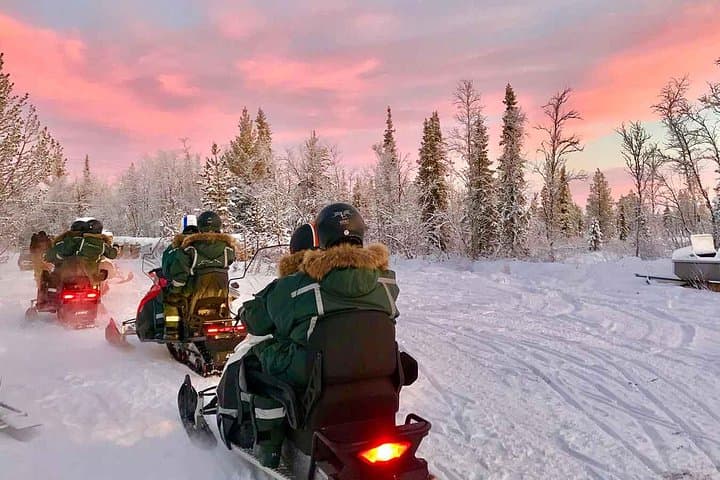
The sun hangs low over a white plain — thin and determined, bleaching the birch trunks into silver columns. Under my boots, the snow has the crisp, unshuffled sound of a world that’s been waiting. We push into a corridor cut through the forest: a compacted ribbon of hard snow, the track’s treadline a heartbeat behind us. The machines breathe; the lead guide nods, and for the next three hours the tundra claims us as temporary guests.
This is an afternoon snowmobile tour outside Kiruna, Lapland — three hours of full-throttle, forest-carved and river-gliding riding that feels part exploration, part communion with a landscape designed in extremes. You zip between trees, ride out onto frozen lakes that reflect a pale sky, and follow the Torne River where the current long ago surrendered to ice but still seems to tug at the face of the landscape. The experience is immediate: wind that dares you to keep the visor up, the low mechanical rumble that becomes a steady companion, and the hush between bursts of speed where the wilderness reclaims its voice.
Geology here reads like a slow-motion drama. This corner of northern Sweden rests on ancient Precambrian rock — the bedrock is billions of years old, scoured and shaped by repeated glaciations. Lakes and low ridges are the fingerprints of ice sheets that ground and gouged the land. The Torne River, which you’ll glimpse as you cross its frozen surface, threads a story of cross-border culture and wildlife; it has long been a corridor for fish and people. Culturally, Lapland is the ancestral homeland of the Sámi. You’ll catch traces of Sami life in place names and in the occasional reindeer herd, and guides will often point out how routes and winter practices grew from centuries of adapting to this climate.
Practically, the tour is straightforward but exacting: plan to be active for about three hours; typical routes cover roughly 25–40 km (15–25 miles), depending on snow and ice conditions and group experience. The operator in Kiruna provides helmets, insulated suits, and instruction: drivers with no prior experience will receive a brief lesson on throttle control, braking, and how to follow a packed track. Many tours allow two people per sled (share the driving) or an upgrade to single-driver machines for a more hands-on experience.
Safety is the steady undercurrent to the thrill. Guides check ice thickness, route conditions, and weather before departing. Stick to the group, keep helmets and goggles secure, and dress in layers to manage sweat and wind exposure — hypothermia is a real risk when body heat drops quickly after exercise. Fuel and mechanical reliability are non-negotiable; operators typically refuel and check sleds between runs but ask about contingency plans for mechanical issues before you head out.
Timing matters. Late winter (February–March) is prime: daylight is long enough for clear views, sleds punch through packed snow, and temperatures, while still cold, are less brittle than mid-December. But if you’re chasing auroras, know that winter nights here are famously dark and clear, and you can combine an afternoon tour with an evening aurora hunt if schedules allow. Because routes cross lakes, guides choose days when ice is reliably thick; cancellations are rare but possible after heavy snow or thaw events.
Local insights make a big difference. Ask your guide about suovas (smoked reindeer), a Sami specialty often served at winter camps, or about the town of Kiruna itself, an Arctic community in motion: the city is in the process of relocating parts of its center because of iron-mining subsidence. Wildlife sightings are subtle but rewarding — tracks of elk, stoat, or wolverine in fresh snow, or herds of reindeer in the distance. Respect fences and reindeer grazing routes; the animals are central to local livelihoods.
Bring camera batteries with you; cold drains power quickly. Use wrist straps and think about composition before you stop: low-angled light and open lake ice make strong, graphic shots. If you want motion, mount the camera with a secure strap and ask the guide whether stopping on a lake for a short, static portrait is safe that day.
The ride ends the way it began: slower, warmer, more tactile. You’ll unpeel frozen fingers and swap stories beside a thermos or a wood stove, with the landscape folded behind you like a finished map. Whether you came for speed, scenery, or the sense of moving through a landscape few get to know intimately, this afternoon tour is a compact, confident way to taste Lapland in motion. For details and to reserve a slot, check the operator’s booking page and local expert overview here: <a href="https://app.advcollective.com/local-experts/explore-arctic-wilderness-on-a-thrilling-afternoon-snowmobile-tour-in-lapland">Afternoon Snowmobile Tour in Lapland</a>.
Want to plan a longer adventure? Combine a snowmobile outing with a multi-day wilderness stay, or add a night-time aurora chase for a textbook Arctic itinerary. The machines are fast, but the landscape moves at its own pace — and that contrast is the real draw.
Trail wisdom
Small choices, better day.
Layer for Wind and Sweat
Wear moisture-wicking base layers and a windproof outer layer; you’ll warm up on the sled but need protection from cold gusts.
Use the Wrist Strap
Secure cameras and gloves with straps — it’s easy to drop gear on a moving sled or when stopping on slick ice.
Follow the Guide
Stay in formation and maintain safe spacing; guides choose the safest line across frozen rivers and lakes.
Fuel & Footwear Check
Confirm fuel policy and wear insulated, non-slip boots as snowmobiles can spray slush and water.
Local knowledge
Read the place, not just the route.
Watch for native species including Reindeer, Elk (moose) tracks and occasional sightings.
Keep an eye out for wildlife during the transition between areas and habitats. Respect distance guidelines.
Respect reindeer grazing routes and avoid driving off marked tracks to protect fragile tundra and prevent disturbing local livelihoods.
Follow the guide's instructions on size limits, ethical handling, and leave-no-trace practices.
Crossing the frozen Torne River where the ice opens into wide channels. A short stop at a Sami lavvu (tent) or winter camp for suovas and storytelling if available
Locally recommended viewpoints and quiet spots known best to local operators.
Kiruna grew around iron ore mining in the early 20th century and is undergoing a planned relocation of parts of the town due to subsidence from mining.
Maritime roots and regional tradition shape the waterways and working coasts.
Seasonal guide
Four versions of the same landscape.
Spring
Best forLonger daylight · Stable late-winter trails
ChallengesVariable ice conditions · Melting snow late in season
Late winter/early spring (Feb–Mar) offers longer days and consistent snow; expect softer snow near the season’s end and occasional route changes.
Summer
Best forHiking alternatives · Midnight sun experiences
ChallengesNo snow — tours cancelled · Different vehicles needed
Snowmobile tours do not run in summer; consider ATV or guided hiking alternatives to explore the region.
Fall
Best forAutumn colors on lowlands · Less crowded trails
ChallengesInsufficient snow cover · Unpredictable weather
Fall is a shoulder season with variable conditions; operators typically suspend snowmobile trips until reliable snow arrives.
Winter
Best forSnowmobiling · Northern Lights viewing
ChallengesShort daylight in mid-winter · Extreme cold in deep winter
Peak winter is prime for snowmobiling; mid-December to March offers the best combination of snow cover and service availability.
Operator details
What the booking data adds.
Included
- ✓2/p per snowmobile ( if uneven number you need to add single driver fee or sitt in a sled)
- ✓Snow suit, boots, wool socks, gloves, balaclava, helmet
Not included
- —Food/drink not included
Good to know
- ✓Public transportation options are available nearby
- ✓Not recommended for travelers with spinal injuries
- ✓Not recommended for pregnant travelers
- ✓Not recommended for travelers with poor cardiovascular health
- ✓Suitable for all physical fitness levels
- ✓Wearing glasses is not recommended as they fog up (wear contacts)
Pack with intention
What to bring.
Good to know
Common questions.
No prior experience is required; operators provide training and pair inexperienced riders with guides or experienced partners.
Plan the edges
The details that make the day easier.
Kiruna is the northernmost city in Sweden and is currently relocating parts of its town center because of ground subsidence caused by iron-ore mining.
After the ride, seek out a local spot for reindeer stew (suovas) and lingonberry jam or visit Kiruna Church for a slice of local history; many lodges offer evening saunas and wood-fired meals to warm up.
- Closest airport
- Kiruna Airport (KRN); Typical drive from Kiruna center to trailhead: 10–30 minutes; Cell service: reliable in town, patchy in remote stretches; Permits: none required for guided tours
Stick to marked trails, avoid driving near reindeer grazing areas, pack out all waste, and support operators who follow local land-use agreements.
Explore by topic
Follow the threads.
Keep exploring
Make the story part of the trip.
Set out from Bass Harbor for a private, customizable day on Blue Hill Bay — lighthouses, puffins, seals, and the chance to feel Acadia from the water. Small groups, local captains, unforgettable views.
In four hours you can move from shaded canyon ferns to wind-scoured coastal ridgelines, guided by someone who knows where the light—and the hidden views—live. This private half-day hike on the Monterey Peninsula or Big Sur is compact, curated, and perfect for travelers who want depth without a multiday commitment.
 Related story
Beneath a sky of shifting light, Skaftafell’s ice reads like a map of time. This three-hour guided glacier hike mixes technical instruction with geology and culture: compact, safe, and unforgettable.