
What the day feels like
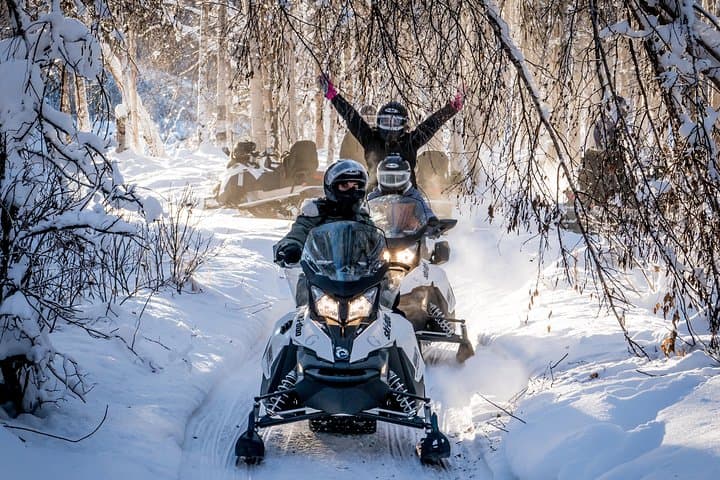
You smell winter before you see it: metallic cold, pine sap, and the faint oil tang of a machine that means motion. A guide thumbs the choke and the Ski‑Doo answers—soft at first, then a steady rumble that feels like an animal waking. You lift off the groomed track and the world rearranges itself into long seams of white. Ahead, the Alaska Pipeline snakes across the tundra like a pale backbone; to either side, black spruce stand like a patient audience. For 60 minutes you trade the padded stillness of Fairbanks for the honest speed of a snowmobile, sledding across a winter stage where moose step like deliberate punctuation and ptarmigan explode from the snow in tiny winged interrogations. This is not fantasy—it's the particular, tactile Alaska of engines, cold, and wide sky, and it's accessible even if your longest outdoor winter memory is a frosty snowboard run. The operators use new Ski‑Doo luxury touring snowmobiles with heated handgrips and electric start, and the route threads the outskirts of North Pole, AK; you cut across sections of the famed Trans‑Alaska Pipeline and slip through snow‑packed forests, keeping an eye out for foxes, snowshoe hares, grouse, and the occasional moose.This guided outing is as much about place as pace. The pipeline you cross is a modern engineering relic completed in 1977 that reshaped Alaska’s economic landscape; on quieter scales, the region is homeland to Athabascan peoples whose subsistence practices and seasonal rhythms are woven into the land. Geologically, you’re running over river‑laid terraces and glacial deposits carved during Pleistocene cycles; the spruce and tundra are survivors of short, sharp summers and long, luminous winters. Culturally, you’ll pass near North Pole—the touristy Santa Claus House sits a short drive away—giving the ride a curious blend of frontier infrastructure and kitsch that is uniquely Alaskan.Practicalities matter here. The tour is a fixed 60 minutes of guided riding, priced from about $169 per person, with instant confirmation and free cancellation. Riders get heated helmets, a short safety briefing, and snowmobile instruction tailored to novices; guides pace the group to match experience and weather. Expect temperatures that bite: midday highs can sit below freezing from late fall through early spring, so layer strategically. Snow conditions can shift from compacted, fast tracks to deep, powdery fields, and operators may adjust the route accordingly. Wildlife sightings are frequent but never guaranteed; the advantage of a guided tour is that local guides know where animals like to feed and rest, and how to approach sightings without disturbance.Want to make the ride better? Choose morning runs for cleaner snow and crisper light—the low winter sun casts the landscape into cinematic relief—and pick a small‑group departure if you want more riding time and photo stops. Ride conservatively on tree runs where hidden branches and narrow corridors demand attention. The gear is comfortable: heated handgrips and electric starts keep the mechanical distractions low, which lets you notice the elemental details—the squeak of snow under the sled, the way breath fogs your visor, the smell of spruce when you slide beneath a canopy.For photographers, the low sun and long shadows are a boon, but the cold will drain batteries fast; bring spares in an insulated pocket and use a wrist strap to secure your camera while riding. Keep your lens wide to capture scale; a 24–70mm equivalent covers both portraits and landscapes. If you want a trophy shot of the Alaska Pipeline or a moose framed against the Porcupine Mountains, ask your guide for a slow stop in a safe pullout.Packing and preparation are straightforward but crucial: warm, moisture‑wicking layers; windproof outer shell; insulated gloves that still allow throttle control; and goggles that resist fogging. If you wear prescription glasses, plan for goggles that fit over them or bring contacts. Physical demands are moderate—standing and shifting weight while cornering, bracing over bumps—but no technical riding experience is required. The guides handle the tricky bits; your job is to listen, learn, and enjoy.Rates and logistics are simple to parse: this is a 1‑hour guided experience operating near Fairbanks and North Pole, roughly a 20–30 minute drive from central Fairbanks and easily paired with other winter activities like dog mushing, Northern Lights viewing, or a soak in a local hot springs. The best time to book is during peak winter months when snow cover is consistent, and small‑group slots fill early. For those who want a deeper Alaska winter day, combine this <a href='https://app.advcollective.com/local-experts/experience-alaskas-wilderness-guided-snowmobile-tour-near-fairbanks'>guided snowmobile tour</a> with a night under the aurora or a visit to a local sled dog kennel.If you go, practice basic snowmobile etiquette: keep a safe following distance, yield to wildlife and other trail users, and never leave litter. Respect the quiet moments when the group stops—the soundtrack of this place is not just the sled but the absence of city noise. And remember that Alaska rewards patience: a slow sky can outdo the most dramatic sprint. For an hour, you trade the predictable for the elemental, and you come back to town with your cheeks stinging, your adrenaline eased into a grin, and a new map of memory—snow lanes, pipeline arc, spruce silhouettes—ready to pull out whenever you need a reminder of why you came.
Trail wisdom
Small choices, better day.
Arrive layered
Temperatures can swing—wear moisture‑wicking base layers and a warm midlayer under a windproof shell to stay comfortable.
Protect electronics
Bring spare batteries in an inner pocket and keep cameras warm to prevent shutdown in extreme cold.
Listen to your guide
Guides set pace and signals—obey throttle and stopping instructions to stay safe on narrow tree corridors.
Leave room for wildlife
Stop at the guide’s direction for photos and give animals space; sudden moves can stress wildlife and risk safety.
Local knowledge
Read the place, not just the route.
Watch for native species including Moose, Fox.
Keep an eye out for wildlife during the transition between areas and habitats. Respect distance guidelines.
Operators follow trail etiquette to minimize disturbance; stay on designated corridors, avoid off‑trail riding in sensitive tundra, and pack out all trash.
Follow the guide's instructions on size limits, ethical handling, and leave-no-trace practices.
Short pullouts alongside the pipeline for unobstructed horizon photos. A quiet spruce glade where tracks thin and the forest hushes—ask guides for a slow stop
Locally recommended viewpoints and quiet spots known best to local operators.
The Trans‑Alaska Pipeline, completed in 1977, is a defining industrial feature of the Fairbanks region and altered Alaska's economic geography.
Maritime roots and regional tradition shape the waterways and working coasts.
Seasonal guide
Four versions of the same landscape.
Spring
Best forLonger daylight · Firm trail conditions
ChallengesThawing snow and variable trail firmness · Colder mornings with melt afternoons
Late winter into early spring offers longer days and more forgiving temperatures, but watch for slush and variable snowpack as the season melts.
Summer
Best forN/A—snowmobile tours do not operate · N/A
ChallengesNo reliable snow cover
This experience is a winter offering; summer conditions eliminate snowmobile access to the same trails.
Fall
Best forAurora‑watching preparation · Cool, crisp practice runs before deep winter
ChallengesLimited snow in early fall · Unpredictable freeze/thaw cycles
Early fall can offer cool, clear days but inconsistent snow; tours are most reliable once consistent snowpack settles.
Winter
Best forSnowmobiling · Wildlife tracking · Northern Lights pairings
ChallengesExtreme cold, short daylight in mid‑winter
Winter is peak season with consistent snow cover and the best chance to pair riding with aurora viewing; dress for serious cold.
Operator details
What the booking data adds.
Included
- ✓Neck Gator
- ✓Gloves
- ✓Boots
- ✓Heated Helmet
- ✓Snow Jacket
- ✓Snow Bibs
- ✓Experienced Guide & instruction
Not included
- —Hotel pickup and drop-off
Good to know
- ✓Not recommended for pregnant travelers
- ✓Not recommended for travelers with spinal injuries
- ✓Wheelchair accessible
- ✓Infants and small children can ride in a pram or stroller
- ✓All areas and surfaces are wheelchair accessible
- ✓Not recommended for travelers with poor cardiovascular health
- ✓Suitable for all physical fitness levels
- ✓Operates in all weather conditions, please dress appropriately or use our clothes for free
- ✓Valid Drivers License required to drive
- ✓Minimum passenger age is 5 years old
- ✓Arrive 30 Minutes prior to tour start
- ✓Drivers must be able to clearly understand safety instructions in English.
Pack with intention
What to bring.
Good to know
Common questions.
No—tours are suitable for beginners; guides provide a safety briefing and keep groups paced for mixed experience levels.
Plan the edges
The details that make the day easier.
The Trans‑Alaska Pipeline System is 800 miles long and was constructed between 1974 and 1977 to transport oil from Prudhoe Bay to Valdez.
After the ride, head back to Fairbanks for hearty Alaskan fare—The Pump House offers riverside views and local seafood; stop at the Santa Claus House in North Pole for kitschy souvenirs, or sample local brews at nearby Silver Gulch or a downtown tasting room to warm up.
- Closest airport
- Fairbanks International Airport (FAI)
- Typical drive to trailhead
- 20–30 minutes from Fairbanks downtown
- Cell service
- patchy on trails; expect reception near towns
- Permits
- none for guided commercial tours, but follow operator rules
Snowmobile corridors concentrate impact—stay on groomed routes, avoid off‑trail riding in sensitive tundra, and follow leave‑no‑trace principles to protect vegetation and wildlife.
Explore by topic
Follow the threads.
Keep exploring
Make the story part of the trip.
Set out from Bass Harbor for a private, customizable day on Blue Hill Bay — lighthouses, puffins, seals, and the chance to feel Acadia from the water. Small groups, local captains, unforgettable views.
In four hours you can move from shaded canyon ferns to wind-scoured coastal ridgelines, guided by someone who knows where the light—and the hidden views—live. This private half-day hike on the Monterey Peninsula or Big Sur is compact, curated, and perfect for travelers who want depth without a multiday commitment.
 Related story
Beneath a sky of shifting light, Skaftafell’s ice reads like a map of time. This three-hour guided glacier hike mixes technical instruction with geology and culture: compact, safe, and unforgettable.