
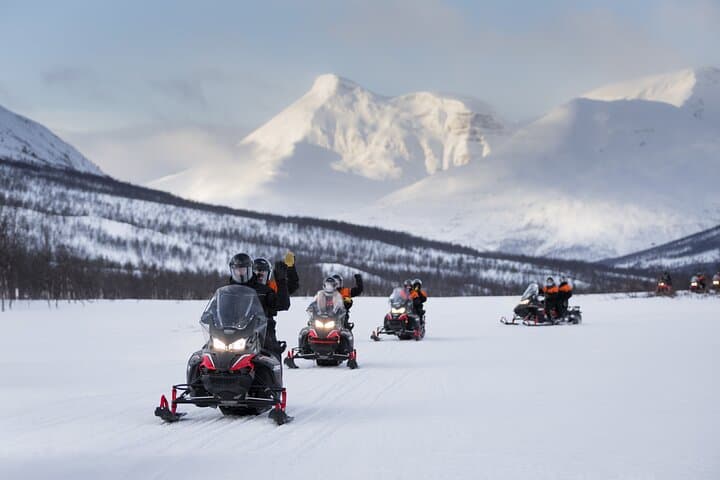
What the day feels like
The first time the sled ate the horizon I felt the world compress into a single, raucous present: white plains stretching to serrated mountains, a wind that sharpened everything it touched, and a guide’s voice through the helmet calmly carving a route through the glare. We’d left Tromsø before coffee had warmed the bones of the town, boarding a coach that unspooled the city’s harbor and glass-fronted buildings into a narrower, quieter Norway. Ninety minutes later the bus dropped us at Camp Tamok—where the map becomes myth and the snow dares you forward.
This is not postcard Norway. Tamokdalen is a throat-cut valley cut by glaciers and ancient rivers; its bedrock is the same gneiss and schist that built the Scandinavian spine. In winter the valley becomes an open laboratory for motion—snow that responds like dry sand, ridgelines that sculpt gusts into ribbons, and frozen rivers that guide the line of sleds like invisible tracks. Our guides fitted us into insulated suits, helmet comms, and a set of rules that felt both strict and sensible: respect the machine, respect the group, respect the land. When the engines fired the sound was immediate and medicine-bracing—a mechanical animal that wanted to run and would take you places your lungs could only remember.
The trip is designed as a shared, 7-hour loop: a scenic 90-minute bus transfer from Tromsø, instruction and gear at Camp Tamok, then a guided snowmobile route through mountains, river beds, and frozen lakes. Riders pair up—drivers switching at a midway break—so the experience is social and safe. The halfway pause is a small ritual: steaming coffee, a quick stretch, and the chance to swap the driver’s seat with someone who just learned the joy of leaning into a turn at 40–50 km/h. After the ride you warm up in a lavvu—a traditional Sámi tent—where a simple, hearty meal and an open fire reframe the day into something more communal.
This is an activity that carries more than adrenaline. Tamokdalen sits within lands used seasonally by Sámi people for centuries; the lavvu and the guides’ short lessons offer a tangible link to that heritage. Geologically, the valley tells an older story: repeated glaciations, uplift, and freeze–thaw cycles that produced the rugged, sculpted peaks and the braided river systems now locked solid under winter’s hand. By mid-winter the low light sharpens every contour, and the night—if your timing is right—brings one of the Arctic’s most famous headliners: the northern lights. Snowmobiling here is therefore both carriage and conduit, moving you into the quiet geography where light and land stage their best work.
For travelers the practical bits matter. This is a half-day to full-day activity (the tour runs about 7 hours, including transfers). Riders go in pairs, the outfit provides safety briefings and winter kit, and you return to Tromsø with the glow of exertion and a warming meal in your belly. The experience is priced from about $251.89 USD and is suited to those who can stay steady on two feet and handle moderate cold. The guides are trained professionals who emphasize stewardship: staying on marked routes, avoiding disturbance to wildlife, and respecting seasonal Sámi activity.
Why go? Because it condenses several Arctic pleasures into one accessible package. You get speed in a landscape where motion reveals geology; you get solitude where the bus drops you off; you get culture at the lavvu; and, best of all, you get the kind of story that arrives fully formed back in town—steam from thermal underlayers, a photo of an alpine ridge you rode along, and the memory of a sky that seemed to take its time setting.
If you’re planning this, practical preparation elevates the trip from good to memorable. Dress in layers—thermal base, insulating mid-layer, and the suit provided—and bring a small daypack for camera gear and snacks. Learn the basics of snowmobile handling from the guides: throttle control, how to lean into berms, and protocols for crossing frozen rivers. Timing matters: clear days mean flatter light and deeper shadows on ridgelines; late afternoon can give you color in the sky, and winter nights can yield aurora if the forecast aligns. Finally, honor the land—stay on trail, listen to guides about wildlife closure zones, and treat the lavvu meal as a cultural exchange rather than a mere refuel.
For the city-weary, the 90-minute transit from Tromsø is part of the story: the fjords shrink from view, small villages fall away, and the road climbs into a different kind of Norway—a place where silence has texture. On returning, consider a slow unwind at Tromsø’s Ølhallen for a local beer and a bowl of reindeer stew; it’s the tidy punctuation to a day spent moving through white and wind.
If you want to read more or book the same exact route that threads Tamokdalen’s rims, check this guided listing for the full itinerary and booking details: <a href="https://app.advcollective.com/local-experts/thrill-through-arctic-wilderness-adventure-snowmobile-safari-from-tromso">Adventure Snowmobile Safari from Tromsø</a>. The next time you’re in Tromsø, arrive with your layers and an appetite for a landscape that rewards motion—this is the sort of trip that recalibrates how you think about speed, cold, and what it feels like to be quiet in a big, loud world.
Trail wisdom
Small choices, better day.
Dress in layers
Bring thermal base layers and an insulating mid-layer; the operator provides protective outer suits but layering keeps you comfortable between rides.
Practice throttle control
Listen closely to the safety briefing and try the sled in a low-speed zone first—smooth throttle inputs prevent skids on icy patches.
Share driving duties
Rides are in pairs; swap drivers at the midpoint to reduce fatigue and give everyone a chance to handle the sled.
Protect your camera
Cold drains batteries fast—carry spares close to your body and use a weatherproof bag to keep lenses clear of snow.
Local knowledge
Read the place, not just the route.
Watch for native species including Reindeer, Arctic fox (rare sightings).
Keep an eye out for wildlife during the transition between areas and habitats. Respect distance guidelines.
Operators emphasize staying on marked trails to protect fragile tundra and seasonal reindeer grazing areas; minimize noise and avoid disturbing wildlife.
Follow the guide's instructions on size limits, ethical handling, and leave-no-trace practices.
Stop at a frozen lake shoreline for unobstructed panorama photos. Short walk to small ridge views near Camp Tamok for different light angles
Locally recommended viewpoints and quiet spots known best to local operators.
Tamokdalen and surrounding valleys have long been used by Sámi people for seasonal grazing and traditional activities, reflected today in hospitality like the lavvu meal.
Maritime roots and regional tradition shape the waterways and working coasts.
Seasonal guide
Four versions of the same landscape.
Spring
Best forLonger daylight · Transitional snow conditions
ChallengesVariable temperatures · Corn snow on sunny slopes
Late winter to spring offers longer days and pleasant temperatures, but expect changing snowpack and softer surfaces by afternoon.
Summer
Best forNot applicable for snowmobiling · Sightseeing in Tromsø
ChallengesNo snow for snowmobiling · Different activities required
Summer in Tromsø is spectacular for hiking and fjord trips, but snowmobile safaris are not available without snow cover.
Fall
Best forAurora season begins · Quieter tourism shoulder period
ChallengesUnpredictable snow conditions · Shortening daylight
Autumn can offer early snow at higher elevations and a good chance of northern lights—but snowmobile availability depends on conditions.
Winter
Best forSnowmobiling · Northern Lights viewing · Arctic landscapes
ChallengesExtreme cold at times · Limited daylight in deep winter
Winter is prime: reliable snow, dramatic landscapes, and the best chance of aurora, though temperatures can be very low—dress accordingly.
Operator details
What the booking data adds.
Included
- ✓Thermal suit, boots and mittens
- ✓Balaclava and helmet
- ✓Transfer by bus from and back to Tromsø
- ✓English speaking guide
- ✓Complimentary traditional Norwegian soup/stew (vegetables with meat or...
- ✓Traffic insurance (maximum personal liability NOK 10.000)
- ✓Coffee and/or Tea
Not included
- —Hotel pick-up and drop off
Good to know
- ✓Not recommended for travelers with spinal injuries
- ✓Not recommended for pregnant travelers
- ✓Not recommended for travelers with poor cardiovascular health
- ✓Travelers should have at least a moderate level of physical fitness
- ✓Passengers needs to be minimum 7 years old.
- ✓You need to be minimum 18 years old and hold a valid driver's license to operate a snowmobile.
- ✓Maximum one child per adult.
- ✓Drivers and passengers must be minimum 130cm in height to meet the safety requirements.
Pack with intention
What to bring.
Good to know
Common questions.
The full experience is about 7 hours including the 90-minute bus transfer each way, instruction, riding time, and the lavvu meal.
Plan the edges
The details that make the day easier.
Tromsø sits well above the Arctic Circle (approximately 69.65° N), making it one of the best places on Earth to view the northern lights and experience polar night and midnight sun phenomena.
After the ride, head back to Tromsø for a hearty meal—try reindeer stew or fresh Arctic cod, then stop by Ølhallen, Tromsø’s oldest pub, for local beers and stories from guides.
- Closest airport
- Tromsø Airport (TOS)
- Trailhead transfer
- 90-minute bus from Tromsø city center to Camp Tamok
- Driving distance
- ~75 km (approximate)
- Cell service
- Limited in valley—expect spotty reception
- Permits
- None typically required for guided snowmobile tours
This activity runs on marked trails to minimize impact on tundra and reindeer pastures—stay with the group, avoid off-trail riding, and pack out all trash to protect fragile Arctic ecosystems.
Explore by topic
Follow the threads.
Keep exploring
Make the story part of the trip.
In four hours you can move from shaded canyon ferns to wind-scoured coastal ridgelines, guided by someone who knows where the light—and the hidden views—live. This private half-day hike on the Monterey Peninsula or Big Sur is compact, curated, and perfect for travelers who want depth without a multiday commitment.
 Related story
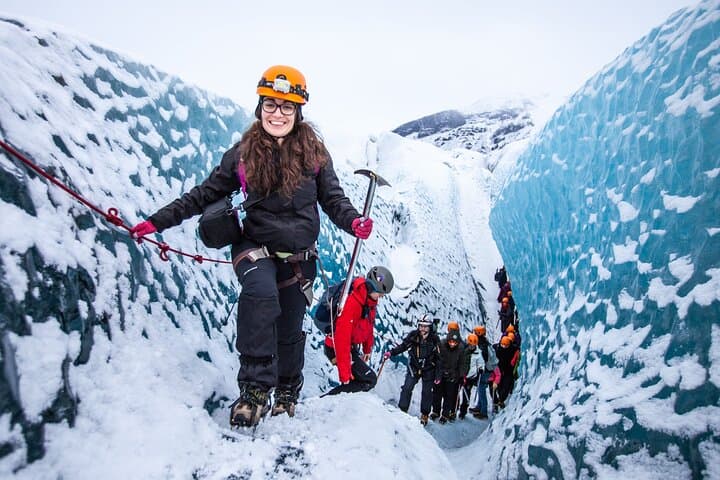
Beneath a sky of shifting light, Skaftafell’s ice reads like a map of time. This three-hour guided glacier hike mixes technical instruction with geology and culture: compact, safe, and unforgettable.
 Related story
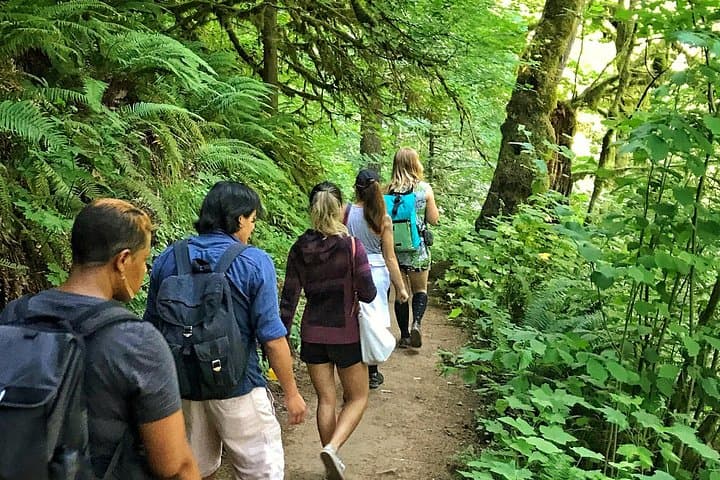
Lose the city for a few hours without leaving it: this 5-mile, 900-foot-gain Forest Park loop threads old-growth pockets, city viewpoints, and cultural landmarks for a compact taste of Portland’s wild side. Expect moss, roots, and stories.