
What the day feels like
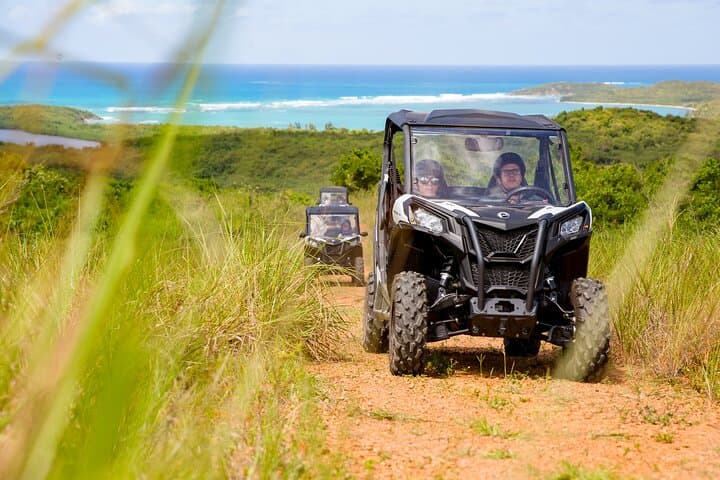
The engine rumbles under you like a distant drum, then answers the twist of your wrist with a shove forward. Dirt sprays behind the Can-Am Maverick as the trail opens, a ribbon of packed earth cutting through green that seems determined to reclaim every inch. Sunlight filters through broadleaf canopies; the air is thick with the scent of wet soil and a distant briny note from the Caribbean. You pull up at the first lookout and the rainforest exhales: a valley of dense green, the serrated silhouette of El Yunque folding into the distance, and beyond that—an impossible blue where little islands float off the coast of Fajardo.
This is the Dos Mares UTV adventure: one hour of mechanical momentum and island panoramas, a compact blast that delivers both adrenaline and the kind of natural theater that defines Puerto Rico’s east end. What the other hours of your trip will fill with—beach time, bioluminescent bays, or an afternoon at a seaside paladar—this fast-moving hour sets the tone for how you remember the island: up close, kinetic, and surprisingly intimate.
The route is short and smart. Operators use two-seat Can-Am Mavericks, modern machines that balance power with control. Before every outing drivers and passengers get a safety briefing; helmets are provided. Guides shepherd the convoy along a mix of hard-packed tracks, rooty forest sections, and occasional rocky stretches. The group stops three times—well-placed pauses that reward the throttle with views: Fajardo’s town and marina, the coral-flanked islands of Culebra and Vieques on clear days, and a broad sweep of the Caribbean Sea where fishing boats and catamarans speckle the horizon.
The ride is as much geology lesson as joyride. Puerto Rico’s eastern spine is a patchwork of volcanic and sedimentary rocks weathered over millennia; the hills around Fajardo reveal old uplift and marine terraces, the latter visible where trail edges roll down toward the sea. The rainforest canopy here is a fragment of the island’s larger El Yunque ecosystem—the only tropical rainforest in the U.S. National Forest System—and the tour does a tidy job of explaining that relationship as you motor between microclimates. Guides often point out endemic plants and explain how a rise of only a few hundred feet can mean dramatic changes in humidity and flora.
Culturally, the tour is rooted in a working landscape. These trails were once paths between farms and fishing hamlets; now they’re an access matrix for modern adventure. Guides weave quick stories about local life, pointing out where small-scale agriculture and reforestation efforts are taking hold, and why protecting these corridors matters to coastal communities who depend on reef health and clean water downstream.
Practicalities are straightforward: the Dos Mares run is an approx. 60-minute experience priced from about $194 per UTV (two passengers per vehicle). It’s an instant-confirmation activity with free cancellation in many cases, a useful feature if Caribbean weather or flight itineraries shift. Expect a safety briefing and helmet exchange before you mount up; operators emphasize safe driving and typically moderate speeds so the experience suits casual adventurers as well as riders who want a brisker pace.
Timing matters. Morning tours enjoy softer light, cooler air, and better visibility to the offshore islands; midday runs can be hotter and dustier but are practical between customer flows. The island’s wet season brings quick showers that turn trails slick—part of the rainforest’s personality, but also something to respect. Wear closed-toe shoes, long-ish sleeves if you’re sensitive to sun and brush, and bring hydration. Put your phone in a secure case or small dry bag—there are picture-perfect moments at every lookout, but bouncing phones are an expensive souvenir.
For photographers, the tour’s rhythm is forgiving: three planned stops mean you’ll get chance to step away from the machine. Golden hour softens palm-lined ridgelines; the rain-washed green after a shower adds saturation you’ll want to capture. If you’re after the best frames, ask your guide for a spot with the islands framed in the middle distance—those layered blues make for some of the most arresting compositions on the route.
Safety and stewardship go hand-in-hand. Stick to the trail, follow your guide’s line, and avoid accelerating through puddles that might hide trail erosion. UTVs are an effective way to access wild places, but they also leave a footprint; pick an operator that prioritizes trail maintenance and explains local conservation efforts.
At the end of the hour, you’ll trade engine thrum for ocean breeze. If you’ve built the rest of the day around the tour, consider a late lunch at Fajardo’s marina—fresh seafood and local comfort food make a satisfying contrast to the dust and motion of the trail. Or schedule the excursion as a bookend to a snorkeling trip to one of the nearby islands, letting the UTV hour be the day’s kinetic punctuation.
This is not a mountain assault or a long technical ride; it’s a curated taste of Puerto Rico’s eastern wild—fast enough to feel like getting away, accessible enough that even first-timers leave grinning. The Dos Mares tour is best thought of as the kind of short, high-reward adventure travelers love: a clear slice of place, a touch of speed, and views that remind you why people keep coming back to this island.
Trail wisdom
Small choices, better day.
Book morning slots
Mornings offer cooler temperatures and clearer visibility to offshore islands—ideal for photography.
Wear closed-toe shoes
Trails include rocky and rooty sections; sturdy shoes protect feet and improve control while driving.
Secure electronics
Use a wrist strap, case, or dry bag for phones and cameras to prevent loss on bumpy sections.
Follow guide instructions
Stick to the convoy and obey speed and passing rules for safety and trail preservation.
Local knowledge
Read the place, not just the route.
Watch for native species including White-tailed deer (occasionally), Tropical birds like bananaquits and tanagers.
Keep an eye out for wildlife during the transition between areas and habitats. Respect distance guidelines.
Operators are urged to stay on established trails to reduce erosion; supporting guides who contribute to local reforestation and trail maintenance helps protect watershed health.
Follow the guide's instructions on size limits, ethical handling, and leave-no-trace practices.
A small lookout that frames both Culebra and Vieques on very clear days. Nearby coastal kiosks and marina eateries offering fresh seafood and local fritters
Locally recommended viewpoints and quiet spots known best to local operators.
The trails crisscross lands once used for small-scale farming and coastal trade; the area’s settlement and maritime culture shaped Fajardo as a gateway to offshore islands.
Maritime roots and regional tradition shape the waterways and working coasts.
Seasonal guide
Four versions of the same landscape.
Spring
Best forCooler mornings · Wildflower season · Photography
ChallengesOccasional showers · Variable trail conditions
Late spring (March–April) offers drier days and excellent light; expect occasional brief rain that freshens the forest.
Summer
Best forLush jungle colors · Extended daylight · Island hopping paired trips
ChallengesHigher heat and humidity · Afternoon storms
Summer brings dense foliage and vibrant green but pack for heat and sudden showers—early tours are best.
Fall
Best forFewer crowds · Milder temps · Clear water visibility offshore
ChallengesSporadic rain events · Hurricane season overlap early fall
Fall is pleasant for off-peak visitors; monitor tropical weather during hurricane season windows.
Winter
Best forDry weather · Best visibility to islands · Comfortable temps
ChallengesHigher demand/peak season · Advance bookings needed
Winter (Dec–Apr) is the driest, clearest stretch—ideal for views and comfortable driving conditions.
Pack with intention
What to bring.
Good to know
Common questions.
Yes—most operators require a valid driver's license for anyone who will be driving; passengers do not need one.
Plan the edges
The details that make the day easier.
El Yunque is the only tropical rainforest in the U.S. National Forest System, and its watershed supports many of Puerto Rico’s eastern coastal communities.
After the ride, head to Fajardo’s marina for grilled fish, mofongo, or a plate of local frituras—small roadside kiosks serve alcapurrias and empanadillas that pair well with cold local beers or a rum cocktail.
- Closest airport
- Luis Muñoz Marín International Airport (SJU) ~40–60 minutes drive; Meeting point: operator-designated location in Fajardo; Driving distance from San Juan: ~30–50 miles; Cell service: intermittent in forested sections; Permits: none—operator handles access.
Stay on designated trails to minimize erosion; choose operators engaged in trail maintenance and local conservation—pack out all trash and avoid disturbing wildlife.
Explore by topic
Follow the threads.
Keep exploring
Make the story part of the trip.
In four hours you can move from shaded canyon ferns to wind-scoured coastal ridgelines, guided by someone who knows where the light—and the hidden views—live. This private half-day hike on the Monterey Peninsula or Big Sur is compact, curated, and perfect for travelers who want depth without a multiday commitment.
 Related story
Beneath a sky of shifting light, Skaftafell’s ice reads like a map of time. This three-hour guided glacier hike mixes technical instruction with geology and culture: compact, safe, and unforgettable.
 Related story
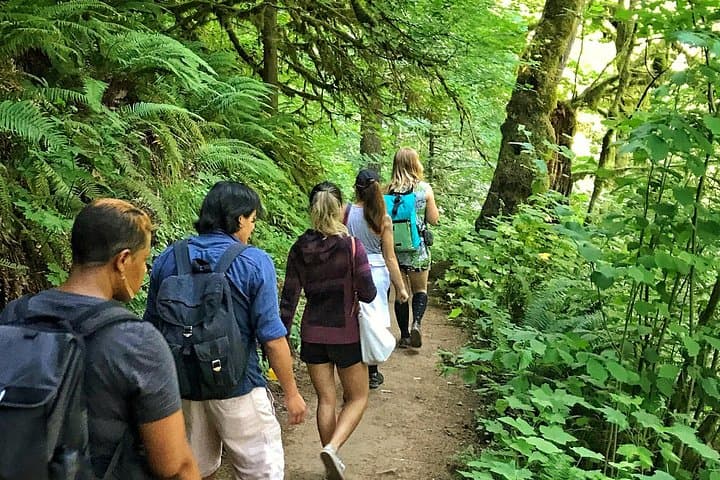
Lose the city for a few hours without leaving it: this 5-mile, 900-foot-gain Forest Park loop threads old-growth pockets, city viewpoints, and cultural landmarks for a compact taste of Portland’s wild side. Expect moss, roots, and stories.