
What the day feels like
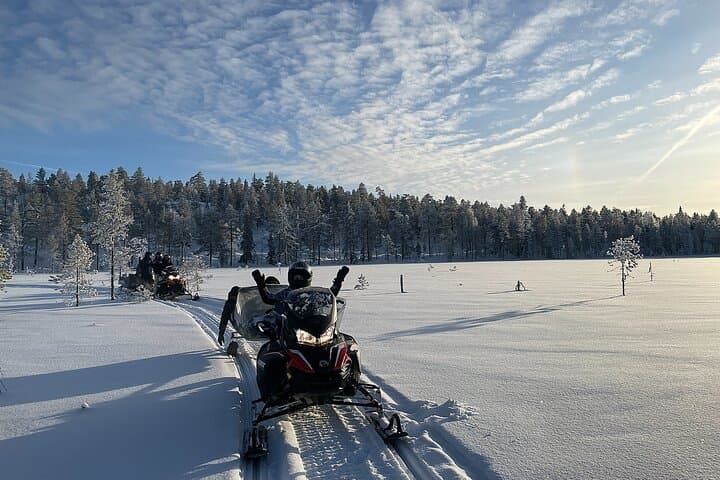
By the time the sun lifts itself off the horizon in Lapland, the world feels pared down to sound and light: the low-pitched hum of a snowmobile, the whisper of wind through frost-laden birches, and the crunch of fresh powder under track. You feel the machine as much as you hear it — a steady, confident pulse that moves you through a landscape shaped by ice and patience. On a family-friendly run outside Rovaniemi, that pulse is measured and communal: adults pilot, children ride in sleds, and guides keep the group together while stories of reindeer and aurora flicker between bites of warm sausage back at the cabin.
This four-hour experience is equal parts winter thrill and Scandinavian hygge. Trails braid across frozen rivers and through pine corridors; small clearings open into wide, snow-blanketed fells where the horizon seems to unspool in pastel blues and grays. The ride teaches you to read this country — ruts and drifts become a language, wind a weather report. Guides slow the pace for families, letting younger riders feel the acceleration in safety while elders take in the panoramic quiet.
Lapland's terrain is the product of glacial patience. The last Ice Age scoured valleys and left shallow basins that now host networks of rivers and lakes, many of them frozen solid in winter. What looks like endless white is a complicated layer cake of frozen waterways, peat bogs, and rocky outcrops hidden beneath deep snow. Local operators know this geography intimately; they plan routes that avoid fragile tundra and prioritize safe crossing points on rivers and lakes.
Culturally, a snowmobile trip in Lapland is never purely recreational. The region is home to Sámi communities whose livelihoods have long included reindeer herding, an activity that shapes both land use and routes. Along the way your guide may point out seasonal grazing grounds or explain why certain tracks are kept clear — a small reminder that winter tourism moves in the same space as traditional life.
Practicalities are straightforward. Expect roughly four hours total, with a mix of guided riding and a cabin stop for hot drinks and sausages — the culinary reset that turns cold hands warm and turns a fast ride into a remembered afternoon. Terrain is low- to mid-angle: there are few technical climbs, but visibility, temperature, and snow conditions dictate pace and comfort. This is a family-oriented outing: children can ride in sleds towed by snowmobiles, and guides manage group safety so everyone can enjoy the motion without strain.
Safety and etiquette matter: follow the guide’s briefing, wear layered insulating clothing, avoid speeding on frozen waterways, and respect local markers for reindeer paths. The best times to go are late January through March, when snow cover is reliable and daylight stretches long enough for comfortable outings. If you want to chase the aurora afterward, schedule your trip during a stretch of clear nights and check local forecasts.
For those thinking in logistics, these excursions typically depart from the Rovaniemi area and operate under instant confirmation — convenient for travel planning. Pricing starts from approximately $143 per person, and the experience includes family-friendly sled options so younger participants can take part. Operators often emphasize sustainability and low-impact routing; sensible visitors will mirror that ethic by staying on marked trails and leaving no trace at cabin stops.
Photography is a steady pursuit here: wide-angle lenses capture the expanse, while fast telephoto or prime lenses help isolate frosted branches, reindeer at a distance, or the expression on a child’s face as they taste hot cocoa for the first time. Bring spare batteries — cold kills charge — and keep them close to your body until you need them. Use the warm cabin break to review shots and change memory cards.
If you want to convert this single-day rush into a fuller northern immersion, pair it with a visit to local museums or a Sámi cultural center to ground the thrill in history. Or simply walk the city of Rovaniemi at dusk; reindeer meat and rustic Lappish cuisine feel like an appropriate punctuation after a day on the snow.
To book a family-oriented outing or learn more about logistics, safety, and availability, check a detailed local guide and booking page built for families: <a href="https://app.advcollective.com/local-experts/family-friendly-snowmobile-adventure-lapland-winter-wilderness">family-friendly snowmobile adventure in Lapland</a>. For families who want a quieter pace or a longer wilderness stretch, many operators offer multi-day options that combine snowmobiling with cabins and overnight stays; see the same local expert page to compare options and seasonal schedules (<a href="https://app.advcollective.com/local-experts/family-friendly-snowmobile-adventure-lapland-winter-wilderness">compare family snowmobile experiences</a>).
A snowmobile drive in Lapland is a tidy lesson in contrasts: speed and stillness, modern machines and ancient landscapes, the practical warmth of a cabin and the cold clarity of an Arctic afternoon. For families it’s a way to introduce kinetic winter sport with care; for travelers it’s a way to feel the terrain beneath you and the north above you. If you go, leave space in your day for silence after the engine stops. That might be the most memorable part.
Trail wisdom
Small choices, better day.
Layer for fluctuating temps
Start with a moisture-wicking base, add insulating mid-layers, and finish with a windproof shell; carry extra gloves and a buff for on-trail breaks.
Protect batteries and optics
Keep camera batteries warm inside an inner pocket and use lens hoods to reduce glare from snow.
Listen to your guide
Follow speed limits on frozen lakes and respect stop points for wildlife and reindeer crossings.
Hot-cabin etiquette
Bring a small packet of biodegradable wipes and minimize waste at cabin stops—greet hosts and follow their guidance for ashtrays or cooking areas.
Local knowledge
Read the place, not just the route.
Watch for native species including Reindeer, Ptarmigan.
Keep an eye out for wildlife during the transition between areas and habitats. Respect distance guidelines.
Operators use marked trails to protect tundra habitats—stick to routes, avoid driving over thin ice, and pack out all waste to limit disturbance.
Follow the guide's instructions on size limits, ethical handling, and leave-no-trace practices.
A short frozen-river walk near the cabin for untouched snow vistas. Quiet roadside stands selling locally smoked sausages and cloudberry jam
Locally recommended viewpoints and quiet spots known best to local operators.
Lapland’s modern winter routes follow centuries-old travel corridors used by Sámi reindeer herders and later winter transport routes developed after motorized vehicles arrived in the region.
Maritime roots and regional tradition shape the waterways and working coasts.
Seasonal guide
Four versions of the same landscape.
Spring
Best forLonger daylight · Stable snowpack for late-season riding · Photography of melting light
ChallengesSlushy trails in late spring · Thawing ice on smaller lakes · Variable temperatures
Late winter to early spring extends daylight and often provides firmer daytime snow, but watch for slush and soft snow in the afternoon.
Summer
Best forPlanning trips and booking ahead · Exploring local culture · Hiking and river activities
ChallengesNo snow for snowmobiling · Most operators closed for winter activities · Different logistics and schedules
Summer is off-season for snowmobiling; use it to arrange travel plans, enjoy Sámi cultural sites, and book winter dates.
Fall
Best forPreparing clothing and gear · Aurora forecasts in darker nights · Fewer crowds for planning
ChallengesUnpredictable early snow · Limited snowmobile availability · Variable trail conditions
Autumn is transitional; early snow can be patchy and operators typically ramp up closer to December–January.
Winter
Best forReliable snow cover · Daytime snowmobile runs · Chasing aurora at night
ChallengesVery cold temperatures · Short daylight in deep winter · Higher demand on peak holiday dates
Winter is prime for snowmobiling with consistent trails and full-service operators, though dress warmly and book peak dates early.
Operator details
What the booking data adds.
Included
- ✓Snacks
- ✓The program includes a helmet and a base layer hood
Good to know
- ✓Service animals allowed
- ✓Public transportation options are available nearby
- ✓Suitable for all physical fitness levels
Pack with intention
What to bring.
Good to know
Common questions.
Yes—this tour includes sled options designed for children so the whole family can participate; age limits and child-seat arrangements vary by operator, so confirm at booking.
Plan the edges
The details that make the day easier.
Rovaniemi sits on or very near the Arctic Circle and is internationally known as the official hometown of Santa Claus, a designation that draws winter tourism alongside traditional Sámi culture.
After the ride, head back to Rovaniemi for reindeer stew or smoked salmon and a local beer; small cafés along the Ounasjoki river and a handful of traditional restaurants offer Lappish fare and warm hospitality.
- Closest airport
- Rovaniemi Airport (RVN). Typical driving from city center: 15–60 minutes depending on meeting point. Cell service: generally good near roads but patchy in remote forest. Permits: none for guided tours; stick to marked trails.
Tours use established trails to minimize impact—do not drive off-route, respect reindeer grazing areas, and pack out any trash to protect fragile Arctic ecosystems.
Explore by topic
Follow the threads.
Keep exploring
Make the story part of the trip.
Set out from Bass Harbor for a private, customizable day on Blue Hill Bay — lighthouses, puffins, seals, and the chance to feel Acadia from the water. Small groups, local captains, unforgettable views.
In four hours you can move from shaded canyon ferns to wind-scoured coastal ridgelines, guided by someone who knows where the light—and the hidden views—live. This private half-day hike on the Monterey Peninsula or Big Sur is compact, curated, and perfect for travelers who want depth without a multiday commitment.
 Related story
Beneath a sky of shifting light, Skaftafell’s ice reads like a map of time. This three-hour guided glacier hike mixes technical instruction with geology and culture: compact, safe, and unforgettable.