
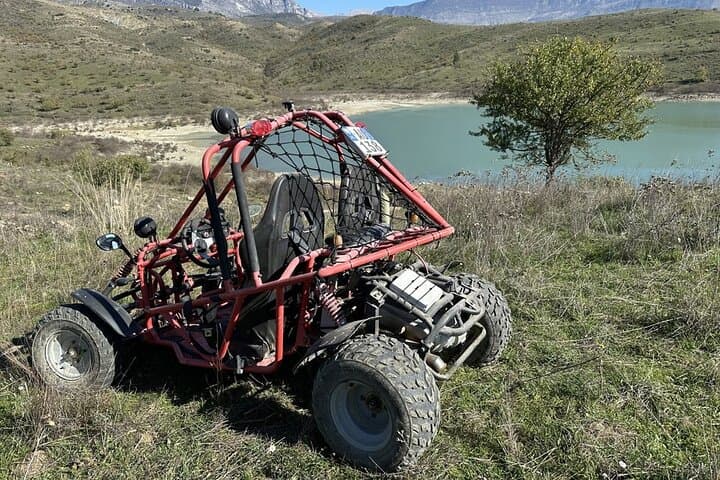
What the day feels like
The engine hiccups, then settles into a steady, cheerful rumble. Under the narrow windshield, a ridge of sunburnt rock slides past, olive trees throwing jagged shadows across the track. You and a partner share the cockpit of a compact off-road buggy, trading steering duties at a roadside farm where a shepherd looks up from his flock and gives a casual wave. Ninety minutes later the land opens and a small, glassy lake waits like a secret—Cini Lake dares you to stop the throttle and listen to the wind across still water. This is southern Albania on a micro scale: a compressed landscape of limestone, terraced fields, and Ottoman-era villages, best seen kicked up by a cloud of dust and a grin.
The drive from the tiny settlement of Asim Zeneli to Cini Lake is short in time but long in landscape change. The geology here is folded limestone, carved by millennia of erosion into dry valleys, scattered karst outcrops, and intermittent springs that feed hidden pools like Cini. That geology shaped local life: stone houses, dry-stone terraces, and olive groves stitched to slopes where mechanized farming is difficult. Gjirokastër, the nearest city, rises above the valley in drab stone—its Ottoman-era bazaar and shuttered tower houses speak to a past of crossroads and craftsmen. The region was a contested hinge between inland and coastal Albania, and today it reads like a rural museum interrupted by the occasional modern guesthouse.
Culturally, the route is raw and immediate. You will cross parcels of land grazed by sheep, pass family orchards, and hear birds reuse centuries-old songs. The drivers of these buggies are local—often the best interpreters of both road and lore—who point out ruined tower houses, tell brief anecdotes about wartime resistance figures, and know the best spot for a lakeside photo. The simplicity is part of the charm: this is not a staged theme park ride but a working landscape with narrow lanes and the occasional loose stone that will test your anticipation and throttle control.
The ride itself is accessible. Buggies are small, nimble, and designed for gravel tracks and dirt ruts; each buggy usually carries two people who can switch driving duties about halfway through. Expect a 1.5-hour outing of alternating throttle and glide, with moderate bumps and a few short climbs. The reward is sensory: the scent of crushed herbs, a sudden sweep of mountain and valley, and the lake that serves as the day’s quiet punctuation. The water, ringed by reed beds and a few fig trees, seems almost staged for reflection—both literal and mental. It is easy to imagine pausing there long enough to feel the day slow down, then climbing back in and sending dust into the afternoon sun.
Why choose this trip? For travelers with limited time who still want an outdoor jolt, it’s an efficient way to sample Albania’s rural soul. For active couples or friends, the shared-buggy format is social and hands-on. For photographers, the contrasting textures—stone, scrub, water, and sky—compress into a small frame that works well for both wide and intimate shots. And for anyone who prefers experiences with a strong local imprint, the guides and the route connect you to villages most visitors never see.
Practicalities are straightforward but worth noting. The tour runs about 90 minutes and usually departs near Asim Zeneli village, a short drive from Gjirokastër. No advanced off-road skills are required; guides brief drivers before they go and oversee vehicle swaps. Footwear should be closed and grippy; the cockpit can be dusty and the short walks to viewpoints or the lake margin can involve rocks. Bring water and sun protection—shade is sparse—and consider a light layer for the open-cockpit breeze if you tend to run cold after a high-adrenaline sprint.
Safety and etiquette matter: stay on designated tracks to protect agricultural land and avoid private orchards, follow the guide’s instructions on passing and vehicle spacing, and yield to livestock and locals when necessary. Respect the lake as a small ecosystem; avoid swimming if signs or guides advise against it and carry your trash out. For timing, morning and late afternoon offer the best light for photos and tend to be cooler, while mid-day delivers harsher sun and more dust.
Booking is uncomplicated and often instant. Expect a modest price for a high-value experience; shared buggies make it economical while still giving a sense of control and involvement. If you want a solo ride, check availability and upgrade options. Local drivers are usually fluent enough in English to offer orientation, and many are eager to point out an overlooked ruin or a secret view.
In short, this is an earthy, immediate way to connect with southern Albania. It’s not about the adrenaline alone; it’s about pace change—the jolt of a fast corner, the slow inhale at a lakeshore, and the brief human encounters that stitch a landscape into memory. For a morning or afternoon that compresses culture, geology, and a little speed into a tight package, there's no better short-format adventure than a buggy run from Asim Zeneli to Cini Lake.
Trail wisdom
Small choices, better day.
Bring a face covering for dust
A buff or bandana will cut down on cockpit dust during dry stretches and is easy to tuck away.
Swap driving mid-tour
Split steering duties with your partner so both get driving time and a chance to relax.
Closed-toe shoes only
Wear sturdy trainers or hiking shoes—cockpit floors and lakeside rocks are rough.
Time for golden hour
Book morning or late afternoon for softer light and cooler temperatures.
Local knowledge
Read the place, not just the route.
Watch for native species including European hare, Common kestrel.
Keep an eye out for wildlife during the transition between areas and habitats. Respect distance guidelines.
Stick to established tracks to avoid damaging fragile terraces, carry out all trash, and respect local farms and waterways to minimize impact.
Follow the guide's instructions on size limits, ethical handling, and leave-no-trace practices.
A ruined watchtower with 360-degree views above the primary route. A family-run orchard offering seasonal fruit and raki near the track
Locally recommended viewpoints and quiet spots known best to local operators.
Gjirokastër and its surroundings preserve Ottoman-era stone houses and a medieval fortress; the city was added to UNESCO’s World Heritage list in 2005 for its well-preserved architecture.
Maritime roots and regional tradition shape the waterways and working coasts.
Seasonal guide
Four versions of the same landscape.
Spring
Best forWildflowers and green terraces · Mild temperatures · Less dust
ChallengesOccasional mud after rains · Variable spring showers
Spring brings green terraces and cooler air, making the ride pleasant though tracks can be softer after rain.
Summer
Best forLong daylight hours · Dry tracks · Lakeside cooling stops
ChallengesHigh sun and heat · More tourists around Gjirokastër
Summer guarantees dry trails and clear skies but pack sun protection and plan around midday heat.
Fall
Best forCrisp light for photos · Harvest rhythms and local food · Comfortable temperatures
ChallengesShortening days · Cooler evenings
Autumn offers sharp light and local harvest activity—ideal for a late-season spin and lakeside downtime.
Winter
Best forFewer crowds · Dramatic, moody skies
ChallengesCold winds, possible rain or snow on higher ground · Some operators may reduce schedules
Winter rides are bracing and atmospheric but can be chilly; check operator schedules and dress warmly.
Pack with intention
What to bring.
Good to know
Common questions.
No. Guides provide a safety briefing and simple instruction; basic vehicle control is sufficient.
Plan the edges
The details that make the day easier.
Gjirokastër was inscribed on the UNESCO World Heritage List in 2005 for its well-preserved Ottoman-era architecture.
After the ride, head back to Gjirokastër’s old bazaar for slow-cooked lamb or grilled seasonal vegetables and a glass of raki at a family-run taverna; stop by a bakery for a sweet made with local honey.
- Closest airport
- Tirana International Airport (TIA) ~3–4 hour drive; Driving distance from Gjirokastër: 10–20 minutes from city center depending on meeting point; Cell service: patchy on rural tracks; Permits: none typically required
Stay on designated tracks to protect terraced farmland and fragile karst features; pack out all waste and avoid disturbing shoreline vegetation at Cini Lake.
Explore by topic
Follow the threads.
Keep exploring
Make the story part of the trip.
In four hours you can move from shaded canyon ferns to wind-scoured coastal ridgelines, guided by someone who knows where the light—and the hidden views—live. This private half-day hike on the Monterey Peninsula or Big Sur is compact, curated, and perfect for travelers who want depth without a multiday commitment.
 Related story
Beneath a sky of shifting light, Skaftafell’s ice reads like a map of time. This three-hour guided glacier hike mixes technical instruction with geology and culture: compact, safe, and unforgettable.
 Related story
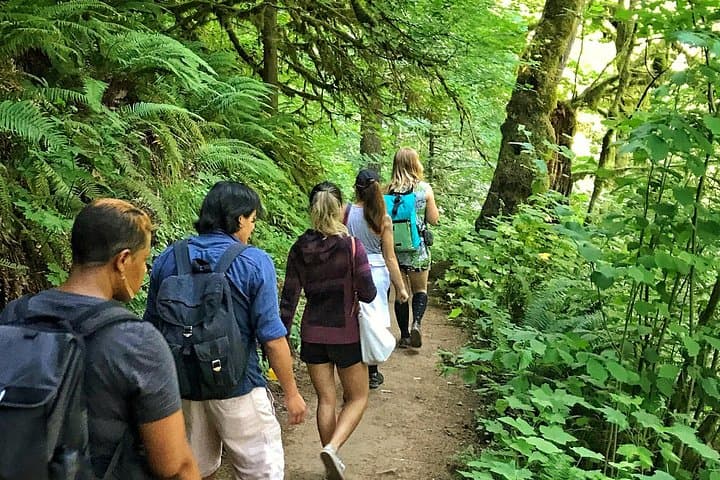
Lose the city for a few hours without leaving it: this 5-mile, 900-foot-gain Forest Park loop threads old-growth pockets, city viewpoints, and cultural landmarks for a compact taste of Portland’s wild side. Expect moss, roots, and stories.