
What the day feels like
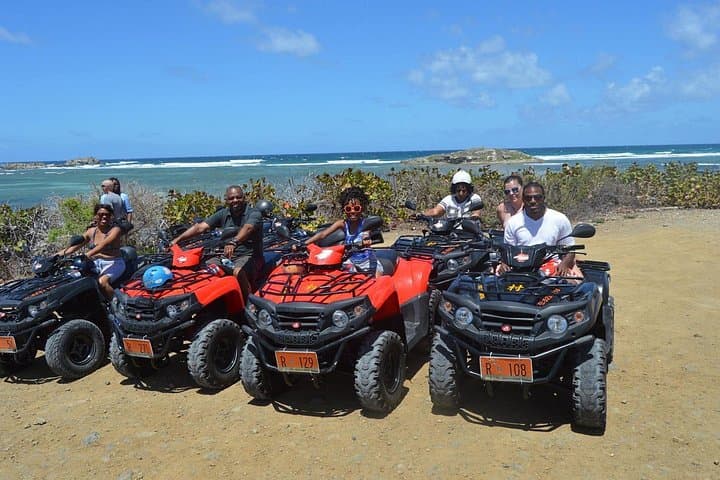
You feel the island before you see it—the salt on the air, a line of palms bowing where trade winds sweep down from the hills, and the distant rumble of waves that have been shaping this coastline for millennia. The quad beneath you answers the breeze with a low, eager growl as the guide checks helmets and hand signals. Tracks run inland from a narrow road; beyond them the landscape opens into scrubbed limestone ridges, pink-hued coral outcrops and sudden gulches that drop toward beaches so bright the ocean looks photoshopped.
This is St. Martin/St. Maarten in concentrated form: a thumbprint of an island divided by treaty, stitched together by creole culture and a reputation for effortless fun. On a half-day ATV tour you’ll cover four hours of shortcuts and scenic pauses—enough time to taste the island’s geological story, meet the people who work its slopes, and carve a personal line through coastal scrub and rutted farm tracks.
Geology and geography do the heavy lifting here. The island is young by geological standards—uplifted limestone and volcanic remnants that create short, steep ridges falling quickly toward two seas. Trails weave across fossilized reef benches and coral-sediment flats, so the underfoot shifts from hard-packed dirt to loose shell and sand. That variance is part of the appeal: you’ll negotiate switchbacks that demand a bit of throttle finesse and then find yourself cresting a ridge with the Caribbean laid out like a blue map below.
History sits in the margins. Long before European flags divided the island in the 17th century, Arawak and Carib peoples navigated these shores. Later, French and Dutch colonists, African laborers and traders shaped the rhythms of towns like Philipsburg and Marigot. Modern St. Martin thrives on tourism, but you’ll notice small farms, rum shops, and roadside stands selling freshly grilled fish and local breads—reminders that this is a working island with a layered story.
Culturally, the island is conversational. Expect a patchwork of French boulangeries in the east and Dutch cafes in the west, Creole accents floating between. The guides you’ll ride with often grew up on the island; they know the sheltered cays, the ecological sensitivities (sea turtle nesting beaches are nearby), and the best local spots to score a strong coffee or a cold beer after a dusty ride.
Practically, a half-day ATV is approachable for many travelers. The route emphasizes scenery over technical extremes: short climbs, a few tight descents and switchbacks, and open coastal tracks where you can open the throttle and feel the machine push you forward. A guide handles route-finding and safety briefings; you don’t need advanced off-road experience, but you do need to be attentive, comfortable on a throttle, and respectful of local rules: stick to designated tracks, avoid eroding gullies, and follow your guide’s instructions.
Timing matters. Morning departures give cooler temperatures and softer light for photography; late afternoons deliver gold onto limestone ridges and quieter beaches but risk gustier winds. Bring bottled water and a compact hydration pack, wear closed-toe shoes with grip, and assume you’ll get dusty. A bandana and sunglasses are useful, and a waterproof phone case protects gear from unexpected spray while still letting you frame that perfect coastal shot.
Safety is straightforward: helmets, goggles, and a short skills demo before you roll out. Guides emphasize steadiness over speed; when in doubt, back off the throttle and let the machine settle. Many groups are mixed experience levels—couples with varying confidence—so expect short stops where novices regroup and more experienced riders can test a line.
Beyond the mechanical thrill, an ATV tour is a shortcut to local textures: a roadside stand selling guavaberry rum; a beach cove with coral gardens visible at low tide; a hillside farm where goats meander among cactus. Those moments make the ride feel less like ticking a box and more like an encounter with the island’s daily life.
If you’re planning it: book morning slots in high season (December–April) to avoid midday heat and to give yourself time afterward for a long lunch in Grand Case or a dip at Orient Bay. Check operator policies on driver age and licensing, and bring a credit card for the mandatory waiver and any incidental tips or purchases. The tour’s pace leaves room for curiosity—ask your guide about local plants, iguana behavior, or where to find the best conch fritters.
A half-day ATV is not a wilderness test so much as a curated, noisy conversation with a small Caribbean island. It’s for travelers who want to feel present—hands on the grips, scent of bay leaf and sea in their nostrils, a guide’s laugh in their ear—and then walk off the trail with sand between their toes and a better sense of how this compact place works.
Trail wisdom
Small choices, better day.
Go early
Book a morning departure for cooler temperatures and softer light for photos.
Wear closed-toe shoes
ATV footwells and rocky tracks demand supportive footwear with good grip.
Bring a bandana and goggles
A bandana helps keep dust out of your mouth; clear or tinted goggles protect eyes.
Respect wildlife and trails
Stay on designated routes to avoid eroding gullies and disturbing nesting sites.
Local knowledge
Read the place, not just the route.
Watch for native species including Lesser Antillean iguana, Brown pelican.
Keep an eye out for wildlife during the transition between areas and habitats. Respect distance guidelines.
Many coastal areas are important nesting sites for sea turtles and habitat for the endemic iguana—stay on trails and avoid driving on dunes or beaches.
Follow the guide's instructions on size limits, ethical handling, and leave-no-trace practices.
A small roadside shack serving conch fritters near coastal cove (ask your guide for the exact stop). A quiet east-facing cove where tide pools reveal colorful coral at low tide
Locally recommended viewpoints and quiet spots known best to local operators.
The island is split between French and Dutch control by a 1648 treaty; both sides preserve distinct culinary and cultural traditions that persist today.
Maritime roots and regional tradition shape the waterways and working coasts.
Seasonal guide
Four versions of the same landscape.
Spring
Best forDry weather · Good visibility · Lower crowds than peak winter
ChallengesWarmer afternoons · Patchy rain toward May
Spring (March–May) offers warm, stable weather and clear coastal views—ideal for morning tours and beach stops.
Summer
Best forFewer tourists · Lower prices · Lush vegetation
ChallengesHotter temps · Higher humidity · Risk of tropical storms
Summer brings fewer crowds but hotter, more humid conditions—plan early starts and stay hydrated.
Fall
Best forQuiet trails · Lush scenery
ChallengesHurricane season peak · Unpredictable showers
Fall is green and quiet but carries hurricane-season risks; check weather and cancellation policies.
Winter
Best forPeak visibility · Cool breezes · Reliable weather
ChallengesHigher prices · Busier tour schedules
Winter (Dec–Feb) is the most reliable season for dry, breezy conditions—book ahead for best slots.
Operator details
What the booking data adds.
Included
- ✓Professional Guide
Good to know
- ✓Not recommended for travelers with spinal injuries
- ✓Not recommended for pregnant travelers
- ✓Not recommended for travelers with poor cardiovascular health
- ✓Suitable for all physical fitness levels
Pack with intention
What to bring.
Good to know
Common questions.
This is a half-day experience lasting approximately four hours including briefing, route, and return.
Plan the edges
The details that make the day easier.
Princess Juliana International Airport on the Dutch side of the island is famous for its low-altitude final approach over Maho Beach—spectators gather there to watch arriving jets skim just above beachgoers.
After the ride, head to Grand Case on the French side for beachfront bistros and Creole-influenced cuisine, or stop in Simpson Bay for bars and local seafood—look for guavaberry rum and fresh fish sandwiches.
- Closest airport
- Princess Juliana International (SXM); Typical drive from Philipsburg: 15–35 minutes depending on operator meeting point; Cell service: Good near towns, patchy on some inland ridges; Permits: None required for passengers—operator handles rental and waiver.
Stick to designated trails to minimize erosion and avoid sensitive coastal habitats; avoid driving on dunes or near known turtle nesting beaches, and carry out any trash.
Explore by topic
Follow the threads.
Keep exploring
Make the story part of the trip.
Set out from Bass Harbor for a private, customizable day on Blue Hill Bay — lighthouses, puffins, seals, and the chance to feel Acadia from the water. Small groups, local captains, unforgettable views.
In four hours you can move from shaded canyon ferns to wind-scoured coastal ridgelines, guided by someone who knows where the light—and the hidden views—live. This private half-day hike on the Monterey Peninsula or Big Sur is compact, curated, and perfect for travelers who want depth without a multiday commitment.
 Related story
Beneath a sky of shifting light, Skaftafell’s ice reads like a map of time. This three-hour guided glacier hike mixes technical instruction with geology and culture: compact, safe, and unforgettable.