
What the day feels like
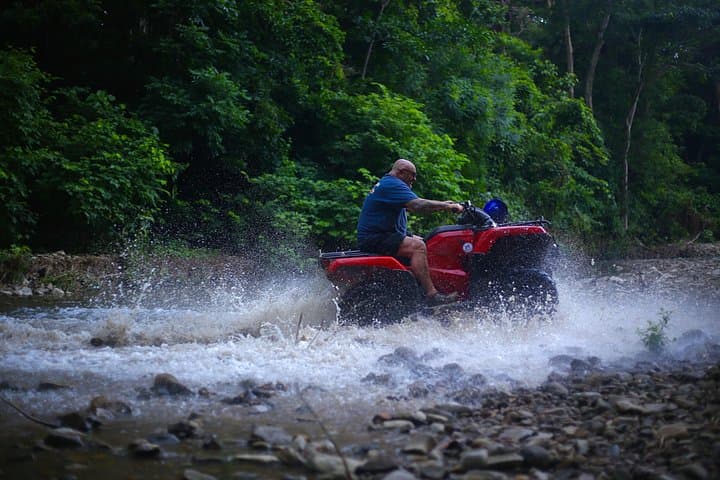
The engine wakes the morning. It’s a low, mechanical heartbeat against the Pacific’s whisper as the convoy rolls out from the small parking lot in San Juan del Sur. Dust kicks up in a beige cloud that the ocean wind tries to pull back toward the bay; ripples of sunlight skip across windshields and wet tires. You can feel the coast moving—waves daring you to drop your speed and the dirt track daring you to hold on. This is an ATV day: four to five hours of beach, scrub, and hillside that stitch surf-town culture to the raw geology of Nicaragua’s Pacific fringe.
San Juan del Sur is no manufactured postcard. Once a sleepy fishing village on the Rivas coast, it has for decades attracted surfers, sailors, and travelers drawn to a distinctive crescent bay ringed with palms and anchored by the Cristo de la Misericordia statue on the hill. The coastline here is a product of restless plates and volcanic soils—black sand beaches and steep bluff viewpoints, with rivers that have carved secret channels through the jungle. On the ATV tour you’ll skirt those bluffs, cut across ranch tracks, and drop into sandy coves where the surf still feels like an invitation.
Local guides—steady hands who know each rut and river crossing—are part conductor, part cultural interpreter. They point out the old boatyards where fishermen mend nets, the fruit trees that feed roadside families, and the tide pools where sea glass gathers like small, ocean-tumbled altars. The ATVs themselves are Honda models the operator keeps in good order: simple machines that translate throttle input into forward momentum and territorial curiosity. For many travelers this ride is equal parts adrenaline and reconnaissance; you get a sense of place that a beachfront stroll can’t provide.
There are chapters of human history layered into the landscape. The bay has been a waypoint for sailors since the age of sail, and the town’s modern economy is an overlay of fishing, surf tourism, and small-scale hospitality. Walking a little behind the beach-side restaurants you’ll notice families preparing ceviche and grilling fresh fish, and the language of work—casting nets, patching hulls—still sets a steady tempo. Your guide will often stop at a vista to show how the coastline and currents influence local life: fishing routes, nesting grounds for sea turtles, and the seasonal movements of shorebirds.
The terrain varies enough to keep you busy. Expect dusty tracks that bake under the sun, a few rock-strewn switchbacks, muddy segments if you’ve timed the rainy season right, and long ribbons of sand where you’ll find the pace opens up and the ocean pushes at your side like a constant companion. There’s a deliberate punctuation in the itinerary: a dip in the surf to cool off and a finishing climb to the viewpoint near the Jesus statue to watch the day fold into sunset. Guides typically run two departure times—8:30 a.m. or 1 p.m.—so you can chase sunrise coolness or late-afternoon gold.
Practicalities matter here. The tour lasts about four hours and requires a minimum of two people per booking; expect a manual confirmation. Price is listed from USD 145 per person. Helmets are provided and must be worn; good instruction is part of the package, but be honest about your experience level—if you’ve never ridden an ATV, say so. Footwear should be closed-toe, with good grip for footpegs and the occasional dismount. Hydration is non-negotiable: coastal sun can be deceptively harsh even when breezy.
Safety on an ATV is about respect—respect for the machine, for the terrain, and for the local environment. Stay with your group, follow the guide’s signals, and keep a measured throttle on steep descents or loose sand. Expect some bumps and an adrenaline spike at narrow cliffside tracks; that’s the point, but it’s not a race. If you want to swim, pack a quick-dry swimsuit and a towel; the guides will point out safe, calm coves.
Why book this? It’s the rare half-day trip that delivers both landscapes and context: views of the Pacific that feel cinematic, close encounters with coastal forest and wildlife, and small cultural touchpoints—fishing families, surf breaks, and a sunset from the Jesus statue that reframes the town below. For travelers who want to move—fast enough to feel remote, slow enough to notice details—this is the kind of outing that stitches a single afternoon into a clearer sense of place.
A final note on stewardship: the coastline here supports nesting turtles and fragile dune ecosystems. Opt for small groups, follow the guide’s route (don’t cut dunes), and ask before touching wildlife. Leave only tire tracks and pack out what you bring. If you do that, the memory of the engine’s pulse, the smell of ocean, and the sight of the bay at sunset will last longer than any single ride.
Trail wisdom
Small choices, better day.
Bring a bandana or buff
Dust can build up on open trails—cover your nose and mouth for comfort between swims.
Wear closed-toe shoes
Sturdy sneakers or light hiking boots protect your feet during dismounts and on rocky sections.
Hydrate and carry cash
Bring at least 1–1.5 liters of water and small bills for roadside snacks or tips for your guide.
Follow the guide’s pace
The lead guide sets safe passing zones and river crossings—stay in the group and listen to instructions.
Local knowledge
Read the place, not just the route.
Watch for native species including Howler monkeys, Green sea turtles (nesting season along some nearby beaches).
Keep an eye out for wildlife during the transition between areas and habitats. Respect distance guidelines.
Turtle nesting occurs on some local beaches—avoid driving on dunes, follow guides, and do not disturb wildlife or nesting sites.
Follow the guide's instructions on size limits, ethical handling, and leave-no-trace practices.
Tide pools hidden below the eastern bluff—perfect for a private swim at low tide. A small backroad viewpoint near the Jesus statue with fewer visitors and panoramic bay views
Locally recommended viewpoints and quiet spots known best to local operators.
San Juan del Sur began as a fishing port; in recent decades surf and small-scale tourism reshaped the town into a popular Pacific-coast destination.
Maritime roots and regional tradition shape the waterways and working coasts.
Seasonal guide
Four versions of the same landscape.
Spring
Best forFewer crowds · Warm, sunny rides
ChallengesEnd of dry season heat · Occasional late showers
Spring (Mar–May) sits at the tail end of the dry season—expect warm, dusty trails and comfortable sea swims, with the first hints of rains later in the period.
Summer
Best forLush scenery · Fewer tourist crowds
ChallengesHeavy rain showers · Muddy/slippery tracks
Summer (Jun–Aug) is wetter—green, dramatic landscapes but bring waterproof layers and expect slower sections through mud.
Fall
Best forVivid sunsets · Shoulder-season rates
ChallengesUnpredictable downpours · Soft sand after rains
Fall (Sep–Nov) is transitional—periods of brilliant weather interspersed with storms; trails can be softer and more technical.
Winter
Best forDry, stable trails · Clear ocean views
ChallengesHigher visitor numbers · Sun exposure
Winter (Dec–Feb) is the dry season with reliable trails and sunny days—ideal for full coastal visibility and evening sunsets.
Operator details
What the booking data adds.
Included
- ✓We provide you with water and fresh fruit
Good to know
- ✓Service animals allowed
- ✓Public transportation options are available nearby
- ✓Infants are required to sit on an adult’s lap
- ✓Not recommended for travelers with poor cardiovascular health
- ✓Suitable for all physical fitness levels
Pack with intention
What to bring.
Good to know
Common questions.
No—guides provide basic instruction before departure; however, riders should be honest about experience so guides can adjust pacing.
Plan the edges
The details that make the day easier.
San Juan del Sur is a historic Pacific port in Nicaragua’s Rivas department that transformed from a fishing village into a popular surf and tourism hub in the late 20th century.
After the ride, head to a beachfront soda for freshly grilled fish or ceviche and a cold local beer. Small family-run restaurants along the bay serve typical Nicaraguan dishes—gallo pinto, plantains, and lively seafood plates. For a sunset drink, climb to the Jesus statue viewpoint and watch the bay below transform as locals and travelers gather.
- Closest airport
- Managua (MGA); Driving distance: ~2–3 hours (approx. 90–110 km) from Managua; Meeting point: operator pickup or central meeting spot in San Juan del Sur; Cell service: good in town, patchy on remote backroads; Permits: none required for typical touring routes
This coastline includes turtle-nesting beaches—stay on designated tracks, avoid driving on dunes, and pack out all trash to protect nesting sites.
Explore by topic
Follow the threads.
Keep exploring
Make the story part of the trip.
 Related story
Less than two hours from Nairobi, Kereita Forest pairs hands-on canopy adventure with quiet montane trails and a sobering colonial history—perfect for families, teams, and curious travelers seeking a full-day pulse of nature.
Set out from Bass Harbor for a private, customizable day on Blue Hill Bay — lighthouses, puffins, seals, and the chance to feel Acadia from the water. Small groups, local captains, unforgettable views.
In four hours you can move from shaded canyon ferns to wind-scoured coastal ridgelines, guided by someone who knows where the light—and the hidden views—live. This private half-day hike on the Monterey Peninsula or Big Sur is compact, curated, and perfect for travelers who want depth without a multiday commitment.