
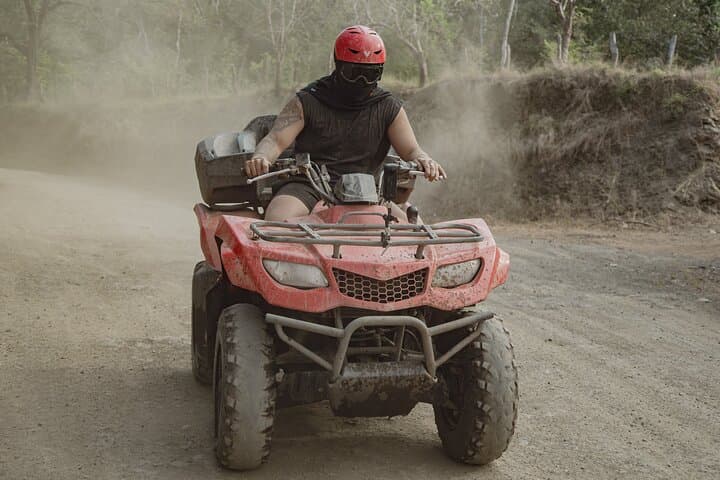
What the day feels like
The engine settles into a steady growl and the trail answers—sand spits, scrub, and the sudden snap of a coati slipping off the path. You lean forward on the ATV and feel the machine find its line; the Pacific is a silver slice on your left, the mountains folding inland like a green, patient wall on your right. For two hours this is a conversation: the tires arguing with gullies, the wind trying to pry your hat free, the forest daring you to slow down. By the time you reach a quiet crescent of shoreline with no footprints but your own, the surf has rearranged the day in a way only the coast can—shifting, improvisational, insistently alive.
This is Tamarindo by wheel and weather: a short, high-adrenaline window into Guanacaste’s ragged edge where tropical dry forest gives way to coastal dune and reef. The two-hour ATV loop advertised on the tin of the booking site is compact and smart—fast enough to feel purposeful, long enough to let the landscape settle in around you. You’ll climb knapped ridgelines to overlook the Pacific, slide down toward secret beaches that are sometimes the arena of local fishermen, sometimes occupied only by pelicans and a scatter of seashells.
Why go? Because this particular route collapses three classic Costa Rican storylines into a single trip: off-road adventure, accessible wildlife viewing, and coastal solitude. Tamarindo itself is a surf town with international sensibilities—hustle and surf shops rubbing shoulders with open-air sodas—yet this tour throws you beyond the main strip into sections of country and coastline few visitors see. It’s a contrast that makes every vantage feel earned.
Geology and ecology give the ride texture. The region’s volcanic past left a mosaic of ancient lava benches and soil types that the rainy season knits into sudden, explosive greenery; the dry season strips this back to ochres and grays. You’ll pass through patches of tropical dry forest—trees that have learned to hold water like hoarded treasure—and across coastal terraces where beach sands are constantly reworked by tides. That geological restlessness is why the beaches you hit can feel private: the coastline is young and moving, always remaking itself.
The human story here is compact but layered. Guanacaste was once relatively isolated, its culture shaped by cattle routes and remote fishing settlements; in recent decades tourism and surf culture reshaped commerce, bringing international flavors without erasing local identity. Near Tamarindo, Playa Grande and the Las Baulas National Marine Park are crucial for endangered leatherback turtles; conservation efforts here are an active part of community life. Much of the ATV route skirts private land and protected areas—operators balance access with respect for nesting grounds and water sources, so responsible guides are essential.
Practical reality: the tour runs about 120 minutes, typically priced from $85 per person with instant confirmation and free cancellation policies through the booking platform. It’s short punch—plan it as an early-morning or late-afternoon ride to avoid midday heat and to catch the best light for photos. Guides provide helmets and a briefing; expect basic instruction on throttle, weight distribution, and how to handle sandy switchbacks. Driving is straightforward for anyone comfortable on a motorcycle or ATV, but the environment can switch from firm crust to knee-deep sand in a heartbeat.
Safety and preparation are simple but non-negotiable. Wear closed-toe shoes with good grip; bring sunglasses that strap on, sunscreen, and a reusable water bottle. The sun here is immediate; dehydration comes on faster than you expect when the engine’s hum masks your breath. If the wet season is in effect, trails turn sticky and streams that used to be trickles can push across the route. That’s part of the appeal—nature has agency—but it also demands judgment from your guide.
Plan for wildlife encounters rather than hope for them: howler monkeys announce themselves in the canopy, coatis and iguanas inspect new tire tracks, and shorebirds quarter the surf. Respect nesting areas—particularly beaches tied to turtle conservation—and keep noise and speed down near sensitive stretches.
If you’re thinking logistics: the closest hub is Tamarindo town, with Liberia’s Daniel Oduber International Airport (LIR) about a 70–75 km drive away (roughly 1–1.5 hours depending on traffic). Operators usually meet in central Tamarindo or include hotel pickup. Expect good cell service in town, which can thin out once you’re pushing into the mountains and remote beaches.
For photographers: bring a small action camera or a gripped mirrorless body with weather sealing. The best images come from the margins—shoreline silhouettes, dust clouds framed by ridgelines, and close-up shots of life on the trail. Keep gear secured; sand gets into everything.
The ride ends with salt on your skin and a clean exhaustion that feels honest. Afterward, the town welcomes you back—Nogui’s or a relaxed soda will hand you cold beer and fish straight off the grill. The contrast is part of the recipe: a raw two-hour run through active landscape, then a slow unwind in a town that knows how to feed tired travelers.
If you want to make the most of it, book a morning slot when the beaches are empty, ask your guide about local conservation work (and how you can support it), and leave room in the afternoon for a surf lesson or a quiet walk on Playa Grande. This is the kind of half-day adventure that expands your sense of place without exhausting the entire trip—an efficient, muscular way to understand why Tamarindo continues to tug at travelers who want both sand underfoot and dirt on their boots.
Trail wisdom
Small choices, better day.
Time it for golden hour
Book early morning or late afternoon to avoid heat and capture the best light on beaches and ridgelines.
Hydrate before you mount up
Bring a full water bottle and sip throughout—the combination of sun and engine noise makes dehydration sneaky.
Secure loose gear
Sand and vibration will find anything not strapped down—use a chest mount or a secure dry bag for cameras and phones.
Respect nesting beaches
Slow down and follow your guide’s instructions near shorelines—some are active turtle-nesting zones tied to Las Baulas National Marine Park.
Local knowledge
Read the place, not just the route.
Watch for native species including Howler monkeys, Coatis.
Keep an eye out for wildlife during the transition between areas and habitats. Respect distance guidelines.
Nearby Las Baulas National Marine Park protects leatherback turtle nesting beaches—operators commonly alter routes and enforce no-disturbance policies during nesting season.
Follow the guide's instructions on size limits, ethical handling, and leave-no-trace practices.
A quiet lookout ridge above Tamarindo that faces southwest—excellent for sunset silhouettes. A small fisherman’s cove reached only by narrow track, often empty except for early-morning nets
Locally recommended viewpoints and quiet spots known best to local operators.
Guanacaste’s culture grew from cattle ranching and coastal fishing; Tamarindo’s modern boom began with surf tourism in the 1990s, reshaping commerce while keeping rural ties.
Maritime roots and regional tradition shape the waterways and working coasts.
Seasonal guide
Four versions of the same landscape.
Spring
Best forDry trails · Wildlife spotting · Photography
ChallengesDusty trails · Strong sun
Spring overlaps the dry-to-wet transition—trails are generally firm, vegetation starts to green up, and mornings are best for wildlife.
Summer
Best forLush landscapes · Fewer crowds · Birding
ChallengesAfternoon showers · Slippery trails
Summer brings intermittent rains that make forests vibrant but can create sticky trail conditions—plan for flexible timing.
Fall
Best forGreen scenery · Turtle nesting awareness · Lower rates
ChallengesIncreased rainfall · Temporary trail closures
Fall is wetter; expect occasional route changes and cooler, overcast light that’s great for moodier photos.
Winter
Best forClear skies · Stable conditions · Beach time
ChallengesHigher demand · Hot daytime temperatures
Costa Rica’s dry season (local ‘winter’) offers the most stable riding with dusty trails and bright coastal vistas—peak season amenities are busiest.
Operator details
What the booking data adds.
Included
- ✓ATV Security Equipment
- ✓Bottled water
- ✓Roundtrip transportation (if selected)
- ✓Seasonal Fruits
- ✓Susuki Automatic Quadracycles
- ✓Tourist Guide in English /Spanish
Not included
- —Gratuities
Good to know
- ✓Infants and small children can ride in a pram or stroller
- ✓Service animals allowed
- ✓Public transportation options are available nearby
- ✓Specialized infant seats are available
- ✓Not recommended for travelers with spinal injuries
- ✓Not recommended for pregnant travelers
- ✓Not recommended for travelers with poor cardiovascular health
- ✓Travelers should have at least a moderate level of physical fitness
Pack with intention
What to bring.
Good to know
Common questions.
No formal experience is required; guides provide a safety briefing and basic instruction, but you should be comfortable on two-wheeled vehicles or similar handling.
Plan the edges
The details that make the day easier.
Playa Grande, a short drive north of Tamarindo, is part of Las Baulas National Marine Park and is one of Costa Rica’s most important nesting sites for endangered leatherback sea turtles.
After the ride, head to Nogui’s or a local soda for fresh ceviche and cold beer; Tamarindo also has small craft breweries and beachside bars that serve toasted seafood and plancha-grilled fish—perfect for rinsing off dust and swapping trail stories.
- Closest airport
- Liberia (LIR); Driving distance: ~70–75 km
- 1–1.5 hours from LIR to Tamarindo; Meeting point
- Central Tamarindo or included hotel pickup; Cell service: strong in town, intermittent on remote trails; Permits: none required, operator may require ID and minimum age.
This route skirts beaches and nesting zones; choose operators that adhere to Las Baulas protections—stay on designated tracks, avoid beach nesting areas at night, and pack out all trash.
Explore by topic
Follow the threads.
Keep exploring
Make the story part of the trip.
 Related story
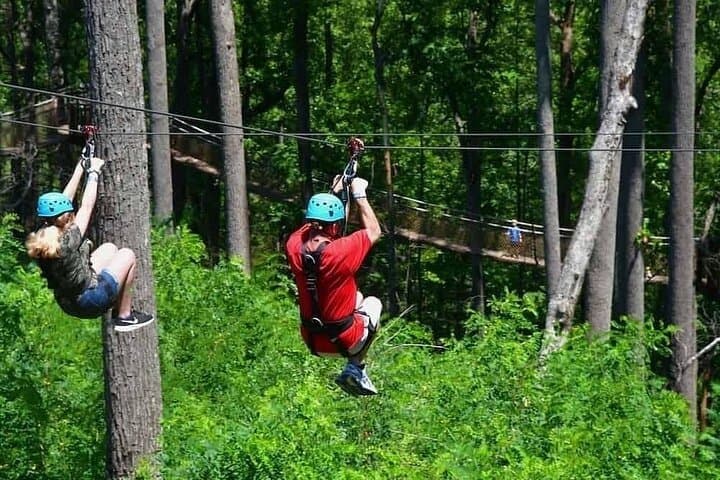
Less than two hours from Nairobi, Kereita Forest pairs hands-on canopy adventure with quiet montane trails and a sobering colonial history—perfect for families, teams, and curious travelers seeking a full-day pulse of nature.
Set out from Bass Harbor for a private, customizable day on Blue Hill Bay — lighthouses, puffins, seals, and the chance to feel Acadia from the water. Small groups, local captains, unforgettable views.
In four hours you can move from shaded canyon ferns to wind-scoured coastal ridgelines, guided by someone who knows where the light—and the hidden views—live. This private half-day hike on the Monterey Peninsula or Big Sur is compact, curated, and perfect for travelers who want depth without a multiday commitment.