
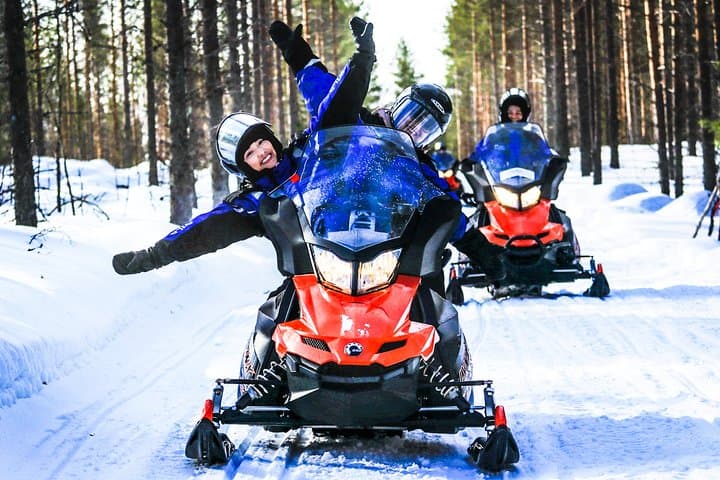
What the day feels like
The engine snorts, a small, mechanical heartbeat against a landscape that otherwise breathes in long, slow white. Headlights slice through a soft fog of snow-laden breath. The track bites the crust and then finds powder, and the forest — spruce sentries capped with sugar — seems to lean closer, curious. You feel speed in the bones and quiet in the ears: this is the paradox of a snowmobile safari in Lapland, where motion reveals solitude.
Out of Rovaniemi, guides shepherd small groups onto frozen lakes and across ribboned trails carved into the taiga. On a 3–4 hour route you’ll move from dense spruce corridors to open fell vistas, the terrain changing so fast it feels like peering through different seasons of one landscape. Birch branches, dark and ornate against the snow, blink water droplets like beads of time. The air smells of wood smoke and cold ozone; even the silence has shape here.
There’s a practical thrill to it — not just speed, but the physics of it: track meeting compact snow, throttle echoing against a wide sky. And there’s context. Rovaniemi, the administrative heart of Finnish Lapland, sits near the Arctic Circle and has long been a gateway to Sámi culture and northern wilderness. The terrain you cross was sculpted by glaciers during the last Ice Age; today those same forces leave long, low ridges and thousands of lakes, many frozen solid in winter and turned into highways. The region’s long winters have pushed locals to innovate: snowmobiles are not just toys here but essential winter transport, a modern continuation of an old bond between people and place.
Geology and culture intersect on these rides. You might skirt peat bogs that were once the lifeblood of local economies, or glance at reindeer fences and realize you’re passing through a working landscape shaped by Sámi husbandry. Guides often share stories of the northern lights and of wartime history when these lands were strategic and hard-won. The safari is as much a micro-lesson in Lapland’s identity as it is an adrenaline fix.
For travelers, the reasons to book are simple: maximum exposure to vast, quiet landscapes in a compact window; a chance to drive your own machine or ride tandem; and the social choreography of small groups warming hands over thermoses and peering at the horizon. It’s efficient: in roughly three hours you’ll see more of Lapland’s varied winter terrain than a day on ski trails might offer.
Practical guide: tours run about 180–240 minutes, often including a safety briefing, fuel and equipment, and stops for photos and hot drinks. Expect frozen lakes, groomed forest tracks, occasional open tundra and small elevation changes rather than steep climbs — the ride is about flow rather than ascent. Weather conditions dictate pace; when winds rise, guides reroute to sheltered corridors of trees. A valid driver’s license is generally required to operate a sled solo; many operators allow passengers to join without one. Rental gear (warm overalls, insulated boots, helmets) is standard, but layering underneath your kit makes the difference between tolerable and comfortable.
Safety is straightforward if you listen: briefings matter, keep throttle smooth, and respect the guide’s pace. Fuel stops and photo breaks are built into the itinerary; these are the moments you’ll remember most — noses cold, cheeks hot, the sky a glittering map. If the aurora arrives early in the night, guides sometimes position the final stop for a clear sky view.
Booking and budgeting: this experience is priced from about USD 182.59 for a 3–4 hour safari. Book early in high season (December–March) and look for operators that limit group sizes and provide full protective clothing. For more details or to reserve a slot with a local operator, check this snowmobile safari in Lapland for Rovaniemi’s winter wilderness.
When to go? Peak winter — late December through March — gives the most reliable snow and deepest low light for that Arctic feel. February is a sweet spot: long enough nights for aurora potential, but often more stable weather than the darker deep-winter months.
Who it’s for: casual outdoor travelers who want a high-adrenaline way to sample Arctic landscapes; active couples or small groups; photographers seeking stark, high-contrast compositions. It’s accessible to most people with basic fitness and no specialized skills beyond listening to the guide and following the throttle.
Bring curiosity and respect. These rides take you across fragile frozen systems and working landscapes. Keep to the route, minimize noise at wildlife sightings, and pack out any waste. The reward is an hour by a steaming thermos, staring at a horizon so wide your conversation grows small and private, and the knowledge that you’ve traveled in a place that rewards both movement and stillness.
Ready to test the sweet spot between throttle and silence? Book a snowmobile safari in Lapland to ride beyond the city lights of Rovaniemi and into a winter that feels like another country — but one that’s calmly, humanly accessible.
Trail wisdom
Small choices, better day.
Layer strategically
Wear a moisture-wicking base layer, insulating mid-layer, and a windproof outer — rentals cover outerwear but underlayers make long stops comfortable.
Bring ID and licence
A valid driver’s license is usually required to operate a sled solo; bring photo ID even if riding as a passenger.
Protect your phone
Cold drains batteries — keep phones in an inner pocket close to your body and bring a small power bank.
Throttle with intention
Smooth acceleration preserves traction and makes the ride safer for you and others — follow the guide’s pace.
Local knowledge
Read the place, not just the route.
Watch for native species including Reindeer, Snowshoe hare (arctic hare).
Keep an eye out for wildlife during the transition between areas and habitats. Respect distance guidelines.
Operators are encouraged to use established trails and avoid sensitive habitats; visitors should stay on routes, pack out waste, and follow guide instructions to minimize impact.
Follow the guide's instructions on size limits, ethical handling, and leave-no-trace practices.
A pause on a frozen riverbank where old sluice posts poke through snow — great for close-up light. A shallow fell ridge offering a panoramic sweep of taiga and distant lights — best at dusk
Locally recommended viewpoints and quiet spots known best to local operators.
Rovaniemi was rebuilt after WWII and has grown as a northern transport hub; the surrounding landscapes have sustained Sámi reindeer herding for centuries.
Maritime roots and regional tradition shape the waterways and working coasts.
Seasonal guide
Four versions of the same landscape.
Spring
Best forLonger daylight hours · Thawing landscapes · Less extreme cold
ChallengesVariable snowpack · Softening ice on lakes
Late winter into spring can offer longer days and better light for photography, but expect softer snow and watch for thin ice near shorelines.
Summer
Best forNot applicable for snowmobile tours · Alternative activities like hiking
ChallengesNo snow — snowmobiles unavailable · Different operators/schedules
Snowmobile safaris are not feasible in summer; instead consider summer Arctic activities and book winter trips for the full experience.
Fall
Best forAurora season buildup · Crisp transitional weather
ChallengesLimited snow cover early in season
Early winter and late fall can be unpredictable; operators open runs once snow and ice conditions are safe.
Winter
Best forReliable snow cover · Aurora viewing · Full winter landscapes
ChallengesExtreme cold on some days · Short daylight in December
Peak winter (December–March) is ideal for consistent snow, frozen lakes for riding, and nights long enough for northern lights chances.
Operator details
What the booking data adds.
Included
- ✓Organizer's liability insurance
- ✓Snacks
- ✓Safari desk support
- ✓Guidance services
- ✓Winter adventure gear
- ✓Coffee and/or Tea
- ✓Transportation
Not included
- —extra pay is needed for Solo driving safari
Good to know
- ✓Infants and small children can ride in a pram or stroller
- ✓Public transportation options are available nearby
- ✓Specialized infant seats are available
- ✓Not recommended for pregnant travelers
- ✓Suitable for all physical fitness levels
- ✓Winter adventure gears included
- ✓For driving on public tracks, valid driving license needed, bring it with you
Pack with intention
What to bring.
Good to know
Common questions.
Most operators require a valid driver's license to operate a sled solo; passengers typically do not need one but should check the tour's policy.
Plan the edges
The details that make the day easier.
Rovaniemi sits right on the Arctic Circle and was designated as the official hometown of Santa Claus in the 20th century — the city was largely rebuilt after WWII, incorporating modernist architecture by Alvar Aalto.
After the ride, head back to Rovaniemi for a warming meal: try wild-game stew or reindeer carpaccio at a local bistro, then grab a craft beer at a nearby microbrewery or a cup of cloudberry juice; for cultural context, visit the Arktikum museum to learn about Sámi life and Arctic science.
- Closest airport
- Rovaniemi Airport (RVN)
- Trailhead
- short drive from central Rovaniemi (15–40 min)
- Driving
- often on groomed roads and frozen lakes
- Cell service
- generally available near Rovaniemi, patchy in remote stretches
- Permits
- none typically required for guided commercial tours
Choose operators that minimize off-trail riding, avoid wildlife disturbance, and follow local guidelines; small-group tours reduce noise footprint and localized environmental impact.
Explore by topic
Follow the threads.
Keep exploring
Make the story part of the trip.
In four hours you can move from shaded canyon ferns to wind-scoured coastal ridgelines, guided by someone who knows where the light—and the hidden views—live. This private half-day hike on the Monterey Peninsula or Big Sur is compact, curated, and perfect for travelers who want depth without a multiday commitment.
 Related story
Beneath a sky of shifting light, Skaftafell’s ice reads like a map of time. This three-hour guided glacier hike mixes technical instruction with geology and culture: compact, safe, and unforgettable.
 Related story
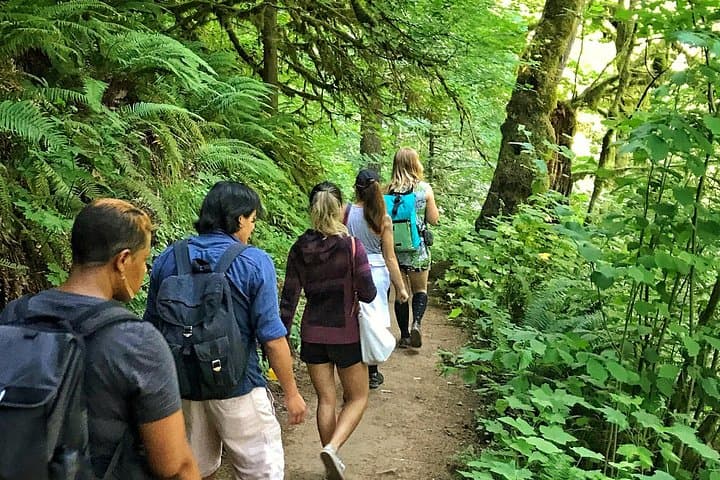
Lose the city for a few hours without leaving it: this 5-mile, 900-foot-gain Forest Park loop threads old-growth pockets, city viewpoints, and cultural landmarks for a compact taste of Portland’s wild side. Expect moss, roots, and stories.