
What the day feels like
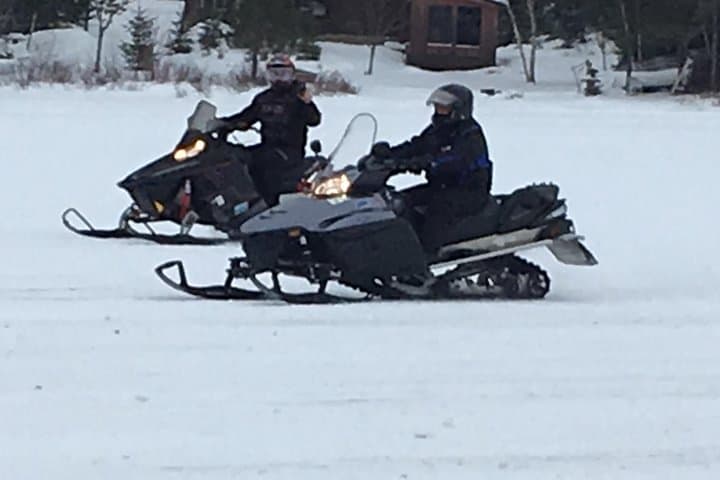
The first breath of air tastes like metal and pine. You kick the starter, the engine answers with a staccato growl that quickly relaxes into a confident hum, and the wide ribbon of groomed trail opens ahead — a white highway that threads through hard-backed spruce, across frozen rivers, and along ridgelines that look out over a lowland stitched with lakes. This is not racing; it’s the precise, clean pleasure of movement on snow, the kind of travel that makes you feel both small and profoundly present. On a three-hour guided snowmobile tour from Calabogie, you spend equal parts time leaning into corners and learning to read a landscape that changes mood every turn: wind-swept flats that gleam like hammered silver, gullied hardwoods where the trees hunch close, and broad viewpoints where the valley falls away and the stillness compresses into a single, hard sound — your sled breathing under you.
Snowmobiling here is not a modern intrusion so much as a continuation of the northern relationship to winter: a pragmatic way to move people and goods that has become a route to deeper wilderness access. The Ottawa Valley around Calabogie sits on ancient Precambrian bedrock, the Grenville Province, scoured by Pleistocene glaciers and left with exposed slabs, kettle lakes and a jumble of ridges and valleys. Those geological bones guide the trails; you climb them, run along their edges, and occasionally drop into pockets where waterbodies have frozen into polished bowls. Indigenous communities have traversed these landscapes for millennia; later, loggers and miners threaded temporary roads through the same passes. Today’s groomed snow trails overlay that history with a modern infrastructure that makes the wild feel reachable — and safe — for newcomers.
A guided tour like this isn’t just about speed. Your guide punctuates each stop with practical instruction — how to posture for a bermed turn, where to shift your weight when ice patches cross the trail, and how to read snow texture to judge traction. They’re also a local archive: which ridgelines yield the cleanest dawn views, where the wolves are rumored to patrol in the early hours, and which lakes offer a straight, exhilarating sprint. Those details turn an adrenaline rush into a well-crafted day in the backcountry. If you like maps, you’ll appreciate that these tours are flexible; trail choices are adjusted for rider skill and snow conditions, which means a gentle loop for a first-timer or a longer, more technical jaunt for someone who spends winter on the gas.
Practical realities matter here. Snow conditions govern everything — deep, powdery drifts invite slower, technical riding; a hard-pack surface encourages speed. Grooming makes an enormous difference: the machine-made corduroy of a freshly groomed trail is predictable and lively. Guides typically include helmet and over-suit rentals but bring your own insulated layers, goggles, and boots if you have them. A three-hour outing covers varied terrain but is short enough that you’ll return with light fatigue rather than exhaustion — and with a hunger for a hot meal and a warm drink.
Safety is baked into the experience. Ontario’s trail system is regulated; guides know the OFSC trail network and the rules that keep both riders and wildlife safe. They brief groups on safety, emergency protocols, and hand signals used on the trail. Respect for winter wildlife — give moose and deer a wide berth and never corner them — is part of the etiquette. The best tours pair the thrill of throttle with a keen sense of stewardship: stay on marked routes, pack out any waste, and avoid disturbing the quieter, off-trail places where animals shelter.
If you’re thinking about when to go, mid-winter offers the most reliable sledding: stable snowpack, cold nights that preserve the groom, and expansive vistas frosted in rime. Shoulder seasons can be beautiful but variable. Busy holiday weekends fill tours quickly; if you want solitude, book a weekday morning.
For photographers and naturalists, snowmobiling opens access to settings few day-hikers reach in winter. The light in low-angle winter is a forgiving, saturated kind of gold; sunrise and late-afternoon rides amplify textures and long shadows in a way summer can’t replicate. Bring a lens with stabilization, layer lens cloths for condensation, and plan short bursts of shooting between stops — your hands will thank you.
There’s a pragmatic beauty to this style of winter travel: it’s accessible, teachable, and modular. Learn to control lean and throttle, respect the rhythm of the trail, and the excursions expand quickly in confidence and distance. Whether you want a scenic introduction to the Ottawa Valley’s winter backcountry or a full-throttle taste of wilderness speed, a guided experience out of Calabogie transforms a cold day into a memorable, embodied adventure. Bookings are often instant and flexible; local operators tailor the route to conditions and rider ability, ensuring the trip is both safe and exhilarating. For a convenient way to research and arrange your ride, see these local options for exploring the Canadian wilds on guided snowmobile tours from Calabogie: <a href="https://app.advcollective.com/local-experts/explore-canadian-wilderness-on-guided-snowmobile-tours-from-calabogie">Guided Snowmobile Tours from Calabogie</a>.
When you park your sled and the engines fall quiet, there’s a particular hush — not quite silence, more a settling — that lets you appreciate how winter sculpts a landscape’s personality. You came for speed and scenery, but you leave with an understanding of how to move through cold country with competence and respect.
Trail wisdom
Small choices, better day.
Layer for Variable Conditions
Wear moisture-wicking base layers, an insulating mid-layer, and a windproof shell; temperatures can swing dramatically during a tour.
Book Morning Slots
Trails are usually firmer and temperatures colder in the morning, which improves traction and visibility.
Communicate With Your Guide
Tell guides about your experience level so they can tailor route difficulty and teach techniques that build confidence.
Protect Electronics From Cold
Keep cameras and phones close to your body to preserve battery life and reduce condensation when bringing them out.
Local knowledge
Read the place, not just the route.
Watch for native species including Moose, White-tailed deer.
Keep an eye out for wildlife during the transition between areas and habitats. Respect distance guidelines.
Stay on groomed trails to protect wintering habitats, pack out all waste, and respect local wildlife by avoiding off-trail chasing or noise.
Follow the guide's instructions on size limits, ethical handling, and leave-no-trace practices.
Sunrise viewpoint on a west-facing ridgeline a short sled-run from the trailhead. A narrow frozen river corridor that offers calm, tree-lined riding away from main trails
Locally recommended viewpoints and quiet spots known best to local operators.
The Calabogie area’s logging and granite-quarrying past shaped many trails; winter travel historically kept remote communities connected.
Maritime roots and regional tradition shape the waterways and working coasts.
Seasonal guide
Four versions of the same landscape.
Spring
Best forLate-season big vistas · Fewer crowds
ChallengesThawing trails · Variable ice on lakes
Spring rides can be scenic with lengthening days but expect softer snow and possible water crossings; operators may alter routes accordingly.
Summer
Best forN/A - snowmobile tours unavailable
ChallengesNo snow · Trails closed
Snowmobile tours are not offered in summer; the landscape shifts to ATV and hiking season.
Fall
Best forScenic pre-snow landscapes · Booking for winter
ChallengesShortening days · Unpredictable early snow
Fall is a planning season — book winter dates early and expect limited off-season trail access.
Winter
Best forReliable snowpack · Full grooming schedules
ChallengesCold temperatures · Potential for storms
Mid-winter provides the most consistent conditions for fast, stable riding and expansive winter vistas.
Operator details
What the booking data adds.
Included
- ✓We Include Snowmobile rental , helmets , fuel , guiding services & a trail side lunch ...Snowmobile Suits are available to rent , but are not included in the price.
Good to know
- ✓Service animals allowed
- ✓Not recommended for travelers with spinal injuries
- ✓Not recommended for pregnant travelers
- ✓Not recommended for travelers with poor cardiovascular health
- ✓Suitable for all physical fitness levels
Pack with intention
What to bring.
Good to know
Common questions.
No — guided tours are designed for beginners to experienced riders; guides provide instruction and choose routes to match your skill level.
Plan the edges
The details that make the day easier.
The bedrock around Calabogie is part of the Grenville Province — ancient Precambrian rock shaped by a billion-year tectonic history and later sculpted by Pleistocene glaciers.
After a ride, head to the Calabogie Peaks Resort base lodge for hot drinks and hearty fare; for more dining options, drive to nearby towns like Perth or Westport to find local pubs and bakeries that showcase Ontario comfort food.
- Closest airport
- Ottawa Macdonald–Cartier Intl. (≈1–1.5 hours drive); Trailhead: Calabogie area (operator provides directions); Driving distance from nearest town: within 10–30 minutes of Calabogie village; Cell service: intermittent on trails; Permits
- passes
- guided tours typically include trail permits — independent riders should verify OFSC requirements.
Ride only on designated groomed trails, minimize idling near wildlife, and pack out all trash; operators often follow guidelines to protect wintering habitats and maintain trails.
Explore by topic
Follow the threads.
Keep exploring
Make the story part of the trip.
Set out from Bass Harbor for a private, customizable day on Blue Hill Bay — lighthouses, puffins, seals, and the chance to feel Acadia from the water. Small groups, local captains, unforgettable views.
In four hours you can move from shaded canyon ferns to wind-scoured coastal ridgelines, guided by someone who knows where the light—and the hidden views—live. This private half-day hike on the Monterey Peninsula or Big Sur is compact, curated, and perfect for travelers who want depth without a multiday commitment.
 Related story
Beneath a sky of shifting light, Skaftafell’s ice reads like a map of time. This three-hour guided glacier hike mixes technical instruction with geology and culture: compact, safe, and unforgettable.