
What the day feels like
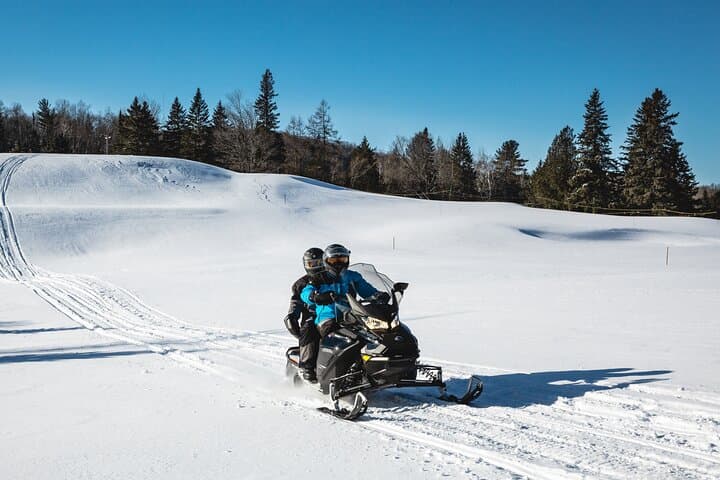
The first breath of cold hits like a promise. Puffs of steam curl from your collar as the guide slides the throttle forward and the sled under you answers like an eager animal. The forest opens in a blur of white trunks and silver branches, a corridor of groomed trail that undulates over frozen streams and skirts the rim of wide, glassy lakes. For two hours the Laurentians stop being a map and become a series of moments: a slope that pulls you into speed, a clearing that gives you a viewpoint like a staged photograph, a punch of wind that dares you to lean in and keep going.
This is a guided snowmobile ride in Quebec’s Laurentians region—two hours of purposeful motion and uncomplicated joy. The product here is both simple and specific: high-end machines, certified guides, and terrain that moves from tightly wooded single-track to broader snowfields. In winter the Laurentians (Les Laurentides) are sculpted into a connective tissue of groomed trails; the experience is part motorized sport, part winter wilderness. If you prefer your motion administered by a local, the guide’s cadence—slow on technical sections, faster on open stretches—keeps you in a comfortable rhythm and lets you read the land as it changes.
The Laurentians are not lofty peaks. They are ancient shoulders of the Canadian Shield, some of North America’s oldest rock, folded and worn by deep time. The mountains are modest in elevation but generous in character: exposed ridgelines, dark conifer stands, cratered lakes frozen flat as mirrors. Historically this area grew around timber, fur trading, and later recreation—sporting lodges and small ski towns dot the valleys. Today, winter recreation is the modern economy: snowmobiling here is as much a cultural current as it is a pastime, connecting Quebecers and visitors to a seasonal landscape that is both rugged and social.
A few practical notes before you click book: the typical outing runs about 120 minutes and is designed to balance adrenaline with accessibility. Operators usually supply helmets and a short safety orientation; keep in mind you’ll want warm, layered clothing and a willingness to lean through corners. Trails are groomed and signed, but they function as working corridors—bridges, frozen lake crossings, and narrower wooded sections demand attention. For detailed booking and meeting details, check the local operator’s listing for the <a href='https://app.advcollective.com/local-experts/laurentians-snowmobile-tour-explore-quebec-winter-trails'>Laurentians snowmobile tour</a>.
Why go? Because this is one of those experiences that compresses an entire winter landscape into a tidy, deliverable burst. You’ll see the region in a way a car never allows: the white stillness of a backcountry clearing, the rhythmic bounce of a sled over crusted snow, the communal hush when everyone stops for a quick viewpoint. It’s social without being crowded—the group size is usually small enough to feel like a crew, large enough to alter pace if someone needs to slow down.
If you’re curious about technicalities: expect mostly groomed trails with occasional wide-open snowfields. Elevation changes are moderate rather than extreme; the route is built for fun, not ascent. The physical demands are manageable—this isn’t backcountry touring on a snowmobile; it’s guided discovery where the guide decides the route and you enjoy the ride. That said, being comfortable with cold, able to grip a handlebar for two hours, and having basic motor control confidence makes the trip smoother.
Safety and etiquette matter. Listen to your guide, keep distances between machines, and follow trail signage—off-trail detours can damage fragile winter ecosystems and increase avalanche exposure where slopes are steep. Most operators are careful about conservation; good guides prioritize staying on groomed routes and educating riders about local wildlife and seasonal behaviors.
Timing is also a practical consideration. Mid-winter—January through March—delivers the most consistent snowpack and the flattest, most predictable conditions. Early or late winter can be icier, with changing trail firmness. Weekdays and early-morning departures generally mean quieter trails.
Whether you’re after raw speed or scenic immersion, a Laurentians ride provides both. It’s a compact, well-led way to feel the pulse of Quebec winter without the logistical heft of a full backcountry expedition. Book, kit up, and then let the guide do the navigation. The woods will lean in, the wind will push you on, and for two hours the world narrows to track, throttle, and the steady white of the Laurentian winter.
Trail wisdom
Small choices, better day.
Layer for the cold
Wear a moisture-wicking base, insulating mid-layer, and a shell; temperatures rise quickly with exertion and drop when stopped.
Bring windproof gloves
Bar-mounted heaters are rare; insulated, windproof gloves keep your fingers working and safe.
Ride within your comfort
Start conservatively—guides will adjust pace, but avoid trying steep maneuvers until you’ve warmed up.
Keep a charged phone and map app
Cell coverage can be patchy; a charged phone helps for logistics, but rely on the guide for navigation.
Local knowledge
Read the place, not just the route.
Watch for native species including White-tailed deer, Red fox.
Keep an eye out for wildlife during the transition between areas and habitats. Respect distance guidelines.
Operators typically use groomed trail networks—stay on marked routes to protect understory plants and avoid disturbing wintering wildlife.
Follow the guide's instructions on size limits, ethical handling, and leave-no-trace practices.
Frozen lake viewpoints just off the main trail. Quiet side loops through mature spruce stands
Locally recommended viewpoints and quiet spots known best to local operators.
The Laurentians are part of the ancient Canadian Shield; settlement here expanded around logging and winter recreation traditions.
Maritime roots and regional tradition shape the waterways and working coasts.
Seasonal guide
Four versions of the same landscape.
Spring
Best forStable snow early in season · Longer daylight windows
ChallengesVariable snowpack · Melted trails late season
Early spring still offers reliable snow and longer days, but trails can become soft as temperatures climb—book earlier in the season for best conditions.
Summer
Best forN/A - not applicable to snowmobiling · N/A
ChallengesNo snow · Operators pause winter services
Summer isn't suitable for snowmobiling; operators pivot to other activities—check local offerings if visiting off-season.
Fall
Best forPre-season planning · Scenic shoulder-season travel
ChallengesNo reliable snow · Cold nights but no groomed trails
Fall is primarily planning season; trails are not yet open for snowmobile tours until sufficient snowfall and grooming.
Winter
Best forConsistent snow · Groomed-trail riding · Frozen lake crossings
ChallengesCold temperatures · Occasional windblown snow
Winter is optimal—expect cold, steady conditions with groomed trails and clear tour operations throughout peak months.
Operator details
What the booking data adds.
Included
- ✓Helmet, Dresses Great complete cold
Not included
- —hood
Good to know
- ✓Wheelchair accessible
- ✓Infants and small children can ride in a pram or stroller
- ✓All areas and surfaces are wheelchair accessible
- ✓Not recommended for travelers with spinal injuries
- ✓Not recommended for pregnant travelers
- ✓Not recommended for travelers with poor cardiovascular health
- ✓Travelers should have at least a moderate level of physical fitness
Pack with intention
What to bring.
Good to know
Common questions.
Requirements vary by operator; many allow passengers without a license, but drivers should bring ID and confirm any age or license rules at booking.
Plan the edges
The details that make the day easier.
The Laurentian Mountains are part of the Canadian Shield and are among the oldest mountain ranges on Earth, with rocks more than a billion years old.
After the ride, head into the pedestrian village of Mont-Tremblant for hearty Quebec fare—think poutine, maple treats, and craft beers—or visit a nearby sugar shack in season for maple taffy and local hospitality.
- Closest airport
- Montreal–Trudeau (YUL) ~1.5–2 hours drive; Driving distance from Mont-Tremblant town center: variable—meeting point provided upon confirmation; Cell service: intermittent on trails; Permits: none beyond booking—check operator rules for age
Stay on groomed trails and follow guide instructions to minimize impact on wintering habitats; choose operators that maintain trails and use modern, well-tuned sleds to reduce emissions and noise.
Explore by topic
Follow the threads.
Keep exploring
Make the story part of the trip.
Set out from Bass Harbor for a private, customizable day on Blue Hill Bay — lighthouses, puffins, seals, and the chance to feel Acadia from the water. Small groups, local captains, unforgettable views.
In four hours you can move from shaded canyon ferns to wind-scoured coastal ridgelines, guided by someone who knows where the light—and the hidden views—live. This private half-day hike on the Monterey Peninsula or Big Sur is compact, curated, and perfect for travelers who want depth without a multiday commitment.
 Related story
Beneath a sky of shifting light, Skaftafell’s ice reads like a map of time. This three-hour guided glacier hike mixes technical instruction with geology and culture: compact, safe, and unforgettable.