
What the day feels like
You arrive on a morning that tastes of pine resin and sea spray, the coastal highway unspooling toward the mountains. The driver pulls off the road at a narrow stone gate and points down a shadowed path: the river has been daring you all morning. That first breath of limestone coolness is what Jeita Grotto delivers — a cavernous hush punctuated by the soft slap of oars and the distant drip of water that has been carving this place for millennia. Later, the road climbs and the Mediterranean pulls back to become a blue ribbon beneath Harissa's lookout, where a statue watches the coastline like a sentinel. The day finishes with a startling drop: Baatara Gorge, where water vanishes through a triple-arched chasm and reappears as if the mountain itself were exhaling.
This eight-hour private tour is an efficient, sensory-heavy primer on Lebanon's geological and cultural highs and lows. It moves fast enough to satisfy a traveler short on time, slow enough to let the places reveal themselves. Jeita, Harissa, and Baatara are different kinds of theater: subterranean, sacred, and vertiginous. Together they read like a compact book on the island's relationship with stone and water.
Jeita Grotto sits in karst country where rainwater has dissolved limestone for eons. The attraction has upper and lower galleries; the lower is experienced by boat across an undersoil river, the upper by a promenade lined with precipitous rock formations. Guides will point out stalactites that have been slowly growing since before the first human settlements in the Levant, a geological patience that dwarfs human calendars. The grotto became a national symbol in the mid-20th century and remains one of Lebanon's best-known natural sites.
Harissa offers a different kind of uplift. Perched above the bay of Jounieh, its statue of Our Lady of Lebanon is less a relic and more a communal landmark, visible from the sea and the city below. The mountain here is a lived landscape: pilgrimage and panorama intersect, and the tiny shops and cafes that cluster near the shrine keep the place grounded. A cable car — the téléphérique from Jounieh — provides a cinematic ascent if you want to trade a mountain road for a gondola ride.
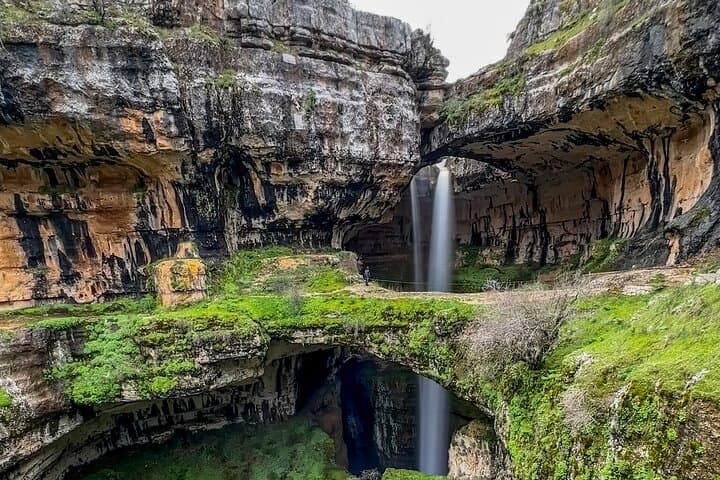
Baatara Gorge delivers the kind of visual punctuation that bookmarks the day. Known also as the Baatara Pothole, its waterfall drops through three natural bridges into a Jurassic limestone sinkhole. The torrent is seasonal and impressive after winter rains; the cascade blinds you with motion and sound, the rock faces slick and folded like a collapsed cathedral.
Practicalities are straightforward but worth planning. The tour runs about eight hours and typically starts in Beirut. Expect roughly an hour's cumulative driving between stops; the itinerary is a loop that keeps you moving while leaving time for a slow walk, a boat, and lookout photos. Walking is generally short but uneven: Jeita's upper gallery involves paved but stepped walkways; the lower cave is experienced seated in a small boat; Baatara has a short, steep approach to its viewing platform. Bring footwear that grips wet limestone and a light shell for chilly caves and gusty ridgelines.
Timing matters. Mornings are quieter in Jeita; late afternoon light is magical at Harissa for coastal vistas. Baatara is at its best in spring when snowmelt and rain swell the falls; in dry months the chasm still impresses, but the cascade can diminish. Respect sacred spaces: Harissa is an active religious site, so modest dress and quiet are appropriate.
What to expect physically: the day is not a technical expedition, but it demands mobility — stairs, uneven ground, and a few short climbs. The tour's private nature makes it flexible for families and photographers; guides frequently allow extra time at your preferred stop. Language is not a barrier: English is widely spoken among guides and ticket staff.
Local context enriches every stop. Jeita has been a point of pride and sometimes political contention in modern Lebanon; preserving the grotto has required balancing tourism with conservation. Harissa blends Maronite devotion with panoramic tourism, and the cable car is as much commuter lift as scenic ride for locals. Baatara sits inland in rugged cedar country, a reminder that Lebanon is a vertical island where mountain and sea live in rapid proximity.
For travelers, this triple stop is efficient, dramatic, and culturally revealing. It makes for a polished single-day introduction to Lebanon's natural architecture and offers plenty of options to linger — lunch in Jounieh's old port, a coffee at a mountain cafe, or an extended photo session as light dips across the gorge. Keep expectations realistic: these are accessible wonders, not wilderness treks. But they reward attention: the echo in a cave, the sun on a bronze statue, the hush after a waterfall — sensory bookmarks that make the whole country feel vivid and immediate.
If you go, plan for comfortable shoes, water, and a respectful layer for Harissa. Book early in high season and ask whether the itinerary includes the cable car (it sometimes operates on a different schedule). The tour's private format is an advantage: you can ask the guide to slow down where a view or feature calls for it. And when the day ends, you won't just have photos; you'll have a concise lesson in how water, stone, and belief have shaped this coastline and its people.
Trail wisdom
Small choices, better day.
Start Early
Visit Jeita first to avoid mid-day crowds and experience the grotto in cooler light.
Wear Grippy Shoes
Paths around Jeita and the Baatara viewpoint are uneven and can be slippery; trail shoes or sturdy sneakers are best.
Respect Harissa
Harissa is an active pilgrimage site; dress modestly and keep voices low near the shrine.
Cable Car Option
Consider taking the Jounieh téléphérique up to Harissa for a quick, scenic ascent if it fits your schedule.
Local knowledge
Read the place, not just the route.
Watch for native species including Rock hyrax (locally known as dassie) in rocky ledges, Migratory seabirds and raptors along the coastal escarpments.
Keep an eye out for wildlife during the transition between areas and habitats. Respect distance guidelines.
All three sites are sensitive to visitor impact; follow marked paths, avoid touching delicate cave formations, and support local guides who contribute to site stewardship.
Follow the guide's instructions on size limits, ethical handling, and leave-no-trace practices.
Take the téléphérique early for quieter views and photo light. Stop for mezze and seafood in Jounieh's old port after Harissa
Locally recommended viewpoints and quiet spots known best to local operators.
These sites sit along ancient trade and pilgrimage routes; Jeita has been a point of national pride, Harissa has long been a Marian pilgrimage site, and the cedar highlands around Baatara have yielded traces of human occupation for millennia.
Maritime roots and regional tradition shape the waterways and working coasts.
Seasonal guide
Four versions of the same landscape.
Spring
Best forWaterfall volume and lush scenery · Milder hiking temperatures
ChallengesOccasional rain · Some trails muddy after storms
Spring offers the fullest Baatara cascade and green hillsides; expect cooler mountain mornings and occasional showers.
Summer
Best forClear coastal views from Harissa · Longer daylight for photography
ChallengesHeat on exposed drives and lookouts · Reduced waterfall flow in dry periods
Summer delivers bright, sea-swept panoramas and reliable cable car service, but Baatara may be less dramatic.
Fall
Best forCrisp light for photos · Fewer tourists at major sites
ChallengesShortening daylight · Cooler evenings
Fall is comfortable for walking and less crowded, with golden light on limestone and olive groves.
Winter
Best forDramatic cloudscapes and swollen falls after storms · Quieter sites
ChallengesChilly, windy conditions at ridgelines · Possible limited access to some roads after heavy weather
Winter can be atmospheric with roaring waterfalls and mist, but be prepared for gusts and muddy approaches.
Operator details
What the booking data adds.
Included
- ✓Knowledgeable English-speaking driver
- ✓Hotel pickup and drop-off in Beirut
- ✓Baatara Gorge Waterfall viewpoint & walk
- ✓Private air-conditioned vehicle
Not included
- —Lunch in Byblos (optional — at own expense)
- —Gratuities (optional)
Good to know
- ✓Specialized infant seats are available
- ✓Suitable for all physical fitness levels
Pack with intention
What to bring.
Good to know
Common questions.
The private tour runs about eight hours and typically includes round-trip transfers from Beirut, entry to Jeita Grotto, the Harissa lookout (and cable car if arranged), and the Baatara Gorge viewpoint.
Plan the edges
The details that make the day easier.
Baatara Gorge Waterfall drops through three natural limestone bridges into a sinkhole sometimes called the Baatara Pothole; the waterfall cascades approximately 255 meters into a Jurassic-era cavern.
After the day, head to Jounieh's old port or Byblos for seafood and mezze—try grilled fish with a side of tabbouleh and a small glass of arak; many cafes near Harissa offer strong Lebanese coffee and mountain olives for a quick, local snack.
- Closest airport
- Beirut-Rafic Hariri International Airport (BEY). Typical drive: 30–90 minutes between stops depending on traffic. Cell service: good near Harissa and coastal roads, patchy near remote gorge. Permits: no formal permits; Jeita requires entry tickets. Parking: available at each site.
These sites are geologically fragile—avoid touching stalactites, pack out all trash, and hire local guides to support responsible tourism and site maintenance.
Explore by topic
Follow the threads.
Keep exploring
Make the story part of the trip.
In four hours you can move from shaded canyon ferns to wind-scoured coastal ridgelines, guided by someone who knows where the light—and the hidden views—live. This private half-day hike on the Monterey Peninsula or Big Sur is compact, curated, and perfect for travelers who want depth without a multiday commitment.
 Related story
Beneath a sky of shifting light, Skaftafell’s ice reads like a map of time. This three-hour guided glacier hike mixes technical instruction with geology and culture: compact, safe, and unforgettable.
 Related story
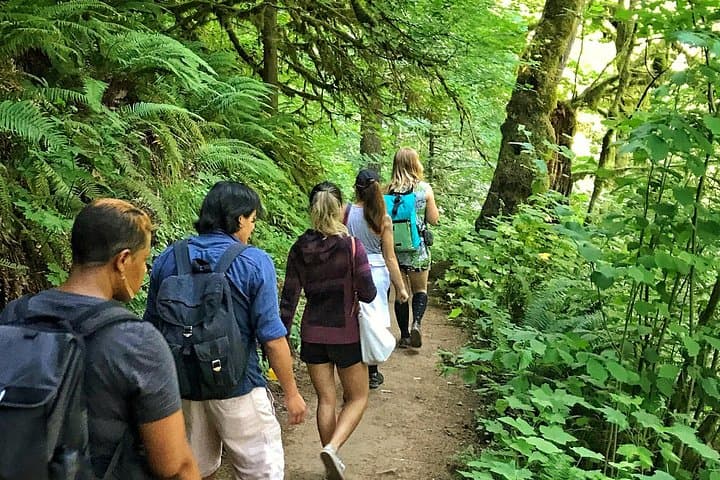
Lose the city for a few hours without leaving it: this 5-mile, 900-foot-gain Forest Park loop threads old-growth pockets, city viewpoints, and cultural landmarks for a compact taste of Portland’s wild side. Expect moss, roots, and stories.