
What the day feels like
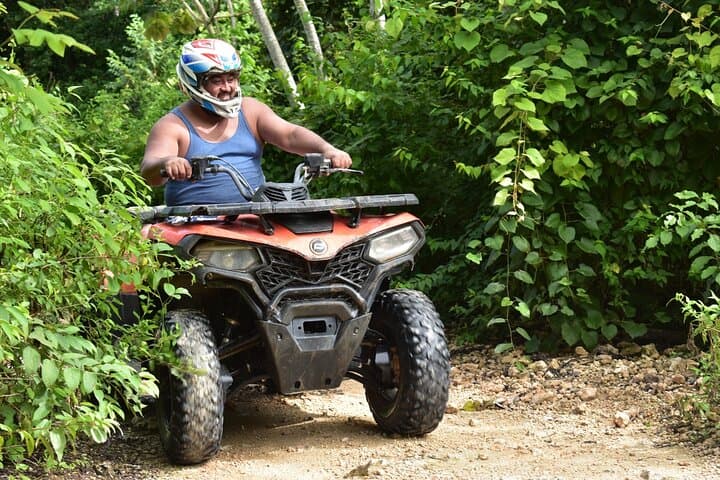
You can feel the jungle before you see it—humid air that smells of damp earth and cut grass, the distant percussion of unseen birds, a single bright leaf flashing like a signal through the green. The ATVs rumble to life beneath you and a guide calls out instructions in a clipped, friendly voice. For the next four hours you’ll trade the white-sand postcard of the Mexican Caribbean for a different kind of postcard: a low-slung world of limestone, ceiba trees, and hidden water carved into the earth long before hotels and all-inclusive signs.
This day trip packages three clean, elemental thrills into one itinerary: the unfiltered joy of throwing an ATV down a jungle track, the brief but uncompromising exhilaration of flying over a canopy on a zipline, and the cool, restorative quiet of a cenote swim in a cave that the Maya long treated as sacred. The price point—starting around $65—makes this experience one of the more accessible ways to feel the rawer edges of the Riviera Maya without committing to a multi-day expedition.
Geology and history are never far beneath the surface here. The Yucatán Peninsula is a wide, porous slab of limestone; when acid rain dissolved corridors under the ground, caverns collapsed and opened into sinkholes we call cenotes. The Maya relied on these freshwater pockets for drinking and ritual; archaeologists have recovered ritual offerings and ceramics in many of the region’s cenotes. Walking toward the water you’re approaching a place that has supplied life—and meaning—for centuries.
The itinerary leans practical and fast-paced. After a short safety briefing and light gear fitting, you'll take a few laps on compact ATVs along trails cut between dense vegetation and fields of fingered palms. Tracks range from hard-packed earth to soft, loamy stretches; expect splashes of mud after rains and the tightened grip of sandier sections near lowlands. The zipline segment is deliberately short and sweet—single- or multi-line setups that let you launch over the canopy, gather speed, and then come to a gentle harnessed stop. Finally, the cenote: water that can feel shockingly clear and cold, a translucent room that swallows sound and returns only the splash of your own presence. Guides provide basic snorkeling masks where needed and brief orientation on respecting fragile limestone and visibility.
Beyond adrenaline, the experience is a lens into local culture. Many smaller operators are family-run and employ guides with deep local knowledge: they’ll point out edible plants, explain the religious significance of a cenote, or gesture toward a distant village where a Spanish mission still stands. There’s a practical culture to this corner of Quintana Roo too—tourism is the dominant economy, but many families balance guide work with fishing, agriculture, and craft-making. Choosing a tour that employs local guides helps ensure the dollars circulate through the community.
This trip is ideal for travelers who want variety and a curated taste of the region’s outdoors without heavy planning. It’s also family-friendly in spirit—kids are often included on these tours, though operators vary by age limits and seating arrangements. The pace makes for a satisfying morning that leaves the afternoon free for beach time, cenote-side tacos, or a nap in your hotel’s hammock.
Practical notes: the whole outing lasts about four hours (operators list a 240-minute tour window), and most providers advertise hotel pickup in the Cancun and Playa del Carmen corridors—confirm inclusion and pickup windows when you book. Safety briefings are standard; expect to sign a waiver, wear closed-toe shoes for the ATV segment, and follow your guide’s instructions both on the ground and in the air. There’s minimal elevation change but uneven terrain can be tiring and slick after rain.
For planning: bring a small dry bag for your phone and valuables, wear quick-dry clothing and a swimsuit underneath so you can jump into the cenote quickly, and carry a refillable water bottle—the heat gets real between shade breaks. If you’re serious about photos, a small action camera with a chest mount or wrist strap makes capturing the zipline and ATV sections easy; a compact waterproof case will save your phone when you go into the cenote.
Who will love this? Active travelers who want varied micro-adventures in one morning, families looking for an energetic half-day, and photographers who like action and the surreal calm of underwater caverns. Who might pause? Purists who want long wilderness treks or people seeking complete solitude—this is a social, guided experience, and it trades isolation for convenience.
Four hours in the Mayan jungle gives you more than snapshots; it gives textured memories: the smell of crushed wet leaves under a rubber boot, the first rush of wind over treetops, the sudden cold when your torso hits cenote water. It’s a compact, practical dose of the Riviera Maya’s deeper side—an afternoon that broadens a beach vacation into something a little wilder, a little more rooted.
Trail wisdom
Small choices, better day.
Wear closed-toe shoes
ATV trails are uneven and can be muddy—sturdy footwear protects toes and improves control.
Bring a dry bag
Keep your phone and wallet dry for the cenote swim and bumpy rides.
Take the safety briefing seriously
Brief training is provided—follow guides closely for safe driving and zipline harness use.
Hydrate before you go
Humidity plus activity increases dehydration risk—carry a refillable bottle.
Local knowledge
Read the place, not just the route.
Watch for native species including Coati, Green iguana and a variety of tropical birds (parrots and kingfishers).
Keep an eye out for wildlife during the transition between areas and habitats. Respect distance guidelines.
Cenotes are delicate freshwater systems—use biodegradable sunscreen, avoid soap or lotions in the water, and follow guide rules to protect underground aquifers.
Follow the guide's instructions on size limits, ethical handling, and leave-no-trace practices.
Explore parts of the Ruta de los Cenotes near Puerto Morelos for quieter, less-commercialized sinkholes. Stop at a local roadside eatery for cochinita pibil tacos after the tour—small family stalls often serve the best regional fare
Locally recommended viewpoints and quiet spots known best to local operators.
Many cenotes were sacred to the Maya and served both as drinking sources and ritual sites; archaeological finds in cenotes include ceramics and ceremonial objects.
Maritime roots and regional tradition shape the waterways and working coasts.
Seasonal guide
Four versions of the same landscape.
Spring
Best forDry weather · Comfortable temperatures · Wildflower growth
ChallengesOccasional pollen · Higher tourism over Easter
Spring offers mild, dry conditions that are ideal for riding, flying, and swimming—expect more visitors around holiday weeks.
Summer
Best forWarm water swims · Long daylight · Lush jungle scenery
ChallengesHeavy afternoon rainstorms · Higher humidity · Heat
Summer is hot and wet—plan morning departures and bring quick-dry clothing to avoid midday storms.
Fall
Best forFewer crowds · Green landscape · Off-peak rates
ChallengesHurricane season overlaps (Aug–Oct) · Higher chance of heavy rains
Fall can be rewarding and quieter, but monitor weather forecasts during hurricane season and expect trail closures after storms.
Winter
Best forDry, cool air · Excellent visibility · Comfortable paddling
ChallengesCooler water temperatures in some cenotes · Higher visitor volume in holiday weeks
The dry season is a popular, comfortable time for this tour—temperatures are pleasant and the cenote water is clear.
Operator details
What the booking data adds.
Included
- ✓Round transportation from your hotel or meeting point
- ✓Sacred Cenote with Zipline
- ✓10-zipline circuit
- ✓Safety equipment for the activities
- ✓Bungee swing
- ✓Air-conditioned vehicle
- ✓Chicken fajitas and fresh water
Not included
- —Photo Package and Souvenirs (additional cost)
- —Locker $10 USD
Good to know
- ✓Not recommended for travelers with spinal injuries
- ✓Not recommended for travelers with poor cardiovascular health
- ✓Not recommended for pregnant travelers
- ✓Suitable for all physical fitness levels
- ✓We recommend you bring: clothes change, towel, closed shoes, swimsuit, sunscreen and biodegradable repellent
- ✓In case you select a different zone than the one your hotel is located in, your reservation must be edited with the correct zone (different cost) through the booking engine
- ✓For security measures, the use of cell phones is not allowed during the activities
- ✓Maximum waist measurement for Ziplines and Bungee Swing: 45 inches
- ✓Weight limit restriction for Ziplines and Bungee Swing: 300 lbs
Pack with intention
What to bring.
Good to know
Common questions.
The listed duration is about four hours (240 minutes), typically including pickup, the activities, and return to your meeting point.
Plan the edges
The details that make the day easier.
The Yucatán’s limestone shelf created thousands of cenotes that fed ancient Maya settlements; many cenotes were considered sacred and were essential freshwater sources.
After the tour, look for family-run eateries serving cochinita pibil, fresh ceviche, and aguas frescas—downtown Playa del Carmen or small stands near Puerto Morelos offer authentic flavors and local craft stalls.
- Closest airport
- Cancún International Airport (CUN); Typical drive from hotel zone: 30–60 minutes depending on pickup; Cell service: Generally good on main roads, limited at remote cenotes; Permits: None typically required for this tour—confirm with operator.
Cenotes are sensitive freshwater systems—use biodegradable sunscreen, pack out trash, and support operators who follow local conservation practices.
Explore by topic
Follow the threads.
Keep exploring
Make the story part of the trip.
Set out from Bass Harbor for a private, customizable day on Blue Hill Bay — lighthouses, puffins, seals, and the chance to feel Acadia from the water. Small groups, local captains, unforgettable views.
In four hours you can move from shaded canyon ferns to wind-scoured coastal ridgelines, guided by someone who knows where the light—and the hidden views—live. This private half-day hike on the Monterey Peninsula or Big Sur is compact, curated, and perfect for travelers who want depth without a multiday commitment.
 Related story
Beneath a sky of shifting light, Skaftafell’s ice reads like a map of time. This three-hour guided glacier hike mixes technical instruction with geology and culture: compact, safe, and unforgettable.