
What the day feels like
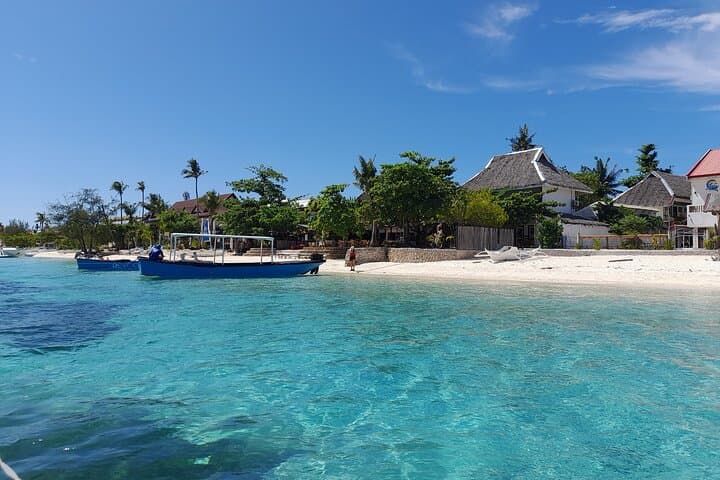
The morning smells like diesel and sun-warmed coconut husks. You step onto the battered skiff at Bantayan’s small pier and the sea immediately asserts itself — a glassy sheet that brightens from turquoise to a hard, luminous blue as the boat churns away from shore. Behind you, low mangroves and the red-tiled roofs of Santa Fe recede. Ahead, a string of islands drifts into focus: Malapascua’s fringe of palms, then the impossibly white wedge of Kalanggaman like a comma on the ocean. The day stretches long and simple: snorkel, eat, walk a sandbar, repeat.
This is classic Central Visayas island-hopping — sun, soft sand, and water that dares you to dive in. It’s an intimate way to read the coastline of the Philippines in a single day. The tour typically runs 6 to 9 hours, leaving early from Bantayan Island, stopping first at Malapascua with its fringe reefs and diving culture, then continuing on to Kalanggaman’s narrow sandbar, where the tide and the light conspire to make postcards out of reality.
The islands you visit each carry a different mood. Malapascua is the diver’s village: rustic wooden dive shops, a coffee stall or two, fishermen mending nets. Below its shallow reefs live resident fish and, in nearby Monad Shoal, the legendary thresher sharks that draw international dive teams. Kalanggaman, by contrast, is all sun and geometry — a perfectly proportioned sand spit that shifts with wind and tide, framed by impossibly clear shallows. Bantayan itself is quieter and less developed than southern Cebu, with a slower tempo of life and the smell of grilled fish on the promenade.
Geologically, these islands are the visible tips of the Philippines’ complex archipelago, formed by tectonic collisions and uplifted coral limestone. The sandbars at Kalanggaman are largely composed of fragmented coral and shell, bleached by sun and shaped by currents into long, low fingers. That fragility is part of their charm — and their vulnerability.
Culturally, a day out on the water connects you to the livelihoods of the central Visayas. Small-scale fishing is still essential here; many local operators run boat charters and fishing tours to supplement income. On the boat, you’ll likely pass local bancas — outrigger canoes — and may see coastal West-looking wooden houses on stilts. On land, lunch is often a simple, satisfying affair: grilled fish, rice, and a punchy vinegar-and-chili dip that tastes of place.
Practicalities anchor the romance. Boats depart early to get the best light and calmer seas; expect a total excursion time of roughly 6–9 hours. The actual time you spend ashore depends on tides and weather; operators sometimes adjust the route (a point in the listing) for safety or to suit sea conditions. Snorkeling spots around Malapascua are shallow and accessible for confident beginners; deeper dives near Monad Shoal are for certified divers. Kalanggaman’s sandbar is walkable in minutes, but its best moments are when the tide lies low and the sliver of beach stretches like a runway into the sea.
What to bring: reef-safe sunscreen, a light long-sleeve for sun, a snorkel mask if you prefer your own gear, and a waterproof case for your phone or camera. Shoes are optional — flip-flops are fine for beach hopping, but reef shoes help if you plan to walk rocky shorelines. Bring cash for island fees or simple stalls; small communities may not accept cards. A dry bag is a small luxury that keeps everything simple and stress-free.
Food is a highlight: the tour includes lunch, typically a local spread of grilled seafood and rice, sometimes prepared ashore. It’s a good moment to taste the region’s simple, direct flavors — coconut, vinegar, fresh fish — and to trade a few sentences with your guide about tides or favorite snorkeling spots.
Safety and sustainability matter. The islands are low-lying and exposed; wear a hat and drink plenty of water. Coral ecosystems around Malapascua and Kalanggaman are resilient but stressed. Choose operators that encourage no-touch snorkeling, avoid anchoring on reefs, and pack out trash. If you plan to visit Monad Shoal for thresher sharks, book with operators who run responsible dive practices and respect daylight dive windows. Finally, remember that the white sand spit at Kalanggaman is a delicate formation — don’t remove sand or shells, and respect any posted local rules.
For travelers who want a balanced day of easy snorkeling, stellar photo ops, and a taste of fishing-village life, this island-hop is spot-on. It’s accessible to casual snorkelers and thrilling enough for divers who’ll want to arrange an overnight on Malapascua for a chance at Monad Shoal’s pelagics. And because much of the charm here is tactile and immediate — sun on skin, salt in the air, the hull’s steady vibration beneath you — the experience translates well even if you’re not an expert swimmer.
By late afternoon, when the boat turns back toward Bantayan and the sun slides toward the horizon, the day feels tidy and complete. You’ve stood on a shoe-string sandbar that seems to belong to no one, swum among parrotfish, and eaten a memorable lunch that tastes of the sea. That combination of low-effort beauty and high-return thrills is what brings people back to the Central Visayas. It’s a short-window, high-reward day that’s rooted in place, and that’s the point: the islands invite you to slow down just enough to notice something new about the ocean each time you look at it.
Trail wisdom
Small choices, better day.
Start early for calmer seas
Departing at first light reduces chop and maximizes time ashore at Kalanggaman before midday crowds and high sun.
Use reef-safe sunscreen
Chemical sunscreens harm coral; choose mineral-based formulas and apply well before entering water.
Bring a dry bag and spare cash
Keep electronics dry and have cash for conservation fees, snacks, or stalls that don’t take cards.
Listen to your guide on currents
Tides around sandbars shift quickly; guides know safe entry points and changing currents—follow their instructions.
Local knowledge
Read the place, not just the route.
Watch for native species including Thresher shark (offshore at Monad Shoal, for divers), Parrotfish and sea turtles in shallow reef zones.
Keep an eye out for wildlife during the transition between areas and habitats. Respect distance guidelines.
Local initiatives and island fees support beach cleanup and reef protection; choose operators who follow no-anchoring and no-touch policies.
Follow the guide's instructions on size limits, ethical handling, and leave-no-trace practices.
Small coral gardens near Malapascua’s western beaches — quieter and great for snorkeling. A local snack stall in Santa Fe that serves fresh grilled tuna with spicy vinegar dip
Locally recommended viewpoints and quiet spots known best to local operators.
These islands are part of the Visayas maritime culture where small-scale fishing and boatbuilding have sustained communities for centuries.
Maritime roots and regional tradition shape the waterways and working coasts.
Seasonal guide
Four versions of the same landscape.
Spring
Best forCalm seas · Birdlife · Photogenic sunrises
ChallengesIntermittent showers · Variable visibility
Late spring brings warming seas and early calm days; expect occasional showers but good light for photos.
Summer
Best forBeach weather · Maximum daylight · Snorkeling
ChallengesHeat and sun exposure · Peak tourist season
Summer is ideal for swimming and sandbar photos but bring sun protection and book ahead for peak days.
Fall
Best forClear water visibility · Fewer crowds · Comfortable temperatures
ChallengesOccasional storms · Shorter daylight
Fall often yields clearer water and lower visitor numbers, though weather can be changeable during transition months.
Winter
Best forQuieter tours · Storm-watching from shore · Lower prices
ChallengesRough seas at times · Limited boat runs on bad-weather days
Winter months can be quieter but bring the risk of choppy seas; operators will alter itineraries for safety.
Operator details
What the booking data adds.
Included
- ✓Lunch is only included if you book the options including meals. In case you booked the lunch as inclusions please let us know what you prefer (meat, seafood, veggies).
- ✓Local guide
- ✓Bottled water
- ✓All taxes, fees and handling charges
- ✓Use of Snorkelling equipment
- ✓Fuel surcharge
- ✓Boat / Boatmen
- ✓Environmental Management Charge (Reef Tax)
Good to know
- ✓Not recommended for travelers with spinal injuries
- ✓Not recommended for travelers with poor cardiovascular health
- ✓Not recommended for pregnant travelers
- ✓Public transportation options are available nearby
- ✓Infants are required to sit on an adult’s lap
- ✓Suitable for all physical fitness levels
- ✓Minimum drinking age is 18 years
- ✓Children must be accompanied by an adult
Pack with intention
What to bring.
Good to know
Common questions.
The tour typically lasts 6–9 hours depending on sea conditions and your chosen itinerary.
Plan the edges
The details that make the day easier.
Kalanggaman Island is administratively part of the municipality of Palompon in Leyte and is famed for its long sandbar; Malapascua is one of the few places in the world with regular sightings of thresher sharks at nearby Monad Shoal.
After the tour, head back to Santa Fe for a simple grilled-fish dinner and a cold San Miguel. Try a local halu-halu or coconut-based dessert, and if you’re lingering on Malapascua, pop into a dive café for fresh seafood and stories from visiting divers.
- Closest airport
- Mactan–Cebu International Airport (CEB). Typical access: 3–4 hour drive or bus to northern Cebu ports then boat transfer; Driving
- ferry from Bantayan island pier varies by operator. Cell service
- patchy on sandbars and some islands. Permits: Small island
This tour visits fragile reef and sandbar habitats—use reef-safe sunscreen, avoid standing on coral, and support operators that practice no-anchoring and local waste management.
Explore by topic
Follow the threads.
Keep exploring
Make the story part of the trip.
Set out from Bass Harbor for a private, customizable day on Blue Hill Bay — lighthouses, puffins, seals, and the chance to feel Acadia from the water. Small groups, local captains, unforgettable views.
In four hours you can move from shaded canyon ferns to wind-scoured coastal ridgelines, guided by someone who knows where the light—and the hidden views—live. This private half-day hike on the Monterey Peninsula or Big Sur is compact, curated, and perfect for travelers who want depth without a multiday commitment.
 Related story
Beneath a sky of shifting light, Skaftafell’s ice reads like a map of time. This three-hour guided glacier hike mixes technical instruction with geology and culture: compact, safe, and unforgettable.