
What the day feels like
You step off the dock in General Luna as the sun lifts the sugar-sand horizon into a strip of brilliant gold. The boat’s engine hums, the ocean coughs a fresh breath, and Siargao’s islands—Naked, Guyam, Daku, and the little Corregidor—sit like scattered gems, daring you to pick one and stay. By mid-morning you’re already balancing on a narrow sandbank at Naked Island: the tide has emptied the shoreline into a thin, perfectly white runway. The water around you is glass and every fish seems to have been painted with tropical neon. Later, lunch on Daku is loud with local chatter and sizzling fish, while Corregidor’s wind-scoured ridgeline offers a small, rugged contrast to the soft, reclining cays.
This is not a remote-archipelago myth—it’s a single, practical day trip that showcases why Siargao has become more than a surf-town secret. The 8:00 a.m.–4:30 p.m. tour window (private boats leave you in charge of pacing) is long enough to taste several different marine moods: the quiet blue where you snorkel a fish sanctuary, the shallow turquoise where kids wade after sea urchins, and the broad cerulean where the horizon feels endless. Pay attention to the tide schedule—operators route the day around high and low water, which decides whether you land on a sandbar or skirt a reef.
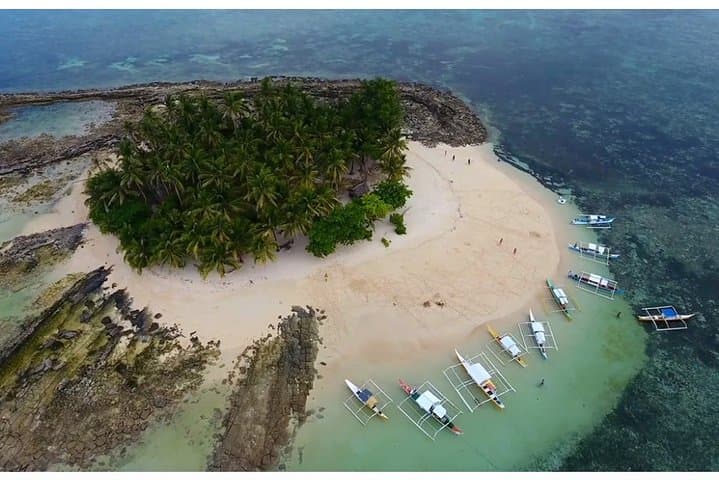
The islands themselves are compact lessons in geology and ecology. Naked Island is a sandbar—transient, sculpted each tide—made from coral fragments ground fine over centuries. Guyam is a tiny coconut-dotted atoll with a sheltered cove perfect for quick swims. Daku, the largest of the trio, has a bit of village life and a long crescent of sand where local boats pull up and prepare seafood feasts. Corregidor—called by locals a miniature Batanes for its clifftop views and stony profile—adds an upland hike option and a fish sanctuary where the underwater life is protected by local ordinances.
Siargao’s modern tourism is braided with tradition. The island was once little more than a chain of fishing villages; surfers arriving in the 1980s built an international reputation that lifted local businesses and reshaped island logistics. Today, island-hopping tours are often run by small, community-linked operators—so your lunch on Daku and the fish sanctuary at Corregidor often both provide direct income for residents and protection for reefs. That’s why private tours—flagged in this itinerary—are popular: you control timing, reduce crowd pressure on small sites, and can coordinate responsibly with local guides.
Practicalities that matter: the tour is typically 8–9 hours, with an 8 a.m. departure and a firm return to the General Luna dock by 5 p.m. The price from USD 103 reflects a private-boat experience with flexibility for snorkeling and a Corregidor hike option. Weather and tide patterns determine the exact sequence of islands—sometimes you start at Guyam, sometimes Naked—but Daku is nearly always the lunch stop. For bookings and local expert coordination, see the detailed trip listing at <a href='https://app.advcollective.com/local-experts/siargao-3-island-hopping-corregidor-daku-guyam-naked-day-trip'>Siargao 3 Island hopping + Corregidor</a>.
How to prepare: bring reef-safe sunscreen, a dry bag for electronics, quick-dry layers, and water shoes for hopping across coral-strewn shores. If you snorkel at Corregidor’s sanctuary, consider bringing your own mask and snorkel for fit and hygiene; most operators will provide gear, but quality varies. The sea can be serene or choppy depending on season—pick the calm months (late dry season) if you’re prone to seasickness.
Local eats and logistics: once you’re back in General Luna, head to a beachfront spot for grilled fish and coconut water; places like Kermit (a local favorite for pizza and wood-fired vibes) or a small sari-sari run will reconnect you with the island’s flavor. If you want to extend the day into a cultural note, ask your guide about community-managed marine areas and how your tour fee supports reef guardians.
This is island-hopping with a practical edge: it’s about pacing, respecting fragile habitats, and soaking in a few very different coastal scenes in one day. It’s the perfect itinerary for travelers who want to get out of the surf crowd and into an afternoon of clear water, local food, and a little coastal geology—all without a multiday commitment. Book smart, pack light, and leave the shoreline better than you found it.
Trail wisdom
Small choices, better day.
Check tide times
Islands are visited in a flexible order: high and low tide change landing spots and sandbars—confirm with your operator before departure.
Bring reef-safe sunscreen
Protect coral and your skin—use reef-safe SPF and reapply after swimming.
Pack a dry bag
Keep phones, spare clothes, and documents dry during crossings and when you’re on exposed sandbars.
Wear water shoes
Shallow reefs and rocky shores make barefoot landings uncomfortable—water shoes protect feet and simplify scrambling.
Local knowledge
Read the place, not just the route.
Watch for native species including Parrotfish, Green sea turtles (occasionally).
Keep an eye out for wildlife during the transition between areas and habitats. Respect distance guidelines.
Many island-hopping operators work with community-based marine sanctuaries—avoid touching coral, use reef-safe products, and support local lunch providers.
Follow the guide's instructions on size limits, ethical handling, and leave-no-trace practices.
The narrow sand spit on Naked Island at low tide—ideal for minimalist photos. A quiet cove on Guyam for sunset if you time a late return
Locally recommended viewpoints and quiet spots known best to local operators.
Daku and surrounding islets have long been subsistence fishing grounds; recent conservation efforts led by local communities created protected zones like Corregidor’s fish sanctuary.
Maritime roots and regional tradition shape the waterways and working coasts.
Seasonal guide
Four versions of the same landscape.
Spring
Best forCalmer seas · Clear snorkeling · Beach lounging
ChallengesOccasional showers · Higher tourist numbers
Late dry-season spring months generally bring warm, clear water and stable conditions—ideal for snorkeling and sandbar photos.
Summer
Best forWarm water · Long daylight · Surf-adjacent activities
ChallengesHigher humidity · Potential squalls
Summer (Philippine dry/warm months) offers long bright days but occasional sudden storms—check forecasts the day before.
Fall
Best forFewer crowds · Dramatic skies · Lower prices
ChallengesIncreased wind and swell · Irregular crossings
Autumn brings bigger swells and wind; island hopping is still possible but operators may alter routes for safety.
Winter
Best forQuiet beaches · Good surf elsewhere · Off-peak rates
ChallengesRough seas during monsoon · Possible cancellations
Winter overlaps with the rainy/typhoon season—expect cancellations on rough-weather days and plan extra time for rescheduling.
Operator details
What the booking data adds.
Included
- ✓Boat w/ life vest
- ✓all fees (parking, permit, entrance, docking & environmental fee)
- ✓Transportation vehicle
- ✓tour assistant
- ✓pick up & drop off from/to hotel
Not included
- —others not mentioned in the inclusions
- —tipping
- —food and drinks
Good to know
- ✓Public transportation options are available nearby
- ✓Suitable for all physical fitness levels
Pack with intention
What to bring.
Good to know
Common questions.
Basic swimming ability is recommended for snorkeling and getting on/off the boat, but operators provide life jackets for non-swimmers and beginners.
Plan the edges
The details that make the day easier.
Siargao is home to Cloud 9, one of the world’s most famous surf breaks and a key reason the island’s tourism economy expanded in the 1980s—today that same boom supports a growing community-led marine conservation movement.
After the boat, head back to General Luna for grilled seafood and coconut water—Kermit is a well-known local pizza spot, while small beachfront eateries serve fresh catch and adobo-style specialties. Finish with a cold San Miguel or a local coconut shake at a beachfront shack.
- trailhead
- Sayak (Siargao) Airport (~40-minute drive to General Luna); Driving distance from nearest town: General Luna is the departure point; Cell service expectations: Reliable in General Luna, patchy on islands; Permits or passes: No national permit, but small community fees or sanctuary donations may apply; Departure
- Return
- 8:00 a.m. to 4:30 p.m. with dock return by 5:00 p.m.
Support community-managed marine sanctuaries by following no-take zones, avoiding anchoring on coral, and disposing of waste back on the mainland—your tour fee often contributes directly to local conservation.
Explore by topic
Follow the threads.
Keep exploring
Make the story part of the trip.
Set out from Bass Harbor for a private, customizable day on Blue Hill Bay — lighthouses, puffins, seals, and the chance to feel Acadia from the water. Small groups, local captains, unforgettable views.
In four hours you can move from shaded canyon ferns to wind-scoured coastal ridgelines, guided by someone who knows where the light—and the hidden views—live. This private half-day hike on the Monterey Peninsula or Big Sur is compact, curated, and perfect for travelers who want depth without a multiday commitment.
 Related story
Beneath a sky of shifting light, Skaftafell’s ice reads like a map of time. This three-hour guided glacier hike mixes technical instruction with geology and culture: compact, safe, and unforgettable.