
What the day feels like
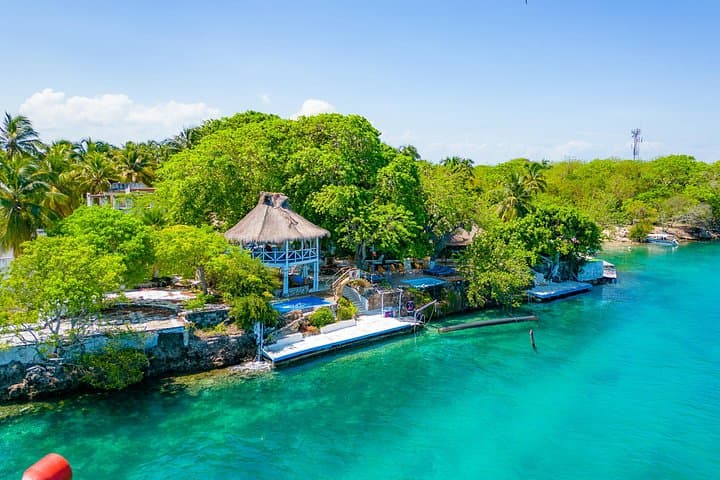
The motor hum of the launch settles into a steady rhythm as Cartagena's wall of color slips into the rearview. Salt arrives before you do: a thin film on your lips, the smell of diesel and seaweed, a breeze that promises heat and light. Within thirty minutes the skyline blurs and the world narrows to turquoise banding and low, green crowns—three islands waiting like small promises in the Caribbean. This is a day designed to reset the senses: bright reef, shallow lagoons, warm sand and the occasional clatter of a beach club umbrella. It isn't remote in the expeditionary sense; it's a practiced, leisurely scramble through coral gardens that invite attention rather than conquest. It’s travel that feels like permission to slow down.
Geologically the Rosario archipelago is the visible edge of Venezuela's long Caribbean platform, where coral accumulated over millennia on a submerged shelf. The result is plenty of shallow reef systems—patches of stony coral, fans and sponges that ripple with fish life when the sun hits just right. Historically, these islands have been both refuge and resource. Colonial maps mark them as waypoints and hidden anchorages; today they are a mix of small, local communities, protected marine areas and tourism infrastructure that ranges from austere to polished. The islands were later declared part of the Rosario and San Bernardo Corals National Natural Park, an acknowledgement of both their ecological value and their vulnerability.
What makes a one-day, three-island trip worth carving out of an itinerary to Cartagena is variety without fuss. You’ll get short, intense bouts of snorkeling in clear shallows where parrotfish, angelfish and wrasse orbit like commuters. You’ll step onto sand that sifts pleasantly from beneath your toes. You'll find mangrove-fringed coves where the tide hushes itself and local vendors set out platters of fresh ceviche and fried fish—simple, immediate food that tastes like the sea it comes from. And because the trip is compact, it encourages small interactions with people doing island life: boat operators, club staff, and other travelers who are often the best informal guides to a rock ledge or a quiet lagoon.
Practical detail matters here: the outing is a half-day to full-day commitment (expect roughly 4–6 hours door-to-door from Cartagena, depending on pier departure and transit), and it's largely low-impact physical activity—short swims, easy walks on sand, and standing on shallow reefs for snorkeling. What makes it more than a postcard are the sensory specifics: the way sunlight fractures through shallow water to make a moving mosaic on the coral; the way a reef fish pauses and seems to count you before it darts away; the warmth of a local lunch served in a beach club that is loud with conversation and marine gulls.
Safety and sustainability go hand-in-hand. Coral is fragile; anchors and careless fins can break lives of small ecosystems. Look for operators that use mooring buoys, brief guests on reef etiquette, and provide reef-safe sunscreen. Aim to travel with a group size that feels respectful—crowded reef sites are worse than none at all. Understanding the tide and sea state can change the quality of a day’s snorkeling: calm mornings often reveal the best underwater visibility.
If you’re planning, time your trip for the drier months (roughly December through April) if you want more consistent sunshine and glassy water. Mornings generally deliver calmer seas and clearer water; many captains schedule the best snorkel stop first, and lunch later when the day has warmed and conversation loosens. Bring your own mask if you can—rental masks are common but ill-fitting gear can turn a perfect reef into a foggy disappointment. And for footwear, lightweight water shoes make transitions between boat, sand, and jagged coral much more comfortable.
There’s a humane choreography to a well-run island day: a brisk launch, a curated selection of shallow reefs and an hour-long shore stop for lunch and lounging. You return to Cartagena in late afternoon with sand in a pocket and an appetite for a beer or a good, salty meal. If you have more time, consider staying overnight on one of the larger islands where early mornings belong exclusively to fishermen and flaming shadows of pelicans outline the horizon.
Ultimately, the appeal of the three-island day is its balance. It’s not the adrenaline rush of big-wave surfing or the solitary challenge of a multi-day trek; it’s a paced, sensory-focused escape where the coral dares you to look closer and the current gently insists you keep moving forward. When you plan well—good gear, respect for the reef, a reliable operator—the Rosario Islands repay you with bright life, slow beaches, and a clear reminder that some of the best travel is measured in small moments and salt water.
Trail wisdom
Small choices, better day.
Book morning departures
Water is usually calmer and visibility better in the morning—ask your operator to schedule the best snorkel stop first.
Bring your own snorkel mask
A well-fitted mask dramatically improves your experience—rental masks are often foggy or loose.
Use reef-safe sunscreen
Avoid oxybenzone-based sunscreens to reduce harm to coral—apply at least 20 minutes before entering the water.
Wear water shoes
Rocky shores and boat ladders are easier with lightweight water shoes for traction and protection.
Local knowledge
Read the place, not just the route.
Watch for native species including Parrotfish and angelfish, Occasional sea turtles and dolphins.
Keep an eye out for wildlife during the transition between areas and habitats. Respect distance guidelines.
The reefs are fragile—support operators who use mooring buoys, avoid single-use plastics, and encourage guests to use reef-safe sunscreen.
Follow the guide's instructions on size limits, ethical handling, and leave-no-trace practices.
La Piscinita snorkel cove (glass-clear shallow reef). Small mangrove inlets and shore trails on the larger islands
Locally recommended viewpoints and quiet spots known best to local operators.
The Rosario Islands were historically noted on colonial charts as anchorages and are now part of the Rosario and San Bernardo Corals National Natural Park.
Maritime roots and regional tradition shape the waterways and working coasts.
Seasonal guide
Four versions of the same landscape.
Spring
Best forCalmer seas · Good visibility
ChallengesIntermittent rain showers · Warmer afternoons
Spring (March–May) overlaps the drier months early on; mornings are often glassy but expect occasional rains later.
Summer
Best forFewer crowds if on weekdays · Warm water for snorkeling
ChallengesIncreased rain and brief squalls · Stronger afternoon winds
Summer brings higher humidity and more frequent showers—plan flexibility and morning snorkeling for best conditions.
Fall
Best forLush island vegetation · Active fish life
ChallengesLower visibility on rainy days · Potential choppier seas
Fall tends toward the wet season; when skies clear you’ll still find excellent snorkel opportunities, but plan for variability.
Winter
Best forConsistent dry weather · Calmer seas
ChallengesHigher tourist volumes around holidays · Slightly cooler winds
Winter (Dec–Feb) is generally the most reliable for sunny, calm conditions—expect more boats and plan early departures.
Operator details
What the booking data adds.
Included
- ✓Limited open bar on the beer, water and soda vessel
- ✓At the beach club Ibizza we welcome you with a welcome non-alcoholic cocktail
- ✓Chicken, fish or vegetarian options
Not included
- —Dinner
- —Gratuities
- —Coffee and/or Tea
- —Towels
Good to know
- ✓Not recommended for travelers with spinal injuries
- ✓Not recommended for pregnant travelers
- ✓Not recommended for travelers with poor cardiovascular health
- ✓Suitable for all physical fitness levels
- ✓Alcoholic beverages are only for those over 18 years
Pack with intention
What to bring.
Good to know
Common questions.
Typical transit to the Rosario archipelago ranges from 30 to 60 minutes each way depending on pier and sea conditions.
Plan the edges
The details that make the day easier.
The Rosario and San Bernardo Corals National Natural Park was established in 1977 to protect Colombia's coral reefs and marine biodiversity.
After the boat, head back to Cartagena’s historic center for ceviche or fried fish—La Cevichería and the restaurants around Getsemaní offer fresh seafood and cold beer—perfect after a day on the water.
- Closest airport
- Rafael Núñez International Airport (CTG); Typical boat time from Cartagena: 30–60 minutes; Driving to pier: 10–30 minutes from city center; Cell service: intermittent on smaller islands; Permits: park fees or entrance charges may apply—confirm with operator.
These islands are part of a protected marine park—choose operators who use mooring buoys, pack out trash, avoid anchoring on reefs, and encourage sunscreen that’s safe for coral.
Explore by topic
Follow the threads.
Keep exploring
Make the story part of the trip.
Set out from Bass Harbor for a private, customizable day on Blue Hill Bay — lighthouses, puffins, seals, and the chance to feel Acadia from the water. Small groups, local captains, unforgettable views.
In four hours you can move from shaded canyon ferns to wind-scoured coastal ridgelines, guided by someone who knows where the light—and the hidden views—live. This private half-day hike on the Monterey Peninsula or Big Sur is compact, curated, and perfect for travelers who want depth without a multiday commitment.
 Related story
Beneath a sky of shifting light, Skaftafell’s ice reads like a map of time. This three-hour guided glacier hike mixes technical instruction with geology and culture: compact, safe, and unforgettable.