
What the day feels like
The Atlantic doesn’t plead — it dares. On day one the ocean leans forward, a blue-gray forehead that opens into Walker Bay, where Southern Right Whales ride the swell and calves practice lazy arcs beneath the surface. A boat cuts across that ribbon of water, and somewhere in Gansbaai a cage lowers with mechanical calm into a shaking sea. The metal frame becomes the line between two worlds: above, gulls wheel and the Cape sky is clean as glass; below, a great white’s profile appears as if testing a dream. Heart quickens. The crew’s calm steadies you. The animal is no caricature; it’s a market of muscle and curiosity, and for these minutes you are a guest in its element.
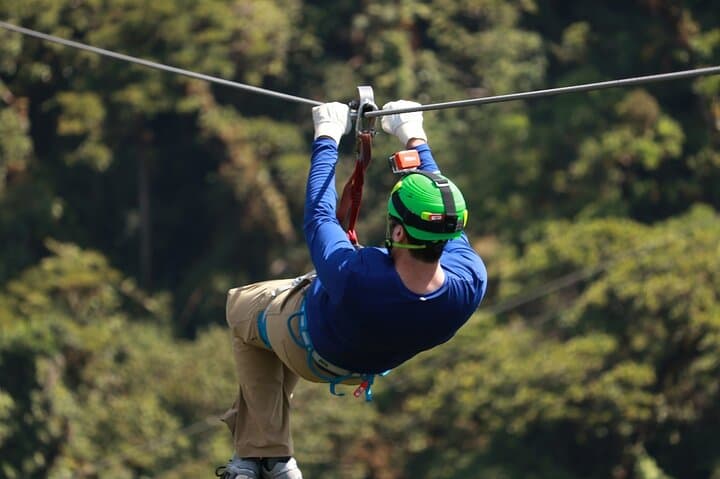
By midday the coastline softens into fynbos and dunes. Fatbikes are absurdly good at eating sand, their wide tires puffing over Grootbos’s loose ridges. The plants here look small and brittle, but the fynbos ecosystem is a slow, wise network—scented, resilient, and older than the mountains that guard it. When the last light hits the Hottentots Holland Range on day two, cables creak and zipline platforms blink solitary in the canyon. You fly through a gorge carved in ancient Cape granite, the wind rewriting your balance, and the mountains respond with an echoing hush.
This is a trip in two registers: the salt and swell of the ocean, and the sculpted, human-time landscapes of the Cape. Hermanus, the tidy coastal town that serves as basecamp, is famous for shore-based whale spotting; locals will tell you the best months as plainly as they’ll hand you a paper cone of calamari. Gansbaai, thirty minutes down the road, has become synonymous with shark-cage diving — not because of spectacle but because the bay’s abundant kelp forests and converging currents create a reliable hunting ground for apex predators. Elgin’s valleys, higher and cooler, were shaped by weathered shale and granite and now hold orchards and canopy ziplines that take advantage of sudden drops and thick river gorges.
Geology here reads like a long, patient argument: ancient Cape Fold Mountains thrust up and were worn down, rivers cut canyons, and the ocean continued to rearrange a coastline of cliffs and sand. Culture is braided through it — from the colonial sea routes that brought sailors and settlers, to the Khoisan people whose place names are preserved in pockets, to modern conservationists working to balance tourism and fragile ecosystems. Grootbos, for instance, began as a private reserve with a conservation focus, and its dunes and fynbos are managed with scientific oversight.
Practically speaking, this is a compact, action-packed 3-day loop. The itinerary typically includes: a morning shark-cage excursion in Gansbaai (boat crossing ~45–60 minutes from Hermanus depending on sea state); a fatbike hour on Grootbos dunes; canopy zip-lining in Elgin with several lines of varying length; and sea kayaking in Walker Bay, where midday glass can turn to a chop with little warning. The tour runs weather dependent; the operators reorder days to fit calm seas or a clear wind window. Expect active hours each day, with transfer times between sites built into the schedule.
If you’re going for whales, plan between June and October: this is Southern Right Whale season, when mothers and calves return to sheltered Walker Bay. Shark encounters are year-round but are more predictable in cooler months when baitfish congregate. All operators emphasize safety: cages are deployed from professional vessels, guides brief thoroughly, and equipment is inspected. Still, this isn’t a passive sightseeing trip. You’ll need comfort with boats, stability on moving platforms, and basic paddling or biking competency.
Logistics and tips: fly into Cape Town International (about a 1.5–2 hour drive to Hermanus), or arrange a transfer. Accommodations cluster around Hermanus — from seaside guesthouses to private lodges — and operators will typically handle transfers. Pack layered clothing (mornings are marine-cool, afternoons can burn), water-resistant gear for boat spray, and an appetite for early wake-ups when the sea is calm.
Why do this trip? It’s the variety: to sit in a metal cage with a living legend, to push across dunes on an absurdly fun drivetrain, to fly through a canyon and find the planet’s geometry thrilling, and to paddle in a bay that still attracts whales close enough to change how you breathe. The region is careful with its wildlife; operators work under permits and with marine mammal guidelines. Your presence, when managed through responsible operators, supports conservation and local communities.
If you go, keep your camera safe (waterproof housing or zippered dry-bag), move slowly when watching whales from shore (they’re sensitive to disturbance), and be prepared to trade an itinerary for a weather window — that is how you get the best of both sea and sky. This is an adventure that rewards attention: to currents, to the wind’s alterations, to the small, explosive smells of fynbos. It’s not a single peak to summit but a series of close encounters, each one different, each one asking you to show up alert and ready for the next moment the ocean decides to offer.
Trail wisdom
Small choices, better day.
Respect the animals’ space
On whale watches and shark excursions follow crew instructions and keep noise to a minimum — approach distances and boat behavior are regulated for a reason.
Layer for changing conditions
Coastal mornings are chilly and afternoons can be sunny; windproof and insulating layers work best for boat and canyon activities.
Secure your camera
Use a waterproof case or dry bag on boats and zipline platforms — salt and spray will ruin electronics fast.
Hydrate and snack smart
Active days in wind and sun demand electrolytes and compact snacks to keep energy steady between transfers.
Local knowledge
Read the place, not just the route.
Watch for native species including Southern Right Whale, Cape Fur Seal.
Keep an eye out for wildlife during the transition between areas and habitats. Respect distance guidelines.
Many operators work with local marine mammal researchers and follow codes of conduct; stick to marked paths in fynbos and avoid disturbing nesting sites.
Follow the guide's instructions on size limits, ethical handling, and leave-no-trace practices.
Cliff-top whale-watching path east of Hermanus (less crowded viewpoints). Morning visits to small kelp coves near Gansbaai for shore snorkeling and birdlife
Locally recommended viewpoints and quiet spots known best to local operators.
Hermanus developed as a fishing village and later became a centre for land-based whale watching; the area’s place names reflect Khoisan, colonial, and maritime histories.
Maritime roots and regional tradition shape the waterways and working coasts.
Seasonal guide
Four versions of the same landscape.
Spring
Best forWildflowers in fynbos · Milder seas for kayaking · Longer daylight for ziplines
ChallengesUnpredictable rain showers · Windy afternoons can delay ziplines
Spring (Sept–Nov) brings blooming fynbos and extended daylight; expect variable weather but excellent whale viewing late in the season.
Summer
Best forWarmest sea temperatures · Long beach days · Good fatbiking conditions for firm sand
ChallengesStronger onshore winds · Sea conditions can get choppy mid-day
Summer (Dec–Feb) is warmer but windier; calm mornings are best for ocean activities before afternoon sea breezes pick up.
Fall
Best forClear skies and stable weather · Calmer seas for boating · Less crowded trails
ChallengesCooling evenings · Whale sightings taper off
Autumn (Mar–May) often gives stable conditions and comfortable days for a mix of water and land activities, with quieter trails and beaches.
Winter
Best forPeak Southern Right Whale season · Cool, crisp air for ziplines · Excellent visibility for marine wildlife
ChallengesColder water temps (wetsuits needed) · Occasional rough seas may cancel boat trips
Winter (Jun–Aug) is whale season and prime for sightings, though boat-based activities are more weather-dependent and require protections against cold spray.
Operator details
What the booking data adds.
Included
- ✓Fat Bike experience
- ✓Shark Cage Diving
- ✓Ocean Kayaking
- ✓Zipline
Good to know
- ✓Infants and small children can ride in a pram or stroller
- ✓Specialized infant seats are available
- ✓Not recommended for travelers with spinal injuries
- ✓Not recommended for pregnant travelers
- ✓Not recommended for travelers with poor cardiovascular health
- ✓Travelers should have at least a moderate level of physical fitness
Pack with intention
What to bring.
Good to know
Common questions.
Operators follow strict safety protocols, use experienced skippers and crew, and deploy inspected cages; choose a reputable company and follow all briefings.
Plan the edges
The details that make the day easier.
Hermanus is considered one of the best land-based whale-watching spots in the world — Southern Right Whales regularly come within meters of the shore during winter months.
After a day on the water, head back to Hermanus for fresh seafood at a seaside bistro, sample apple-cider and small-batch wines in Elgin, or grab a craft beer at a local pub; Grootbos and nearby farms also offer guided botanical walks to learn about fynbos cuisine and medicinal plants.
- Closest airport
- Cape Town International (CPT) — ~1.5–2 hour drive; Typical driving distance: Hermanus to Gansbaai ~35 km (40–50 min); Cell service: Good in towns, limited in some reserve areas; Permits: No general permit, but shark-cage and reserve access managed by operators — book in advance.
This tour operates in sensitive marine and fynbos habitats; choose operators who follow marine mammal approach guidelines, support local conservation fees, and practice Leave No Trace on dunes and trails.
Explore by topic
Follow the threads.
Keep exploring
Make the story part of the trip.
In four hours you can move from shaded canyon ferns to wind-scoured coastal ridgelines, guided by someone who knows where the light—and the hidden views—live. This private half-day hike on the Monterey Peninsula or Big Sur is compact, curated, and perfect for travelers who want depth without a multiday commitment.
 Related story
Beneath a sky of shifting light, Skaftafell’s ice reads like a map of time. This three-hour guided glacier hike mixes technical instruction with geology and culture: compact, safe, and unforgettable.
 Related story
Lose the city for a few hours without leaving it: this 5-mile, 900-foot-gain Forest Park loop threads old-growth pockets, city viewpoints, and cultural landmarks for a compact taste of Portland’s wild side. Expect moss, roots, and stories.